Skip to content

Crude Oil Peak

Menu
  • Home
    • About
    • Disclaimer
  • OECD imports
    • France
    • Germany
    • Italy
    • Japan oil imports
    • OECD Europe
    • OECD Pacific
    • South Korea
    • UK
    • US Imports
  • Australian graphs
    • Australian electricity supply graphs
    • Australian crude oil production
    • Australian crude oil reserves
    • Oil import dependency
    • Oil and fuel imports
    • ULP prices
    • Industry stocks
    • End use of oil
    • WA crude oil
    • WA domestic gas
    • East coast conventional gas
    • Geoscience Australia March 2010
    • Geoscience Australia 2005/2006
    • Gippsland
    • LPG
    • Petrol rationing in WW2
  • Oil reserves
    • OPEC paper barrels
    • Kuwait Reserves
    • Strategic Oil Reserve
  • Global Peak
    • Algeria peak
    • Angola peak oil
    • Argentina peak
    • Azerbaijan peak
    • Brazil
    • Brunei peak
    • Canada and tar sands
    • Caspian peak
    • China Peak Oil
    • Deepwater peak
    • Egypt
    • Gabon peak
    • India peak oil
    • Indonesia peak
    • Iran Peak
    • Libya peak oil
    • Malaysia-peak
    • Mexico peak
    • Norway peak oil
    • Qatar peak
    • Russia peak
    • Saudi Arabia export peak
    • Sudan Peak
    • Syria
    • Tunesia
    • UAE peak
    • UK Peak
    • US Peak
    • Vietnam peak
    • Venezuela peak
    • Yemen
  • Energy Transitions
    • Germany energy transition
    • Japan Energy Transition
    • UK Energy Transition
    • US
  • Fuel Shortages
    • China Fuel Shortages
    • Egypt Diesel shortages
    • India petrol price hike
    • Malawi fuel shortage
    • Nepal
    • Nigeria fuel shortage
    • Pakistan petrol shortage
    • Russia
    • Tanzania fuel shortage
    • Uganda Fuel Shortage
    • Yemen fuel shortages
  • I told you so
    • Top Ryde Shopping Centre
    • North South Bypass Tunnel (Clem7) Brisbane
    • Airportlink Brisbane
    • Cross City Tunnel
    • Lane Cove Tunnel
    • Too late for Metro tunnels
    • Australian car manufacturing closing down
    • How the first phase of peak oil brought Virgin Australia into minus after 2008
  • Solutions
    • Night trains
    • Electric Rail on Freeways
    • LNG locomotive conversion
    • Electric trolley buses
    • Walk to school
  • Oil crises
    • Oil crisis 1973
    • My experience oil crisis 1979
    • Historical Oil Disruptions
  • Food and Oil
    • Farm Costs Australia
    • Food crises and political instability
  • Global warming
    • Storms of my Grandchildren
    • Extreme weather events
    • Global warming and petrol lines
    • Compensation claims from global warming damage
    • Sea level rises
    • Why coal seam gas will not reduce CO2 emissions
Menu

NSW coal fired generation exceeded 7,000 MW on 20 evenings in July 2026

Posted on August 6, 2026

The following graph shows the NSW maximum power generation reached every evening in the winter month of July 2026:
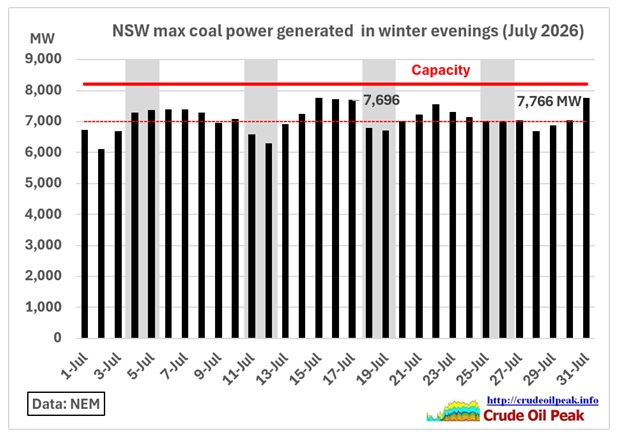
Fig 1: Max daily coal power generation in evening hours

Data are from here: https://explore.openelectricity.org.au/energy/nsw1

The times at which coal generation peaked (very often a very flat peak lasting for hours) varied between 18:30 and 22:30. The maximum during July was 7,766 MW (a Friday), or 95% of the capacity which is 8,200 MW for the 4 NSW coal plants.

The next graph shows the coal fired power plants which contributed to this maximum generation. Data are from here: https://openelectricity.org.au/facilities

Fig 2: Power generation at maximum by coal plant

Week 30 as an example
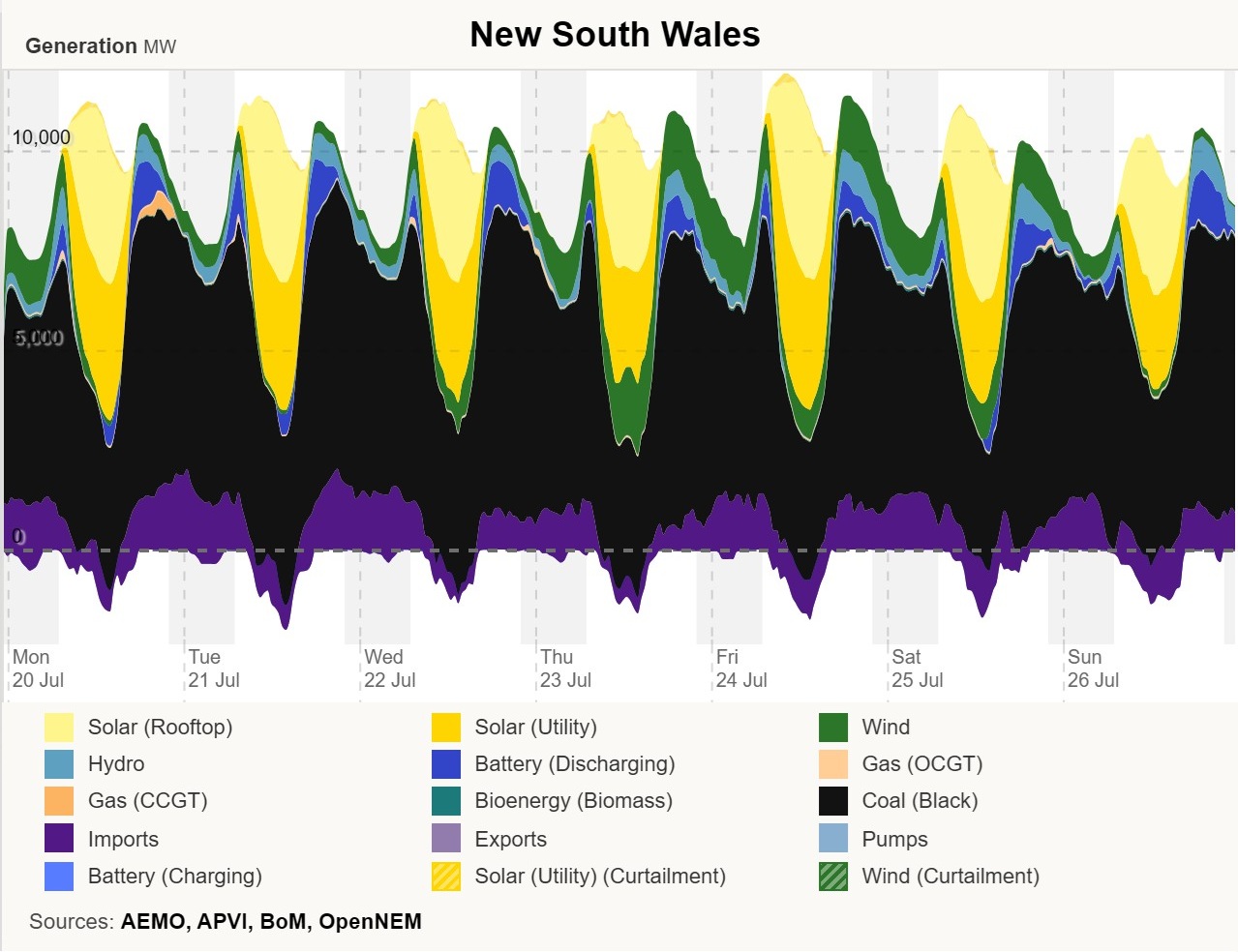
Fig 3: NSW generation by fuel type, week 30 (20/7/26 – 26/7/26)

The imports (violet) at night came from Victoria which had a lot of wind power in that week
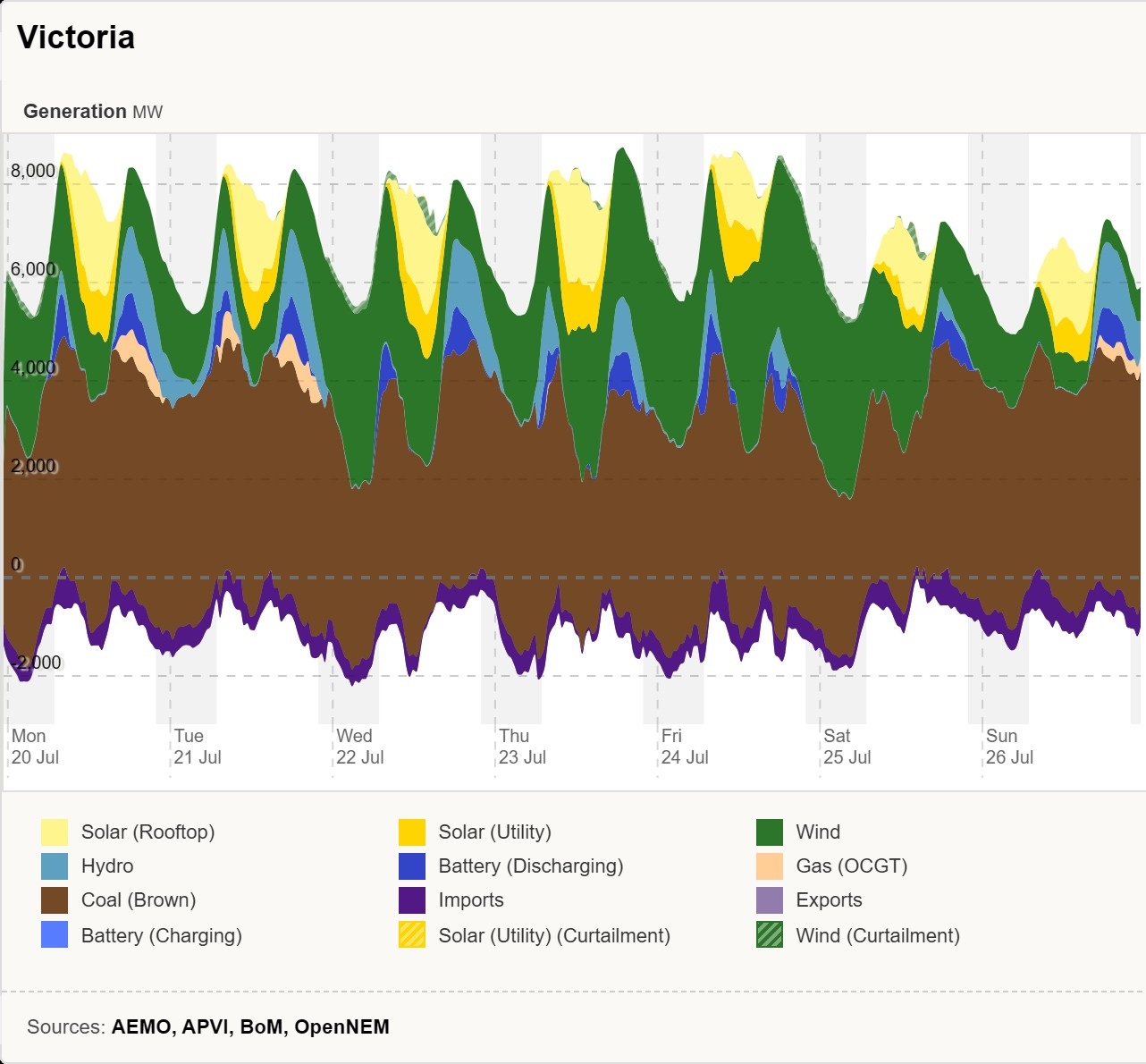
Fig 4: Victoria power generation week 30. Brown coal dominates

Each day there are different conditions to prepare the system for the peak load in the late afternoon and evening:

  • Solar power during the day to recharge grid scale batteries, possibly limiting the discharging in the evening
  • Wind available
  • Hydro available
  • Imports from either Queensland or Victoria
  • Gas as last resort
  • Temperatures and therefore heating requirements
  • Weekday-weekend
  • Public holidays, school holiday

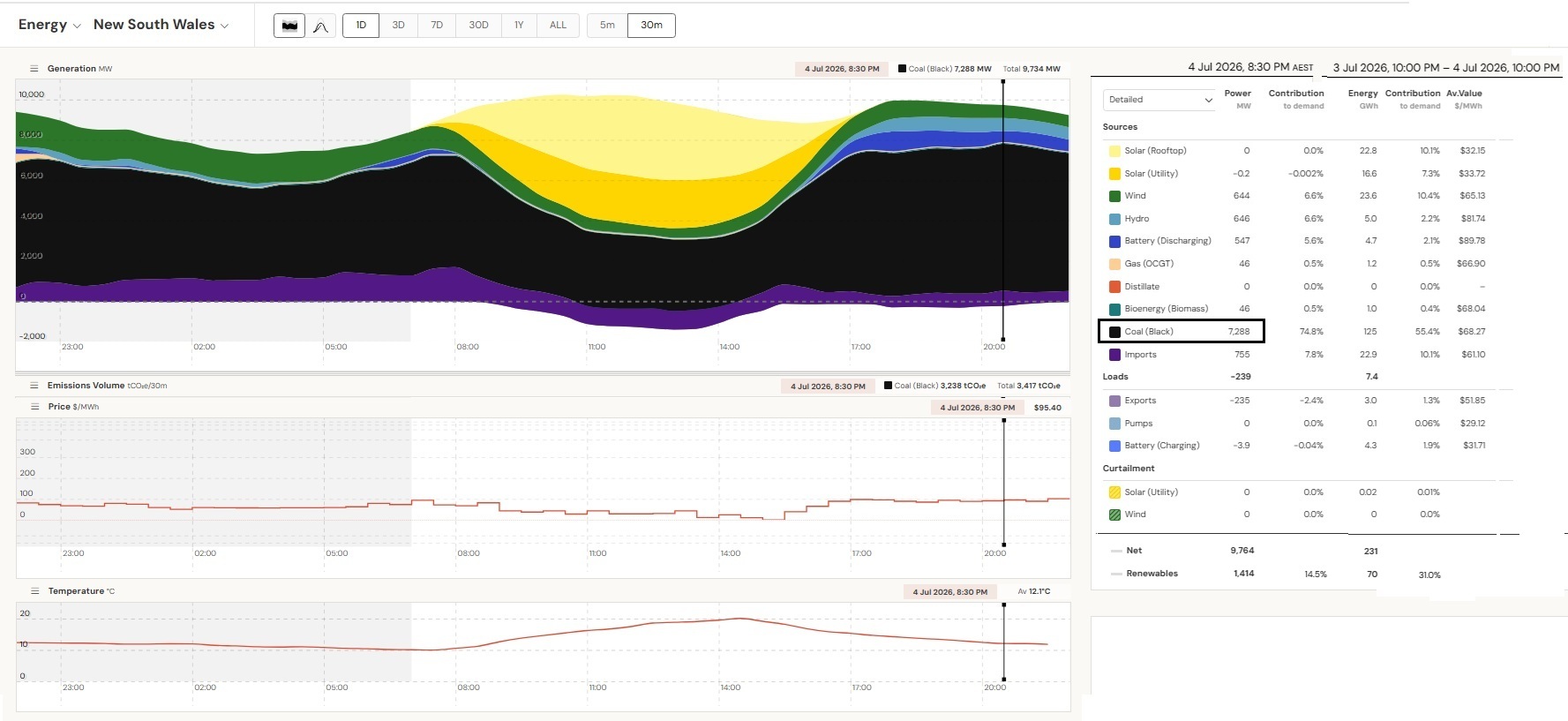
.Fig 5: NSW power generation on Saturday, 4th July 26. Not much wind in the evening

At 20:30 hrs
Coal 7,288 MW (75%)
Imports 755 MW (8%)
Battery discharging 547 MW (6%)
Hydro 646 MW (7%)
Wind 644 MW (7%)
Temperature 12.1º (morning: 10º; max temp during day 20º)
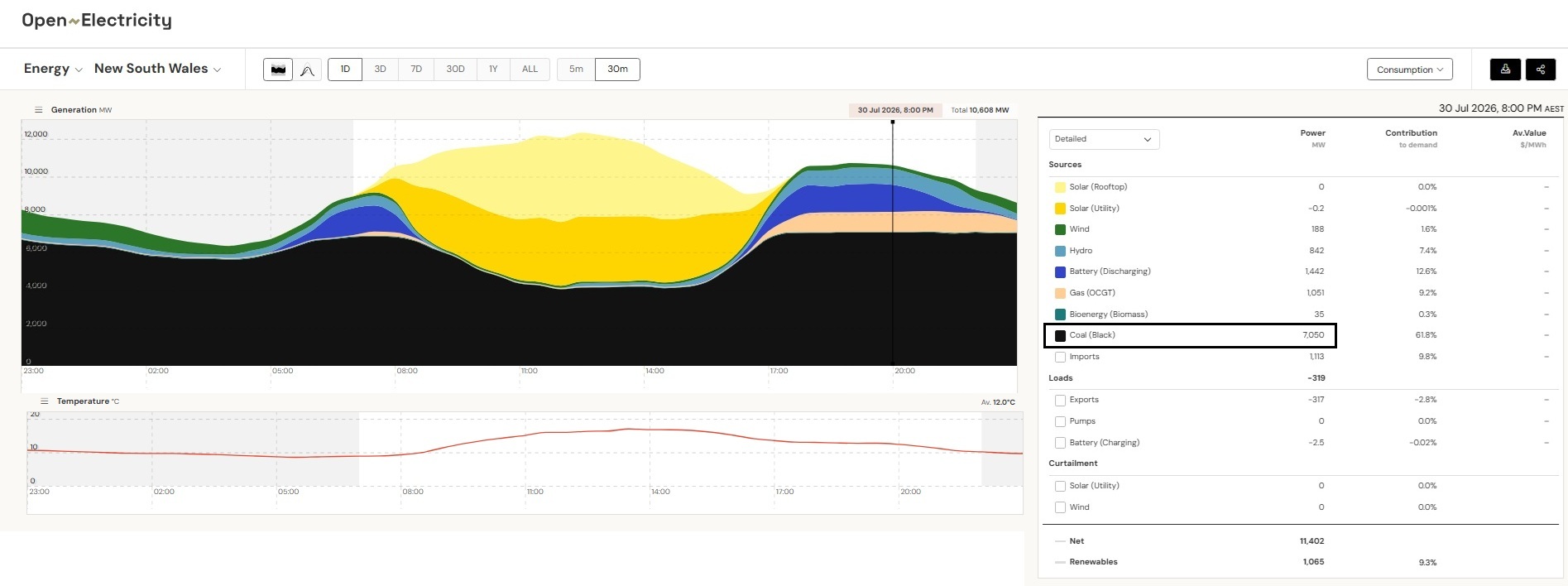
Fig 6: NSW coal power Thursday, 30 July flat out from 5:30 pm to 23:30 (6 hrs!) at 7 GW

Imports, exports, pumps and batteries charging not shown to highlight long periods of high coal production.

Notice the morning peak (> 6,000 MW from 5:30 – 9:00) requiring batteries (up to 1,400 MW) with sufficient energy after the previous evening’s discharge.
The next day (31 July) the morning peak was >7,000 MW from 6:30 – 8:30
At 20:00 hrs, 30 July
Coal 7,050 MW (62%)
Gas 1,050 MW (9%)
Imports 1,113 MW (10%)
Battery discharging 1,442 MW (13%)
Hydro 842 MW (7%)
Wind 188 MW (7%)
Temperature 12º (morning: 8.5º; max temp during day 17º)

Conclusion:

What matters in winter is how many MW are available in the evening hours of cold nights. The NSW State Government (Premier Minns on 10 August: “I want growth”) will throw money at the coal plants if necessary, until there are no more spare parts available for these aging plants. An earlier end may come if there is an accident like in Callide C4 in Queensland (May 2021)

Key data & graphs

  • Net oil importers
  • Oil Exports
  • Crude oil imports
  • Downloads
  • Latest Graphs
  • Oil price analysis
  • US drilling rig count
  • International drilling rig count
  • Australian fuel prices
  • Diary
  • International oil companies
  • US tight oil production
  • China peak oil
  • World liquids supply – demand balance
  • Tankers arriving and departing in Sydney
  • Australian oil and fuel imports

Latest posts

  • Asia Pacific peak oil update 2025, consumption 5x higher than production
  • Australian jet fuel stock floating offshore while fuel prices are flying away
  • Australian Diesel imports in August dropped from high in May
  • First early hot summer day in spring 2026 and power prices spike at a whopping AUD 23k per MWh
  • Energy Minister Bowen firm in refusing Russian fuel imports but keeps options open for diesel imports from Russian dependent India
  • Australian Energy Minister Bowen downplays diesel supply risk after Saudi Arabia visit

Archives

©2026 Crude Oil Peak | Design: Newspaperly WordPress Theme