Skip to content

Crude Oil Peak

Menu
  • Home
    • About
    • Disclaimer
  • OECD imports
    • France
    • Germany
    • Italy
    • Japan oil imports
    • OECD Europe
    • OECD Pacific
    • South Korea
    • UK
    • US Imports
  • Australian graphs
    • Australian electricity supply graphs
    • Australian crude oil production
    • Australian crude oil reserves
    • Oil import dependency
    • Oil and fuel imports
    • ULP prices
    • Industry stocks
    • End use of oil
    • WA crude oil
    • WA domestic gas
    • East coast conventional gas
    • Geoscience Australia March 2010
    • Geoscience Australia 2005/2006
    • Gippsland
    • LPG
    • Petrol rationing in WW2
  • Oil reserves
    • OPEC paper barrels
    • Kuwait Reserves
    • Strategic Oil Reserve
  • Global Peak
    • Algeria peak
    • Angola peak oil
    • Argentina peak
    • Azerbaijan peak
    • Brazil
    • Brunei peak
    • Canada and tar sands
    • Caspian peak
    • China Peak Oil
    • Deepwater peak
    • Egypt
    • Gabon peak
    • India peak oil
    • Indonesia peak
    • Iran Peak
    • Libya peak oil
    • Malaysia-peak
    • Mexico peak
    • Norway peak oil
    • Qatar peak
    • Russia peak
    • Saudi Arabia export peak
    • Sudan Peak
    • Syria
    • Tunesia
    • UAE peak
    • UK Peak
    • US Peak
    • Vietnam peak
    • Venezuela peak
    • Yemen
  • Energy Transitions
    • Germany energy transition
    • Japan Energy Transition
    • UK Energy Transition
    • US
  • Fuel Shortages
    • China Fuel Shortages
    • Egypt Diesel shortages
    • India petrol price hike
    • Malawi fuel shortage
    • Nepal
    • Nigeria fuel shortage
    • Pakistan petrol shortage
    • Russia
    • Tanzania fuel shortage
    • Uganda Fuel Shortage
    • Yemen fuel shortages
  • I told you so
    • Top Ryde Shopping Centre
    • North South Bypass Tunnel (Clem7) Brisbane
    • Airportlink Brisbane
    • Cross City Tunnel
    • Lane Cove Tunnel
    • Too late for Metro tunnels
    • Australian car manufacturing closing down
    • How the first phase of peak oil brought Virgin Australia into minus after 2008
  • Solutions
    • Night trains
    • Electric Rail on Freeways
    • LNG locomotive conversion
    • Electric trolley buses
    • Walk to school
  • Oil crises
    • Oil crisis 1973
    • My experience oil crisis 1979
    • Historical Oil Disruptions
  • Food and Oil
    • Farm Costs Australia
    • Food crises and political instability
  • Global warming
    • Storms of my Grandchildren
    • Extreme weather events
    • Global warming and petrol lines
    • Compensation claims from global warming damage
    • Sea level rises
    • Why coal seam gas will not reduce CO2 emissions
Menu

UK government report in 2009 picked late peak oil scenario – and got it wrong

Posted on June 20, 2011

Summary

According to a 2009 report by the Department of Energy & Climate Change the UK Labour government thought their policies on climate change were sufficient to mitigate the impact of peak oil. Among 4 scenarios arrived at after the study of literature

  1. Very early peak before 2010
  2. Early peak between 2010 and 2015
  3. Medium term peak between 2025-2030
  4. Late Peak mid to late 2030s

the very early peak was seen unlikely although the authors realized that the IEA’s World Energy Outlook 2008 showed an early peaking in existing fields and practically flat crude oil production over the projection period up to 2030.
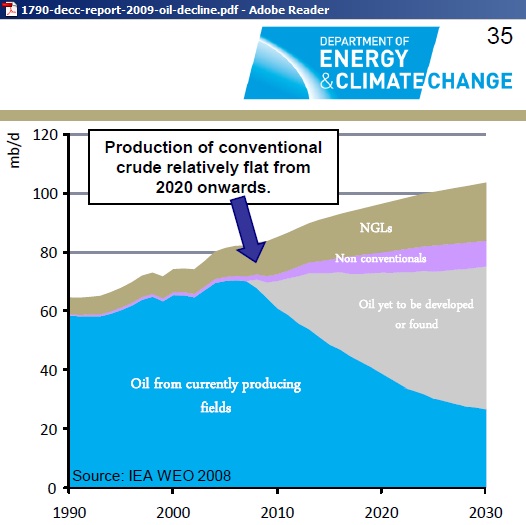
Note: this should obviously read “from 2010 onwards”

The report acknowledged many uncertainties surrounding estimates of future production but did not take these as a reason to adopt a prudent approach for additional action, despite an assessment that alternatives to oil would mature only after 2015 and mostly between 2020 and 2030.

The report also came to the conclusion that UK is better off than other countries as a result of domestic oil production – although oil import dependence was calculated to increase from 8% to 60% in 2025. Most astonishingly, additional action to make UK more resilient to peak oil was seen as impossible to “unilaterally influence the global consequences of a peak”.

Conclusion: things go wrong when governments pick scenarios convenient for them

It seems the very early peaking was dismissed so that peak oil could be covered by climate change action taken anyway and around which there is already public debate and support. The government got it wrong. The IEA’s Chief Economist Fatih Birol conceded recently that the peaking of conventional oil production happened already in 2006, as reported in this post:

28/4/2011
IEA oil crunch warning: governments should have worked on it 10 years ago
http://crudeoilpeak.info/iea-oil-crunch-warning-governments-should-have-worked-on-it-10-years-ago

What the report omitted

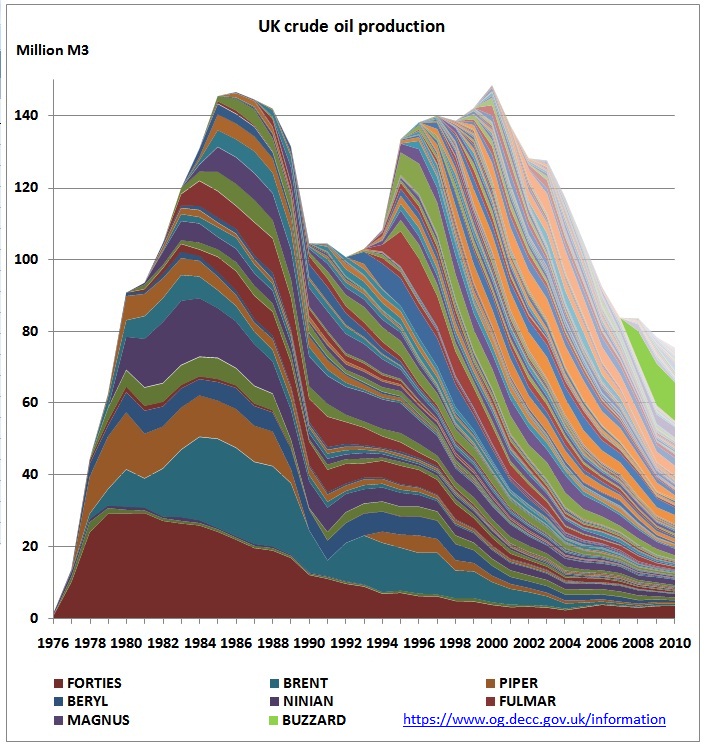
The report did not show the steep decline in UK oil fields:
Other topics not covered in the report were:

(a)    Impact of peak oil on agriculture, food processing and transport

(b)   Oil wars and other armed conflicts

(c)    Physical oil shortages

(d)   General energy crunch due to the need to replace both oil and coal at the same time


The Guardian ahead of the media pack

Thanks, George Monbiot, to bring this to the attention of the wider public:

Peak oil: “nothing to worry about” – but Labour knew the real facts

http://www.guardian.co.uk/environment/georgemonbiot/2011/jun/16/peak-oil-labour-government

This article in the Guardian contains the link to the report:

http://www.decc.gov.uk/assets/decc/What%20we%20do/Global%20climate%20change%20and%20energy/International%20energy/energy%20security/1790-decc-report-2009-oil-decline.pptx


Selected extracts from the report

The report lists all peak oil related problems known for many years. This is an extract of the main issues:

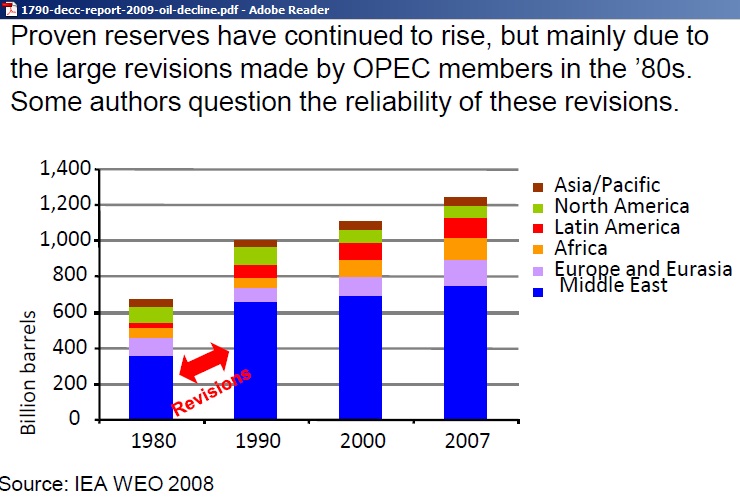
(1) OPEC’s overstated reserves (slide 10)
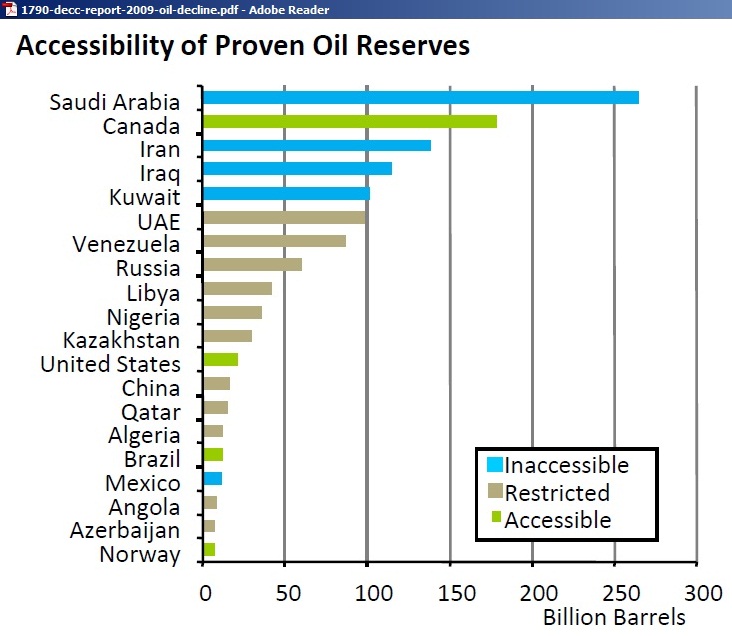
(2) Huge investments to develop remaining, inaccessible reserves (slide 11)

The IEA‟s WEO 2008 has noted that around $5 trillion (2007 $) of upstream oil investment is needed between 2007-2030. An annual $350 billion (2007 $) on average in both upstream oil and gas investment.
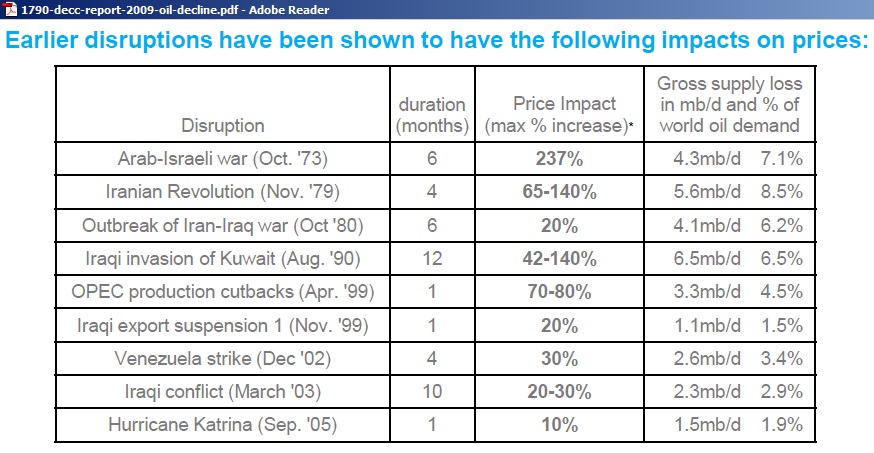
(3) Oil prices after earlier disruptions to oil supplies (slide 15)
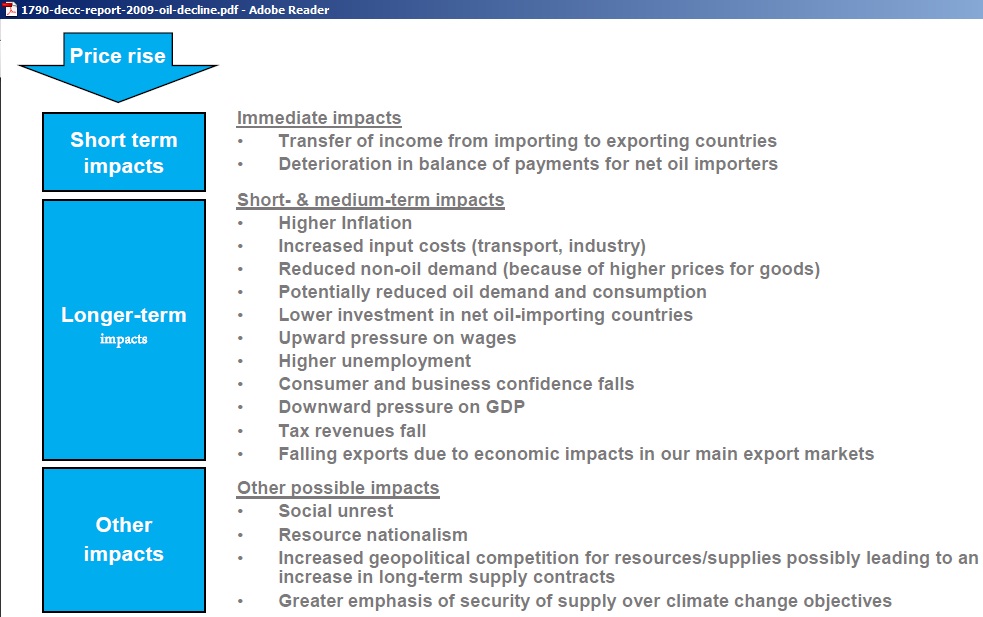
(4) Impacts of oil price rises (slide 16)
(5) Alternatives to oil (slide 21)

(6) Other Transport Alternatives (slide 22)

(7) Very early peak scenario (slide 25)

(8) Conclusions (slide 34)

Let’s zoom in on the box marked in red:

Given the uncertainties around the timing of peak oil and its implications for the UK, there are no obvious additional policies the UK government should pursue to minimise the likelihood of a ‘peak oil’ scenario and to be prepared to mitigate its impacts in addition to those already in place.

•While there may be policies that the UK government could put in place, in addition to those above, in order to make the UK economy more robust and resilient to peak oil, it is unlikely that the UK Government can unilaterally influence the global consequences of any peak.

Clearly, this violates the principles of prudent governance.

Key data & graphs

  • Net oil importers
  • Oil Exports
  • Crude oil imports
  • Downloads
  • Latest Graphs
  • Oil price analysis
  • US drilling rig count
  • International drilling rig count
  • Australian fuel prices
  • Diary
  • International oil companies
  • US tight oil production
  • China peak oil
  • World liquids supply – demand balance
  • Tankers arriving and departing in Sydney
  • Australian oil and fuel imports

Latest posts

  • Asia Pacific peak oil update 2025, consumption 5x higher than production
  • Australian jet fuel stock floating offshore while fuel prices are flying away
  • Australian Diesel imports in August dropped from high in May
  • First early hot summer day in spring 2026 and power prices spike at a whopping AUD 23k per MWh
  • Energy Minister Bowen firm in refusing Russian fuel imports but keeps options open for diesel imports from Russian dependent India
  • Australian Energy Minister Bowen downplays diesel supply risk after Saudi Arabia visit

Archives

©2026 Crude Oil Peak | Design: Newspaperly WordPress Theme