Coming back to the 2019 Liquid Security Review
https://www.environment.gov.au/energy/liquid-fuel-security-review-consultation
Figures 9-11 in part 1 show how dependent Australia has become on fuel imports from South Korea and Japan, even China. The Review is aware of this, as shown on this map:
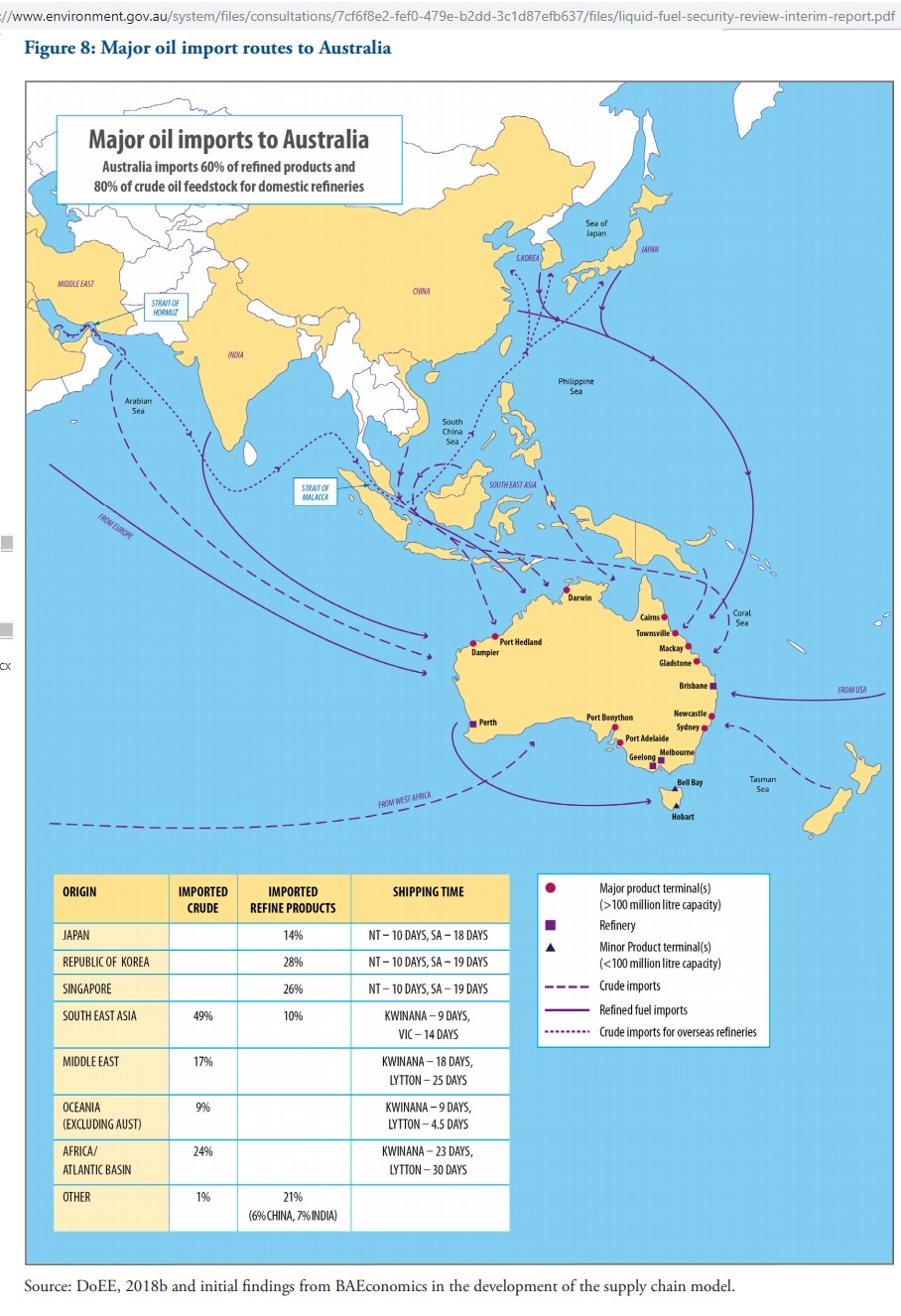 Fig 18: Australia’s oil supply routes
Note that any military confrontation in the South China Sea would necessitate the re-routing of crude supplies from the Middle East to South Korea and Japan via the Strait of Lombok (East of Bali) or – in the worst case – the Bass Strait as shown on this sketch map of the Centre of Strategic and International Studies (Washington):
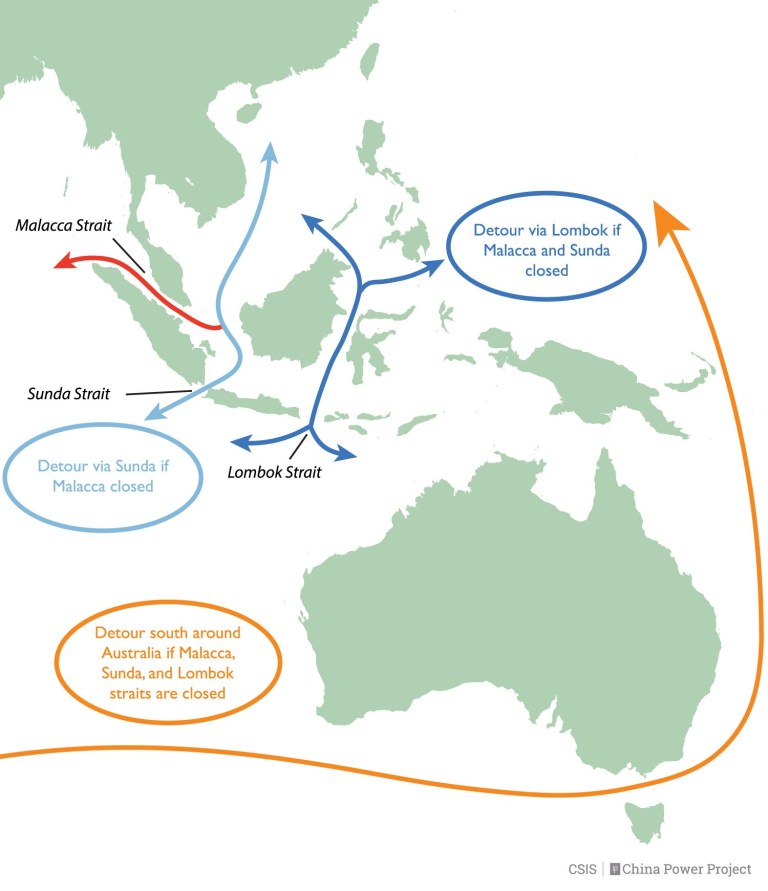 Fig 19: Alternative shipping routes for the Sunda and Malacca Straits
https://chinapower.csis.org/much-trade-transits-south-china-sea/
Similar detours will be necessary if there is a military confrontation in the Taiwan Strait or around the Korean peninsula. Although tensions have eased, the North Korean problem has not been solved. Particularly vulnerable is the refining complex in Ulsan because of its size.
Conflicts are more likely because Asian oil production has peaked and oil demand is growing:
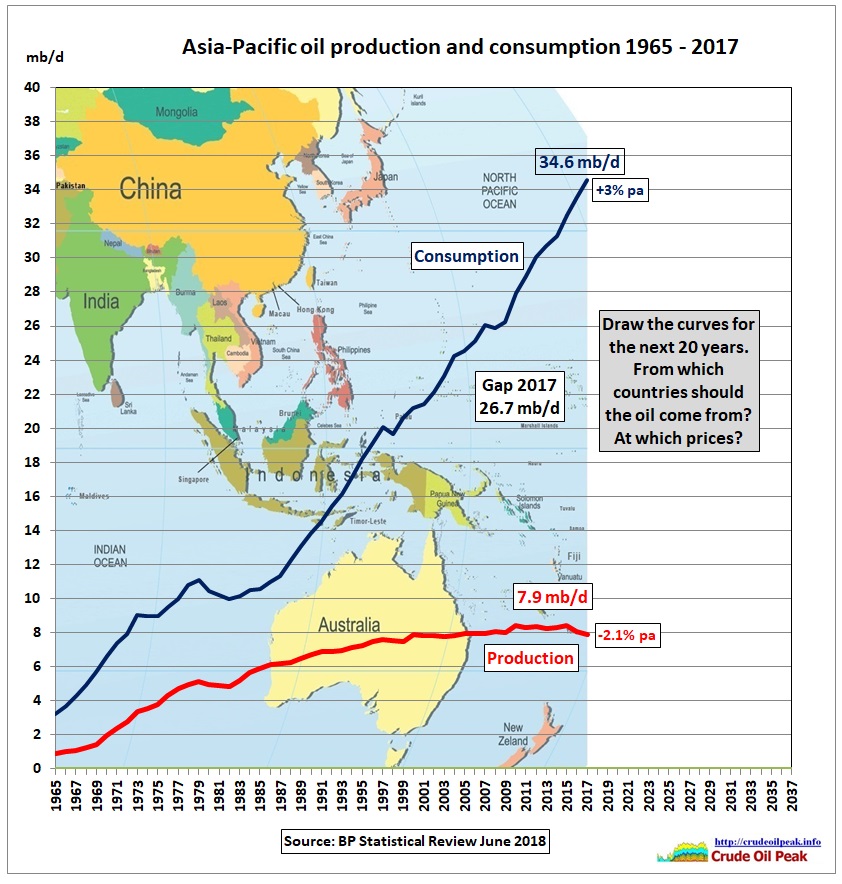
Fig 20: Homework for all State and Federal governments
More details are in following posts:
15/8/2018 Peak oil in the Asia Pacific (part 3)
http://crudeoilpeak.info/peak-oil-in-the-asia-pacific-part-3
12/8/2018 Peak oil in China and the Asia Pacific (part 2)
http://crudeoilpeak.info/peak-oil-in-china-and-the-asia-pacific-part-2
18/6/2018 Peak oil in Asia Pacific (part 1)
http://crudeoilpeak.info/peak-oil-in-asia-pacific-part-1
Asia imports around 16 mb/d from the Middle East, not sufficient for its growing demand. Increasing imports now also come from Africa, South and Central America and the Former Soviet Union (FSU)
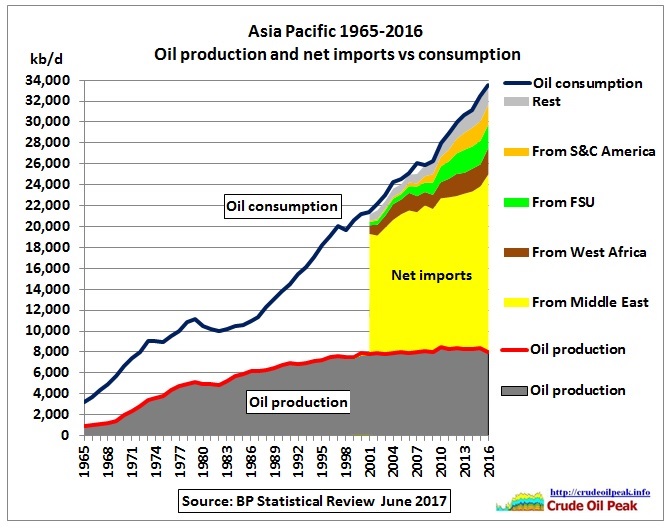 Fig 21: Asia’s net oil imports by region of origin
In all of this, the game changing event is peak oil in China:
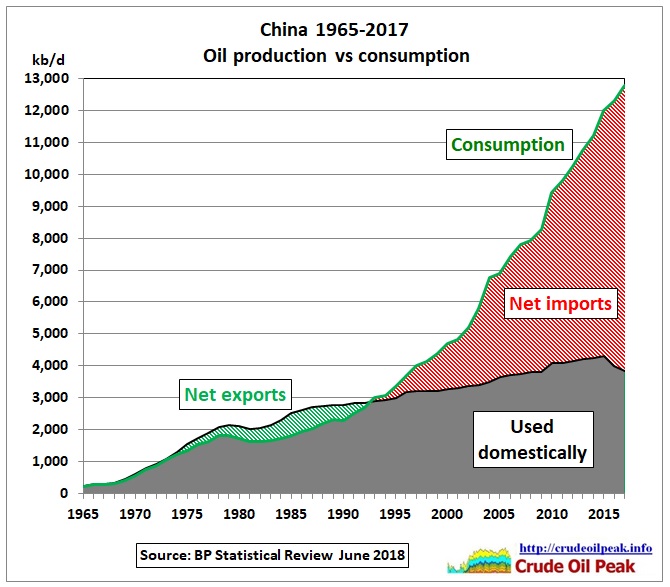 Fig 22: Peak oil in China 2015
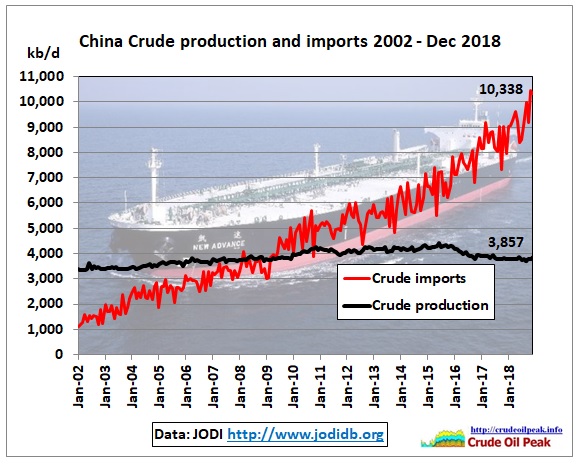 Fig 23: China’s crude imports increased by 640 kb/d pa since 2012
Peak oil in China in 2015 will permanently change oil flows in Asia
At this seminar in the Australian Institute of International Affairs (AIIA)
31 Oct 2017 Australia in Today’s World – some observations from former PM John Howard
https://aiiansw.tidyhq.com/public/schedule/events/16630-australia-in-today-s-world-some-observations-from-former-pm-john-howard
John spruiked China’s growth of 6% as beneficial for Australia. In Q&A I asked him where China will import its oil from in future in order to support that kind of growth. Answer: “I was never asked this question….form US shale oil I guess”. The following graph at the same scale as Fig 23 shows US crude oil exports and how tiny China’s share is.
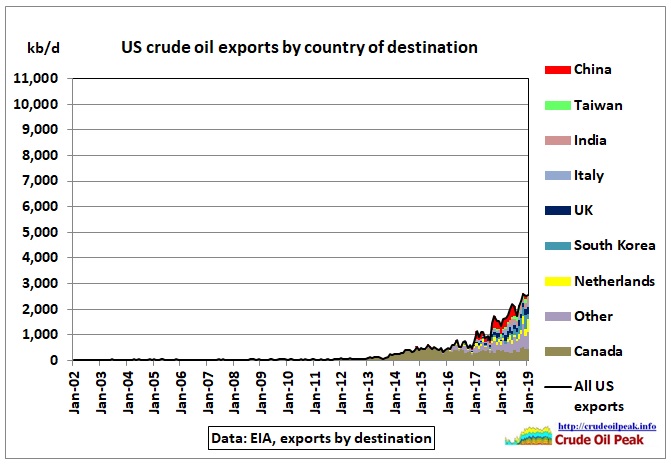 Fig 24: US crude oil exports
Moreover, US shale oil will peak due to very high depletion rates:
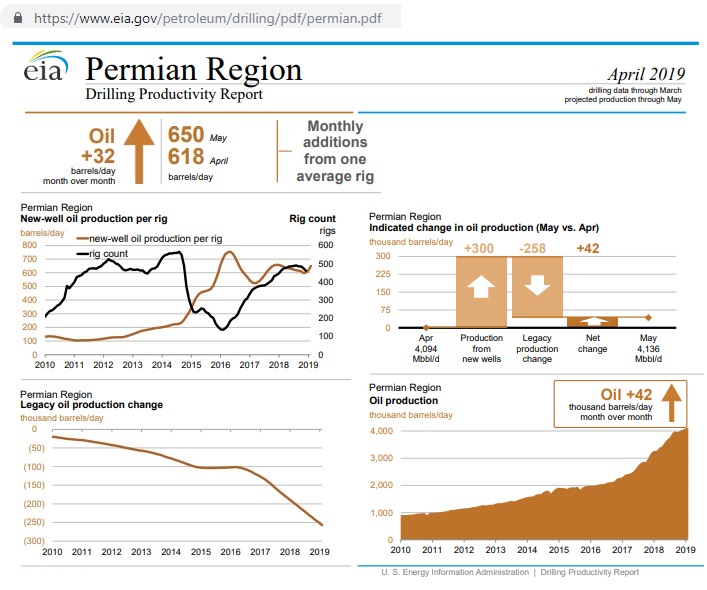 Fig 25: Permian drill-baby-drill
Imagine you have a business which produces 300 units of something every month. But because your product deteriorates very quickly you lose 258 units in the same period, leaving you with a net production of 42 units or just 14% of your production capacity.
The Silk Road Project
The Maritime Silk Route is to be seen as securing China’s oil import routes through the South China Sea and the Indian Ocean. The map below is from the Congressional Research Service (CRS) report “China-India Great Power Competition in the Indian Ocean Region: Issues for Congress”, April 2018.
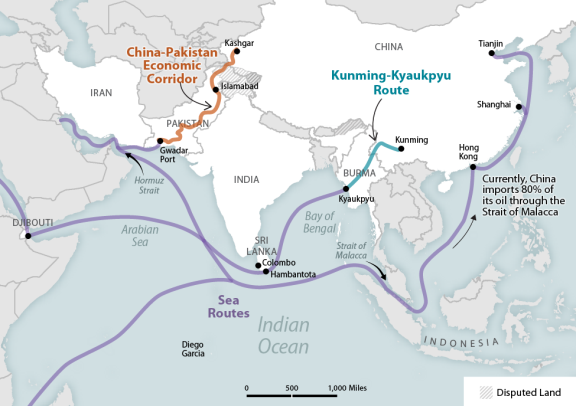 Fig 26: China’s oil supply routes (CRS)
https://www.everycrsreport.com/reports/R45194.html
The Australian Liquid Security Review identified following oil supply interruption scenarios (p 41):
1) Australia does not receive any imports of liquid fuel (crude and refined) for an extended period of time
2) large-scale regional conflict in the Middle East
3) a reduction in supply of liquid fuel (mainly refined product) from North-East Asia
4) major shipping lane closure
5) a closure of all Australian refineries
6) an outage at an Australian refinery
7) an outage at a major Australian terminal
8) grounding of a trucking fleet that transports liquid fuel around Australia
9) a sudden increase in Australian demand for liquid fuel
The Review considers (1) to be extremely unlikely. The Liquid Fuel Emergency Act 1984 (LFE) would be enacted with the government introducing rationing and allocating fuel for critical uses for which – the Review claims – stocks are sufficient for 3 months. Consultation with these critical users would take 1-3 weeks.
The Review also assumes that all scenarios will ultimately result in supplies returning to normal after some time:
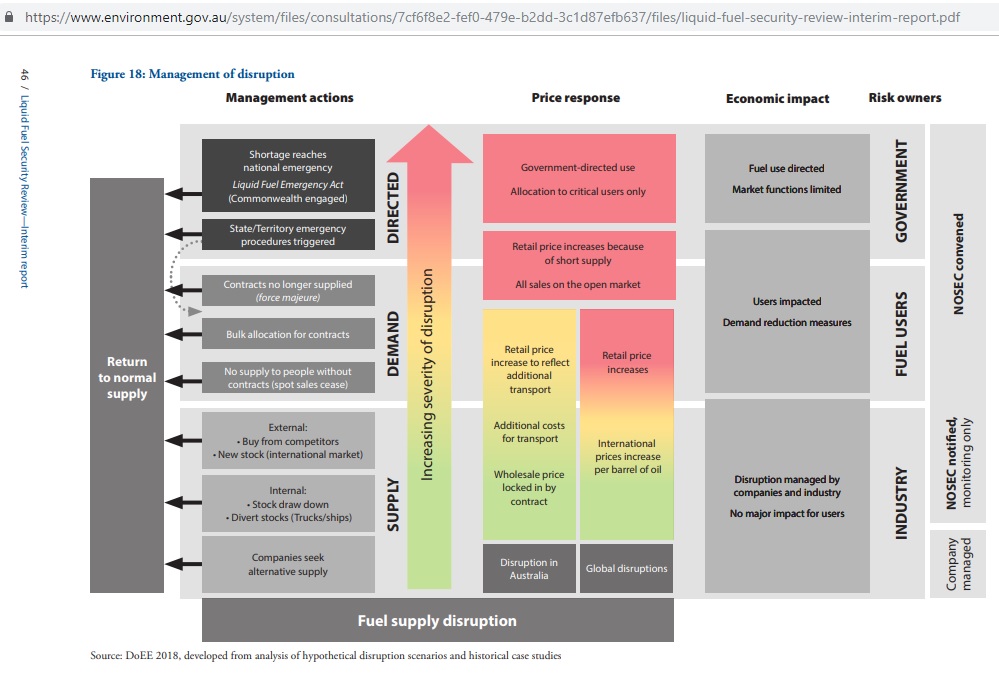 Fig 27: Management of disruptions as seen by the Review
That of course is an untested assumption because the Review does not want to look at peak oil in Asia. This peak alone can cause an oil crisis in itself or exacerbate other geo-political issues, quite likely at an inconvenient time. Peak oil in Asia is a worrisome pre-existing condition during the next oil crisis even if this should not directly originate in Asia.
Although a fuel security paper is not an energy white paper, the Review should have at least identified this problem.
Instead, we find this rather naïve sentence on page 42:
“Countries like Saudi Arabia, Iraq and Russia are large oil exporters dependent on the revenue for their economies; therefore, it is not in their interest to cut supply. Equally, there are 27 OECD countries, plus China and India, that are net importers of oil and that reliably maintain global demand. These mutual interests create incentives to reduce the threat of major, disruptive incidents and promote a functioning oil market.”
And on page 47:
“If there is a physical disruption to international supply, such as a blockade of a key shipping lane, companies would seek supply from unaffected regions. The number of countries Australia sources from helps to manage this risk to some extent. For example, Australia sources around 29 per cent of its crude oil and refined product from North-East Asia in 2017–18, including the Republic of Korea, Japan, China and Taiwan. If a regional conflict reduced supply from this region, supply would increase from India, Malaysia, the Middle East, Europe or the US. These alternative supplies could take up to five weeks to arrive in Australia.”
Well, Australia does not import any crude oil from North East Asia and the percentages of refined product imports are:
Diesel: 52% (China, Japan, South Korea)
Petrol: 34% (Japan, South Korea)
Jet fuel: 64% (China, Japan, South Korea)
It seems that by including crude oil volumes a low 29% has been computed. If there were a regional conflict like in the South China Sea, the whole Asian oil market – including Malaysia and India – would be in turmoil as all of Australia’s neighbours would also be seeking alternative supplies at the same time.
Imagine also that – just as an example with an arbitrary number – 3 mb/d of crude oil could no longer reach South Korea and/or Japan. Where would that crude go and to which refineries? Would there be sufficient spare capacity in these refineries and would they get the right blends to continue their efficient operation? Would their output be physically available as alternative supplies to Australia?
What other factors would be at play like the exchange rate of the Australian dollar, the availability and size of tankers, competition from other Asian countries etc.?
Conclusion:
It appears the scenarios have not been really thought through. It seems that arguments are laid out in such a way that the desired outcome will be that oil supplies get back to normal after some time, due to the cleverness of the global market. But what if they don’t?
Related link:
29/4/2019
Australian fuel security review ignores peak oil in China 2015 (part 1)
http://crudeoilpeak.info/australian-fuel-security-review-ignores-peak-oil-in-china-2015-part-1
In part 3 we look at how Australia has made herself unnecessarily dependent on oil