Summary
1) Fuel supply Update
1.1) Stock in days Way below IEA requirement
1.2) Stock in ML Onshore diesel stock close to MSO
2) Ships on the way Smaller Cargos
3) Forward orders Still not a full reporting
4) Diesel supply risk Dislike of critique
5) Reduction in oil reserves Misrepresentation
6) Memory lane to reserve complacency Started under Rudd
7) Visit to Reliance refinery in India No deal, only engagement
8) Visit in Saudi Arabia No lessons learned
9) Analyst from Kpler on Hormuz tolls Unsustainable US escorts
Press conference, Fairfield West, NSW
3 October 2026
https://minister.dcceew.gov.au/bowen/transcripts/press-conference-fairfield-west-nsw-5
1) Fuel supply Update
1.1) Stock in days
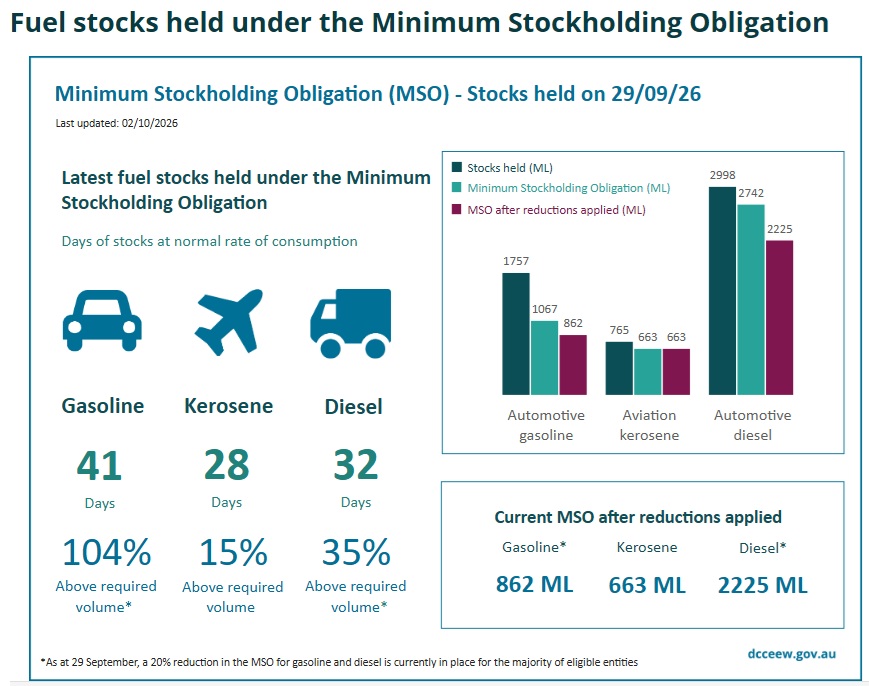
MINISTER BOWEN: 41 days worth of petrol, which is one day less than the update last week, 32 days worth o f diesel, which is the same as last week’s update, and 28 days worth of jet fuel, which is one day more than last week’s update
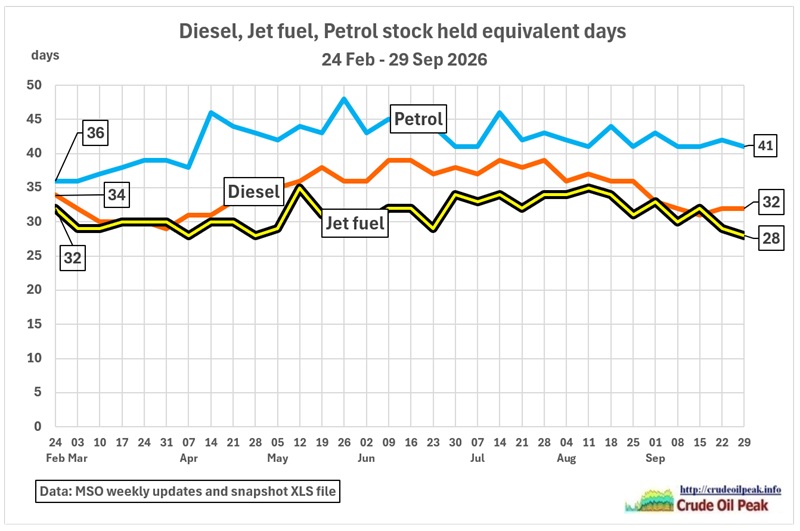 Fig 1: Fuel stock in days
Comment: No, Jet fuel on 29th September was 1 day LESS than on 22nd September. But that is a minor detail. What is much more important is that Australia’s IEA net import coverage is non-compliant with the requirement as shown in this graph:
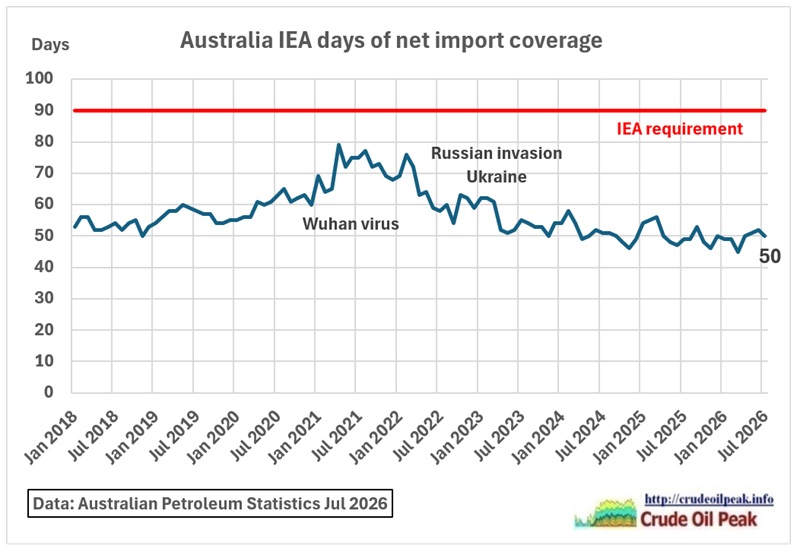 Fig 2: IEA days of net import coverage 2018-Jul 2026
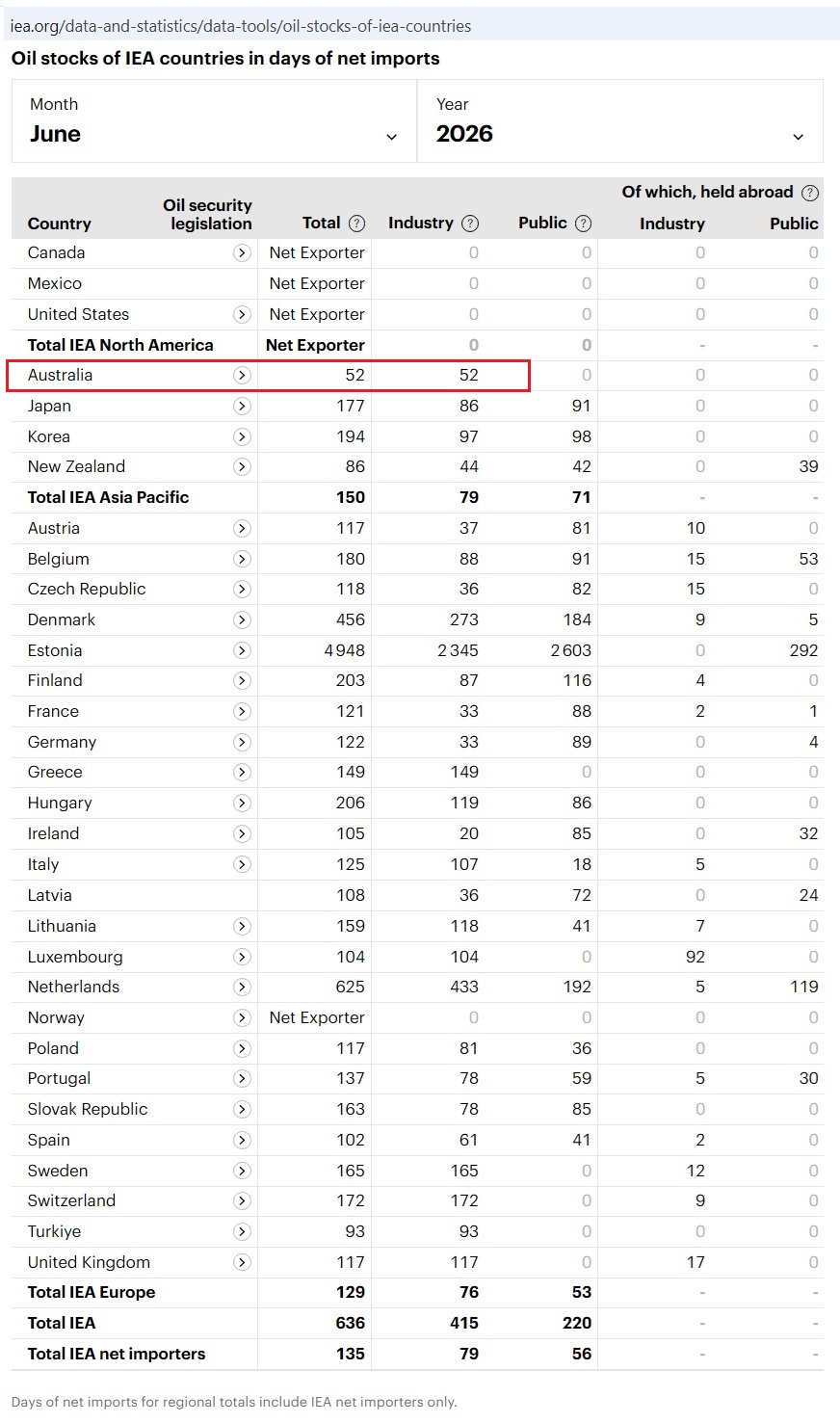 Fig 3: IEA table of OECD oil stock. Compare Australian with South Korean reserves
https://www.iea.org/data-and-statistics/data-tools/oil-stocks-of-iea-countries
Australia is in effect free-coasting on South Korea’s foresightedness and oil reserves. The recent policy adjustment:
Australia-Republic of Korea (ROK) joint statement on Energy Resource Security
30/4/2026
https://www.foreignminister.gov.au/minister/penny-wong/media-release/australia-republic-korea-rok-joint-statement-energy-resource-security
is a late re-branding of the existing energy trade into an oil-for-LNG deal which was not originally planned.
Australia was supposed to have increased its reserves starting in 2016 but little progress was made in 10 years.
Plan for return to compliance
In June 2016, the IEA Governing Board noted the Australian Government’s plan for returning to compliance with the 90 day stockholding obligation. In November 2017, Australia held oil stocks equivalent to 45 IEA days, increasing to an average of 63 IEA days over 2022.
https://www.dcceew.gov.au/energy/international-activity/iea-program-treaty
That increase was due to the travel restriction during Covid.
How far have we come with new storage facilities?
Strengthening Australia’s Fuel
Security and Resilience
Consultation Paper
DCCEEW
September 2026
Brownfield expansion of existing storage facilities or terminals by adding new infrastructure within the footprint of an existing operational site.
https://storage.googleapis.com/files-au-climate/climate-au/p/prj3e13a2c1e43cda2fec8ee/page/Strengthening_Australias_fuel_security_and_resilience_consultation_paper_2026.pdf
Has the NSW State government made any proposals to approve an increase in storage capacity at Clyde? How will that fit with their plans for 10,000 new homes along Grand Avenue, the exit route for all diesel tanker trucks to Sydney’s West?
https://www.planning.nsw.gov.au/plans-in-nsw/priority-growth-areas-and-precincts/camellia-rosehill
It will be very difficult if not impossible to make good the oil-illiterate decisions which started in 2008 (oils shock year!) with the closure of the Sandown goods line for tanker trains, made worse by the access of light rail to a stabling yard.
The NSW government’s mindset is on perpetual immigration and the apartment towers needed, not fuel resilience.
In the previous post a photo was shown of the last tanker train to Canberra in October 2009.
1.2) Stock in ML
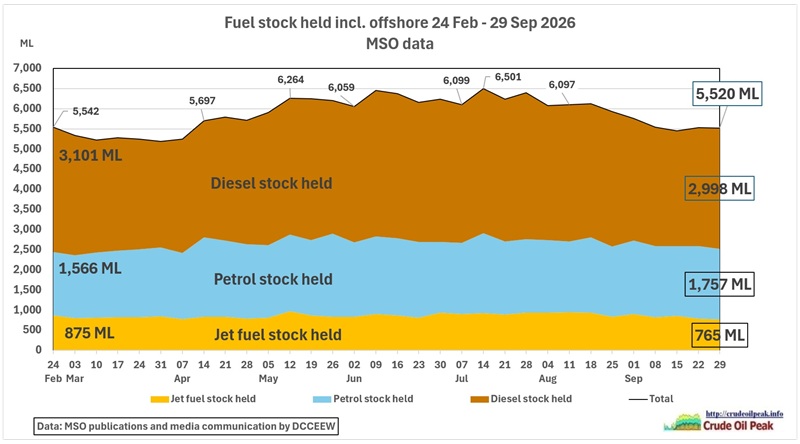 Fig 4: Stock level back to end February
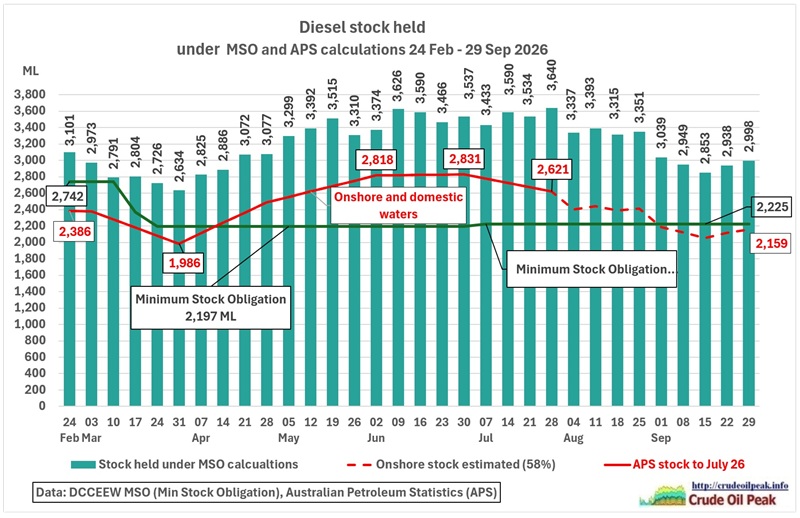 Fig 5: Diesel stock peaked June – July
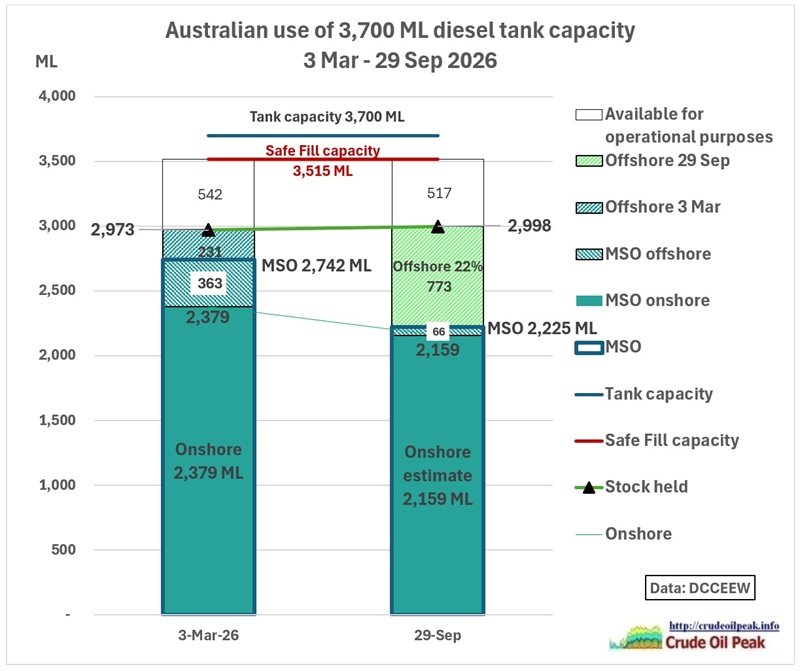 Fig 6: Onshore diesel stock close to MSO
2) Ships on the way
MINISTER BOWEN: We have 50 ships on their way to Australia with fuel supplies. That is five more than last week’s update, and the highest it’s been for quite a few weeks
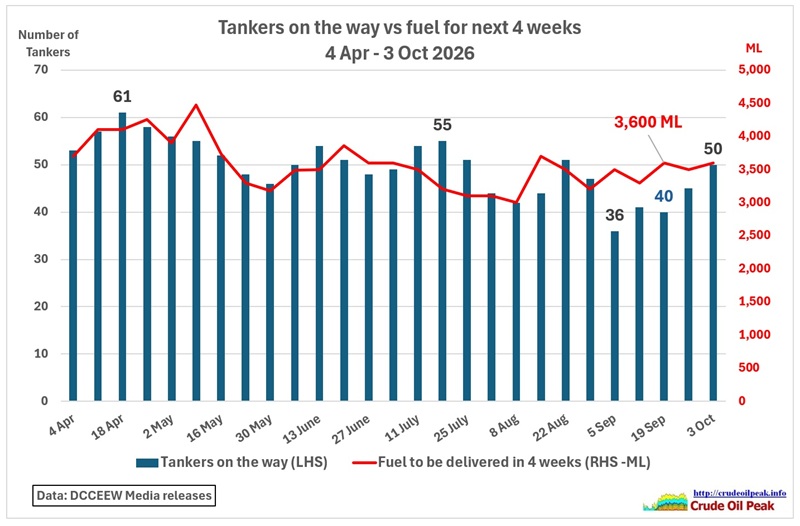 Fig 8: Number of ships up but same volume
Comment: Yes, but forward orders in these last weeks have been around 3,500 ML, not changing much. The Minister did not give any explanation. It seems more ships are needed for the same volume of planned deliveries with smaller cargos. This suggests it’s getting harder (and more costly) to supply fuels. More spot market shipments?
3) Forward orders
MINISTER BOWEN: We also have 3.6 billion litres of fuel locked in, contracted to be delivered over the next four weeks. and included in that is 2 billion litres of diesel, which is the highest number for forward orders of diesel since May. [which was 2,300]
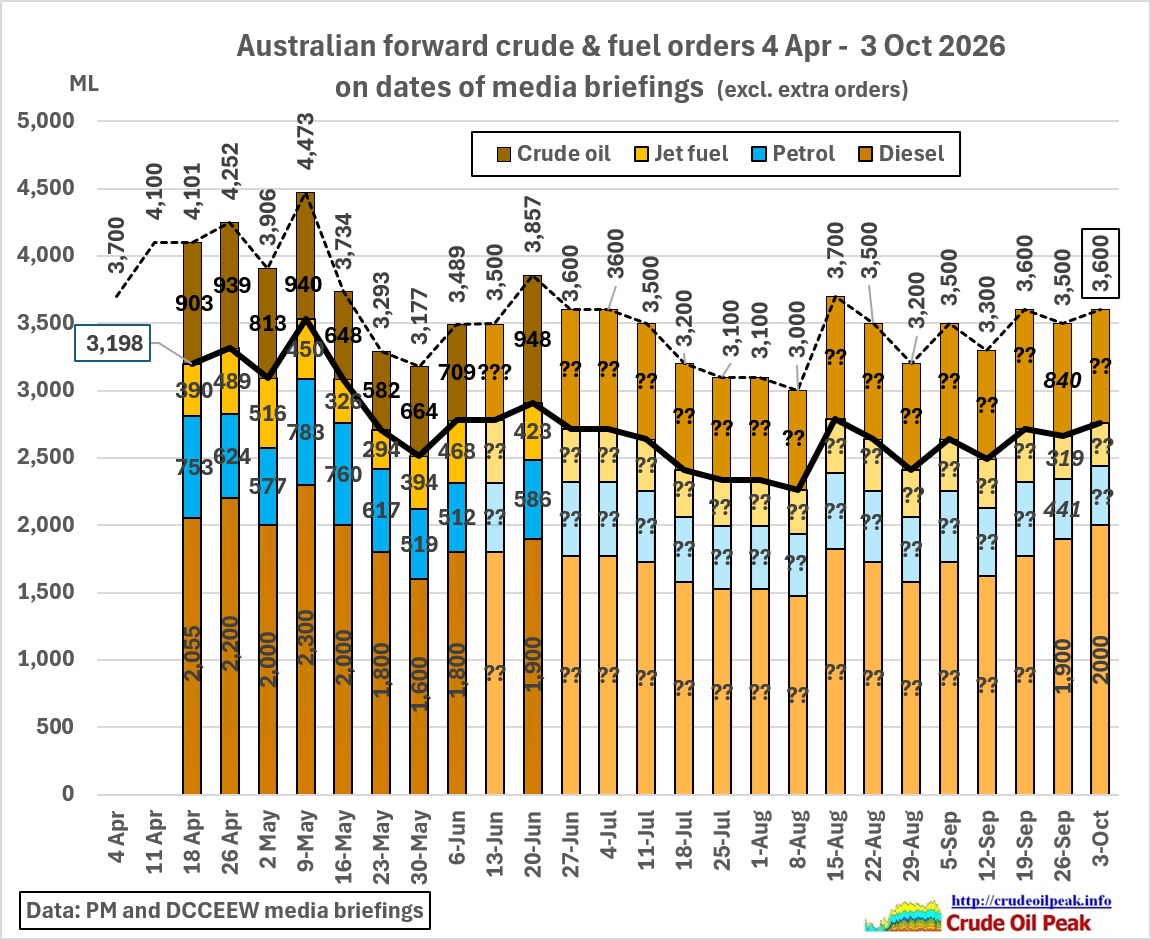 Fig 9: No details on crude oil, petrol and jet fuel
It is an improvement that after months of silence on future diesel supplies, we now got another number on diesel: 2,000 ML. But still no full picture on deliveries of crude oil, jet-fuel and petrol.
4) Diesel supply risk
JOURNALIST: Minister Tim Lester here. Just on the question if the decision that the G7 on release of fuel today. Saul Kavonic suggested some weeks ago that if America did go ahead with any sort of restrictions on diesel, that could quite easily drive Australia into fuel rationing, not because we directly get fuel from America, but because it would bid up fuel around the world such that it would affect us. Do you accept that there is that risk, if America ever does go down that path?
(G7 = Canada, France, Germany, Italy, Japan, the United Kingdom, and the United States)
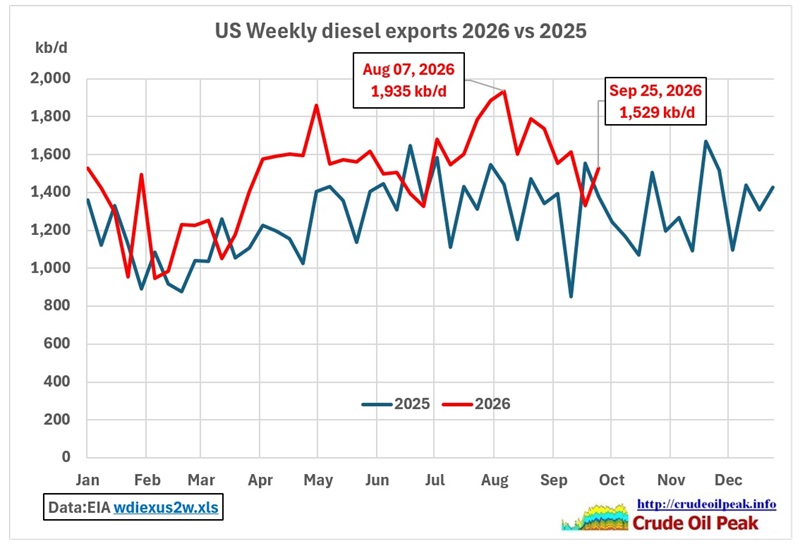 Fig 10: US diesel exports 400 kb/d lower end September compared to August
MINISTER BOWEN: No. No, I don’t. As I said, it would be a backward step to have export restrictions for the United States. As I think I said to you last week, Tim, that would be a negative development. But not one- I mean, people can predict rationing, although- like, Mister Kavonic has predicted rationing several times. I think he said it was inevitable after Easter. He’s been wrong about these issues. Frankly, a calm, cool approach will see Australia through, and predictions of rationing are unhelpful, and irresponsible, and inaccurate.
The question was about a diesel supply risk to Australia IF the US put a ban on diesel exports. The context mentioned is the G7 decision to release 100 mb of diesel and crude oil from reserves. The risk was obviously high enough for European countries to take action in response to Trump’s announcement of an export ban which was promptly cancelled at the G7 meeting.
Instead of acknowledging the actual situation the Minister immediately went into Parliamentary question time mode: rejecting assumptions, attacking the negative opposition (Mister Kavonic) and praising its own calm approach.
The most concerning in the Minister’s answer is that warnings about fuel supplies are “unhelpful, and irresponsible”. It is the other way around. Prudent governance is asked for. It is easy to ridicule inaccurate predictions in hindsight.
The Kavonic warning can be found in this link:
24 Sep 2026
https://www.abc.net.au/news/2026-09-24/diesel-rationing-possible-within-weeks-if-us-goes-ahead-with-ban/107189268\
The warning is still valid. Trump could change his mind and revisit the diesel export ban if:
– the G7 release does not lower US diesel prices
– voter pressure forces him to take action
– Iran escalates attacks on tankers in the Strait of Hormuz
– China continues suspension of fuel exports
And apparently the Minister does not look at the UKMTO weekly reports
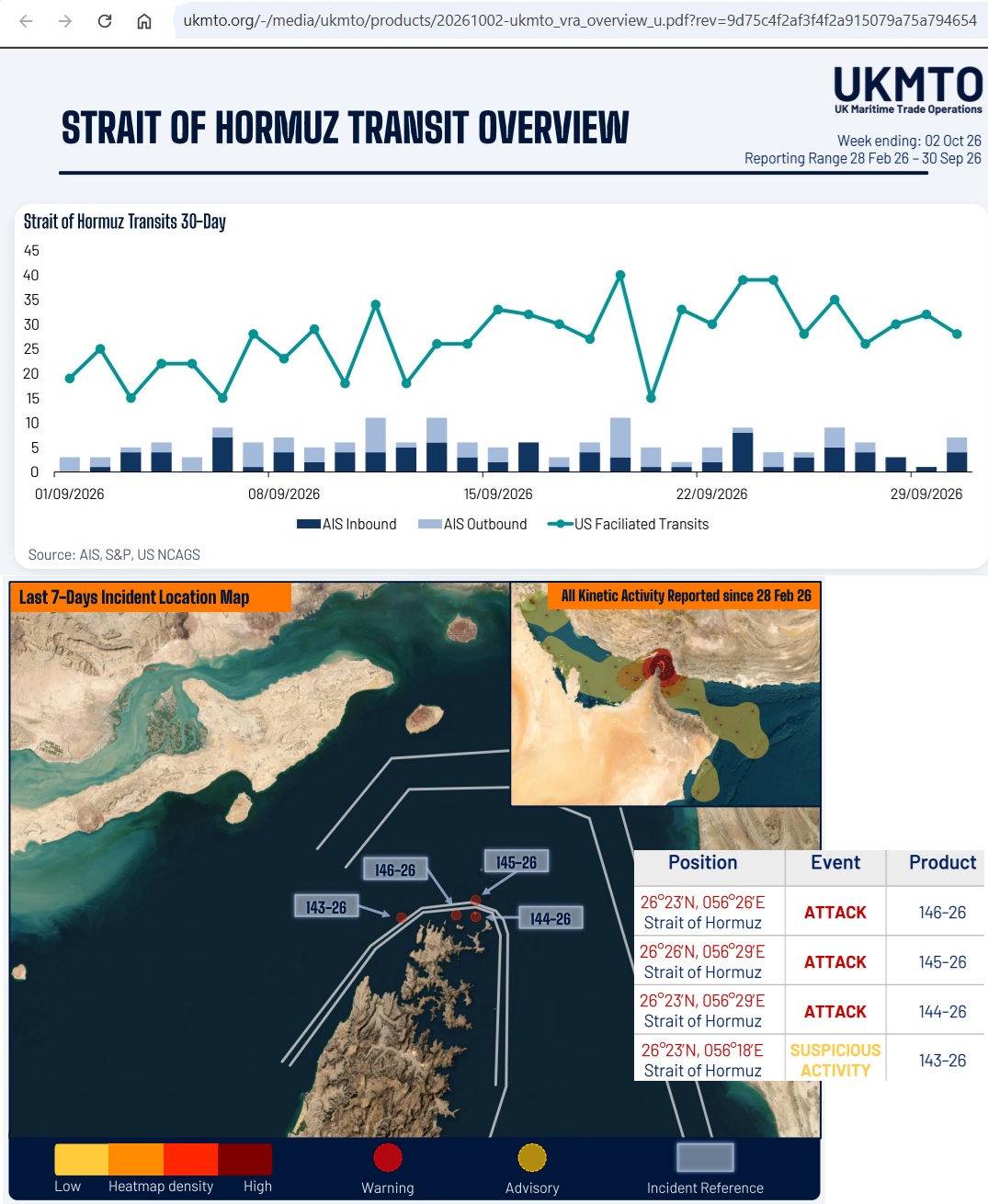 Fig 11: SoH incident report 30 Sep 26
https://www.ukmto.org/-/media/ukmto/products/20261002-ukmto_vra_overview_u.pdf?rev=9d75c4f2af3f4f2a915079a75a794654
5) Reduction in oil reserves
MINISTER BOWEN: …we reduced our minimum stock obligation requirements earlier in this crisis ….and also that it is, in effect, a reduction of our reserves…..keeping our minimum stock obligation 20 per cent lower than it otherwise would be is, in effect, a release of reserves, and that will continue until January.
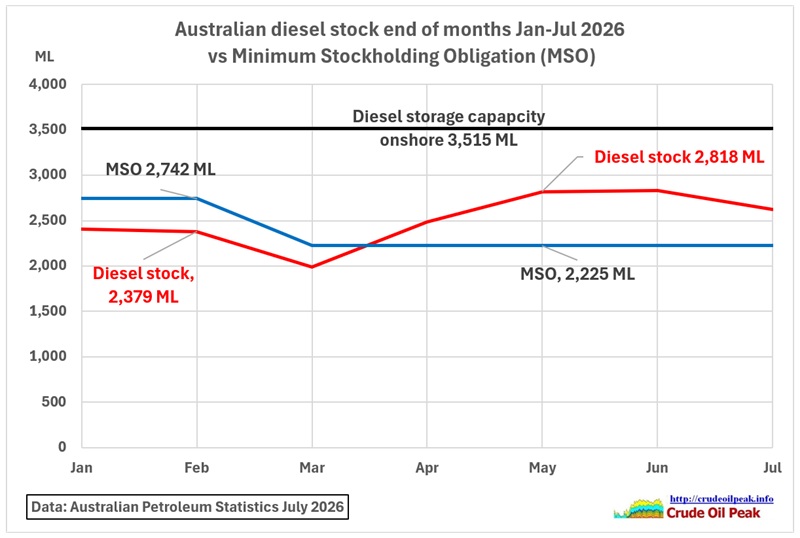 Fig 12 : Diesel stock (APS) vs Minimum Stockholding obligation
When the Minimum Stock Obligation for diesel was reduced from 2,742 ML to 2,225 ML (by 19%) on 13 March 26 there was not much diesel to be released as stocks were lower than the MSO. https://minister.dcceew.gov.au/bowen/transcripts/press-conference-sydney-nsw-6
In fact, the lowering was done to adjust the MSO to the reality of these low stocks so the fuel suppliers came into compliance. Unbelievable how this is now presented. Stock went up slightly above the previous MSO level (but only for 2 months) because imports increased.
6) Memory lane to reserve complacency under Rudd
In relation to who failed to establish a proper oil reserve in a previous oil crisis let’s go down the memory lane to the oil price shock year 2008 when Bowen was Assistant Treasurer and Minister for Competition Policy and Consumer Affairs in the Rudd government.
23 June 2008
Just over six months from the election, the Rudd Government is caught between the need to do something about climate change and the rocketing cost of foreign oil. The Opposition has accused the Government of failing to do what it promised and take a blowtorch to oil-producing nations at a weekend meeting of OPEC.
https://www.abc.net.au/listen/programs/pm/rudd-under-pressure-to-ease-oil-crisis/2482368
Here is the Parliamentary evidence on the same day
QUESTIONS WITHOUT NOTICE Fuel Prices – Oil Conference
Mr TREVOR (2.09 pm)—My question is to the Prime Minister. Will the Prime Minister update the House on the outcomes of the international oil summit in Jeddah over the weekend?
Mr RUDD—We believe in making a positive contribution to dealing with what is the third-greatest oil shock we have seen in modern history and certainly the greatest shock since the 1970s. Governments around the world are struggling with the same challenge, which is why the Kingdom of Saudi Arabia, supported by the government of the United Kingdom and other participating states, met in Jeddah over the weekend to discuss a range of matters on both the global supply side and the global demand side. Opening the conference, King Abdullah confirmed that Saudi Arabia had increased its daily production from nine million barrels to 9.7 million barrels. This increase in supply is an important step to put downward pressure on oil prices, but this will be a longterm process….
On the domestic front, it is important to invest appropriately in an alternative fuel strategy and a national energy security strategy for Australia—of a type we do not have and which the government did not inherit when it assumed office only six months ago. It is important that we invest in the future of fuel-efficient cars and public transport.
It is also important that we deliver the measures contained in the budget to assist the family budget. A typical young family of mum, dad and two kids is, as a result of the budget measures, $52 a week better off, but, as a consequence of one of the four policies advocated by those opposite on the question of the price of petrol, that family would be $2.50 a week better off. The contrast, I think, is clear.
https://parlinfo.aph.gov.au/parlInfo/download/chamber/hansardr/2008-06-23/toc_pdf/5926-6.pdf;fileType=application%2Fpdf
7) Visit to Reliance refinery in India
JOURNALIST: And you did mention briefly your- you returned recently from talks with your counterparts in India and Saudi Arabia. What did that visit achieve?
MINISTER BOWEN: Well, it was good to engage with Reliance. As I said, the owner of the largest refinery in the world, which I visited and saw firsthand in Jamnagar in India….. And also, we agreed to work further with India and with Reliance on other measures going forward, which we’ll continue to engage with them on about ensuring our links and lines of communication are open in relation to the ongoing international circumstances.
Engagement. No deal. From the Reliance annual report 2025/26
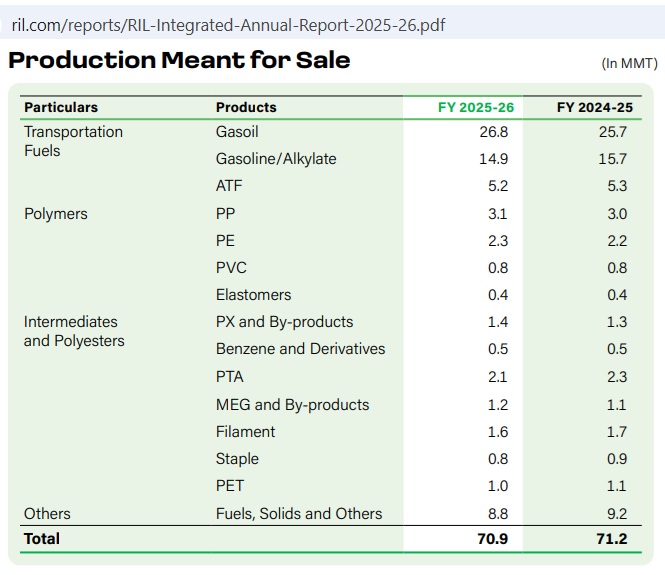 Fig 13: Reliance Gasoil (diesel) production 26.8 MMT = 32,000 ML
India’s petroleum demand is experiencing sustained growth on the back of government infrastructure push for greenfield access-controlled highways, rising vehicle population, increased industry activity and passenger and freight travel on roads and airways. Total India petroleum product demand rose to 243 MMTPA up 1.7% on a Y-o-Y basis, led by transportation fuels.
https://www.ril.com/reports/RIL-Integrated-Annual-Report-2025-26.pdf
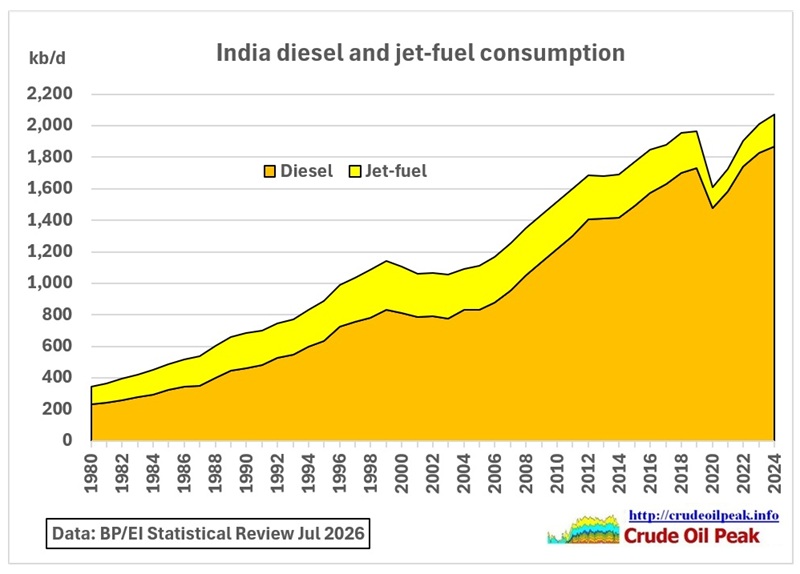 Fig 14: India’s diesel and jet fuel consumption up and up
And then the Minister thinks diesel exports will have any priority for the Indian government?
8) Visit in Saudi Arabia
MINISTER BOWEN: And also with Aramco and with Minister Abdulaziz. Prince Abdulaziz was able to brief me on the current situation in Saudi Arabia and the attacks that they’ve been receiving, the impacts on fuel supply. And I found those updates, which were- it was good to get them in person on site, in Saudi Arabia, much more direct than cables and other things. And I found that update encouraging.
Here is Bowen’s travel report by him:
https://www.linkedin.com/posts/chris-bowen-274565340_the-attacks-on-saudi-arabia-have-made-the-activity-7510593351478333441-qgB1
Comment: Of course, Bowen was assured of supplies to the global market. But the situation can change quickly:
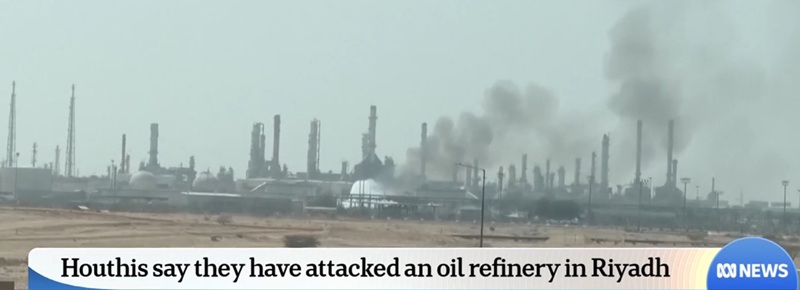 Fig 15: Only hours after the press conference reality changed again
https://www.aljazeera.com/news/2026/10/4/houthis-claim-strike-on-saudi-energy-facility-as-yemen-fighting-intensifies
Remember:
1/10/2019
The Attacks on Abqaiq and Peak Oil in Ghawar
http://crudeoilpeak.info/the-attacks-on-abqaiq-and-peak-oil-in-ghawar
9) Analyst from Kpler on unsustainability of US escorts
Michelle Brouhard from Kpler
Video: Hormuz, Diesel & the Return of the Geopolitical Risk Premium
Oct 3 2026
at 44 min
This is just my speculation. I suspect that the countries that are able to get their crude out are paying a run. And I suspect there is a toll that’s being paid which is giving these ships safe passage. I also suspect that these countries know that it is unsustainable from a perspective of a US escorting and also unsustainable from them paying Iran 10% of their cargo or 20% of their cargo. It is unsustainable to continue to pay a hefty fee to Iran and for the US government to be escorting these ships through and for this to carry on because it’s expensive for the US government. It’s expensive for the US taxpayer. It’s expensive for these countries that are trying to get their ships out. So, you’re starting to see what I would call like a race to get out as much as possible, as quickly as possible before the war restarts. And we’ve seen there was a Times article this morning that came out saying that Trump is talking about re-escalating the war again. And so, why not get as many ships as you can out of the Strait as quickly as possible? But this is not in my mind or in my view a sustainable way to keep oil flowing through the Strait. And there needs to be something that’s more sustainable that restores confidence in the Strait.
https://www.youtube.com/watch?v=v72t8SYw8z8
Here is the Time transcript:
1 Oct 2926
Time: Are you going to ramp up bombing after the midterms? There’s been reports of that.
Trump: Possible.
https://time.com/article/2026/10/01/donald-trump-2026-interview-transcript/
Conclusion:
The Minister’s dismissal of warnings on diesel supplies was premature and imprudent. His cherry picking has reached a critical level which puts the planning of unnecessary, large diesel consuming projects on risk.
Previous post
29/9/2026
Australia to expect less petrol and jet fuel deliveries in next 4 weeks as diesel economy guzzles along
https://crudeoilpeak.info/australia-to-expect-less-petrol-and-jet-fuel-deliveries-in-next-4-weeks-as-diesel-economy-guzzles-along
Further reading
Can the diesel and jet fuel shortage be solved?
30 Sep 2026 by Gail Tverberg
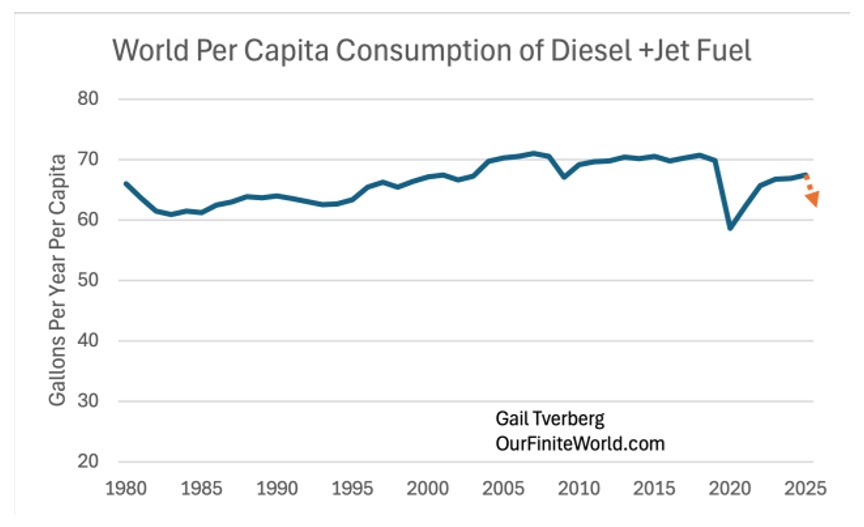 Fig 16: Per capita diesel consumption flat since conventional crude oil peak
https://ourfiniteworld.com/2026/09/30/can-the-diesel-and-jet-fuel-shortage-be-solved/