MSO update with data from 21 July 2026
Context
Hormuz tanker crossings slip to lowest in more than two months, data shows
24/7/26
Only one tanker crossed the Strait of Hormuz on July 23, compared with three the day earlier, data from analytics firm Kpler showed
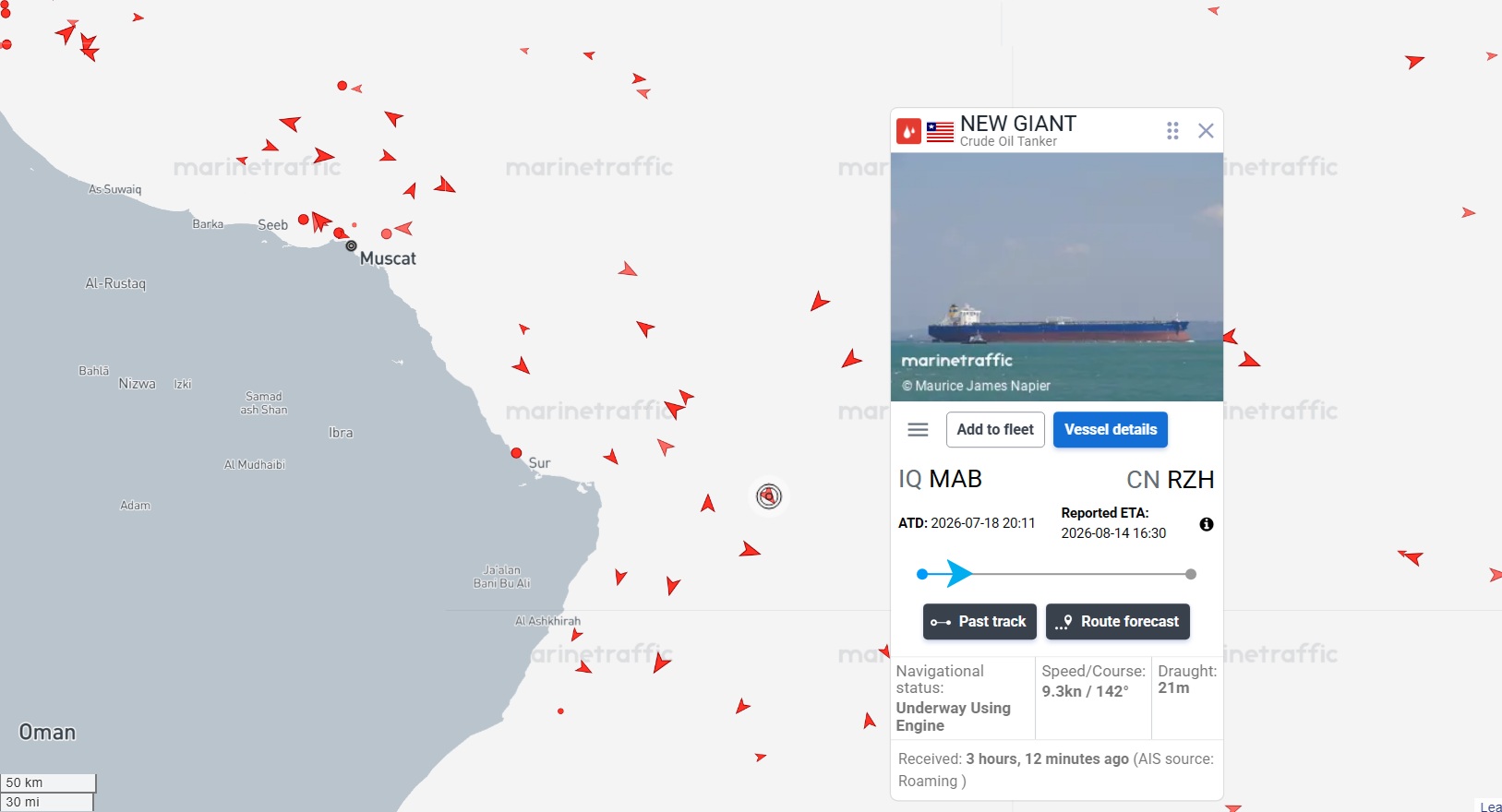
Very large crude carrier New Giant, loaded with 2 million barrels of Iraqi Basrah crude, exited the strait on Thursday and is due to arrive at China’s Rizhao port by mid-August.
 Separately, the clean tanker Torm Innovation – loaded with around 500,000 barrels of naphtha bound for Asia – has made a slight turn for the Suez Canal exit instead of a typical Bab el-Mandeb exit, Kpler and LSEG shiptracking data showed.
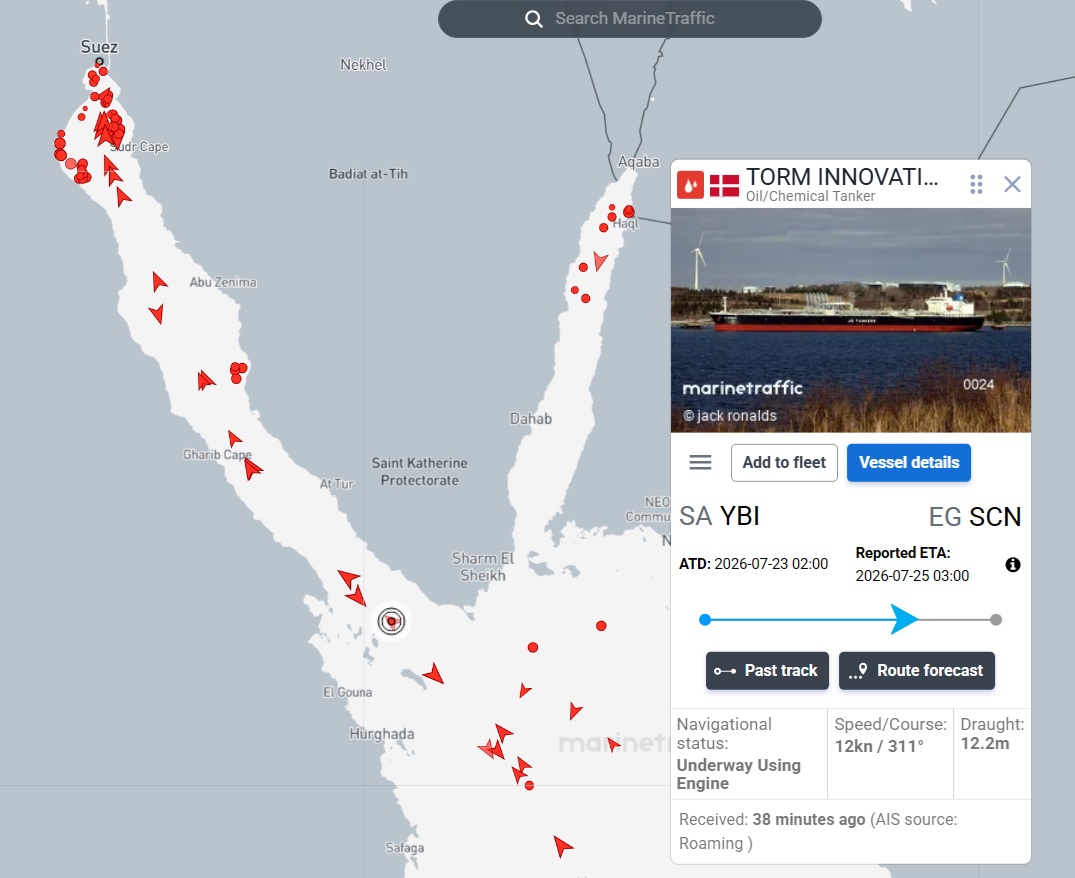
Houthis say they attacked two Saudi tankers; Saudi Arabia says one ablaze in Red Sea
23/7/26
https://www.reuters.com/world/middle-east/yemens-houthis-say-they-targeted-two-saudi-oil-tankers-2026-07-22/
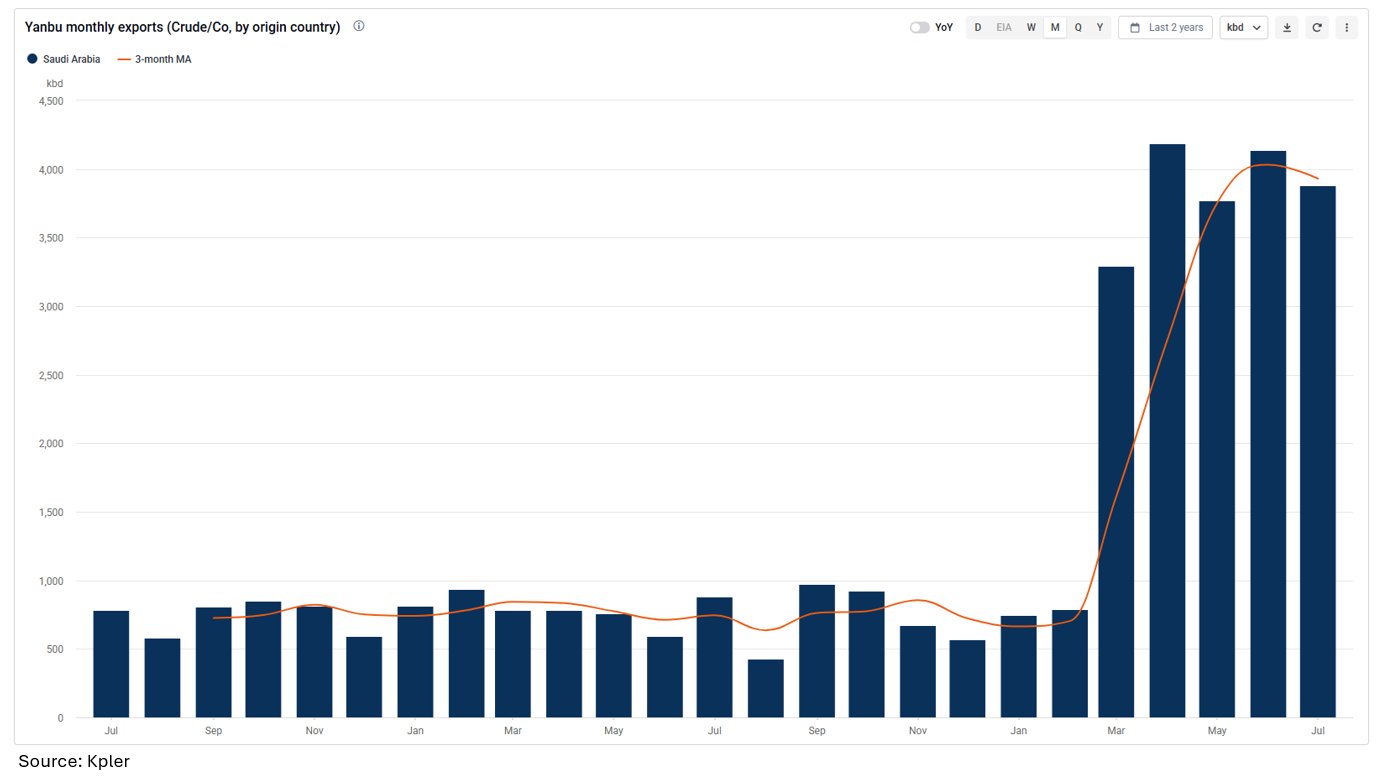 Saudi Yanbu crude exports Jul 25 – Jul 26. They will have to use the route Suez – Cape – Asia
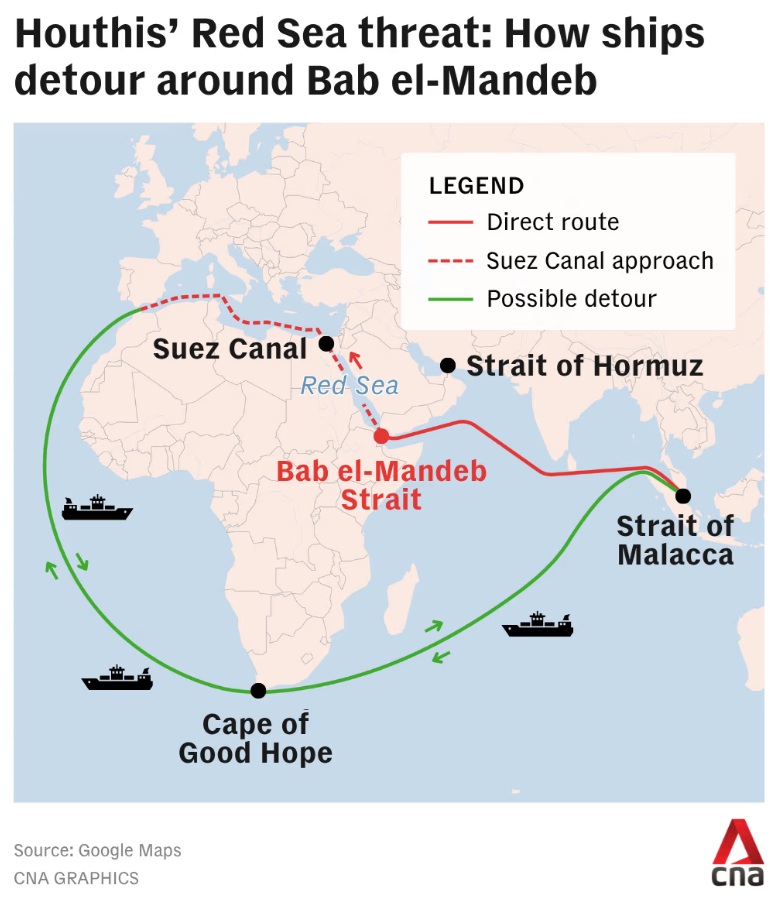 https://www.channelnewsasia.com/world/houthis-red-sea-threat-detour-shipping-cna-explains-6270411
Tankers using Suez are limited to 1 mb (compared to 2 mb of a VLCC). Trip takes 1 additional month. More costly and more tankers needed.
Australia depends on this longer supply chain
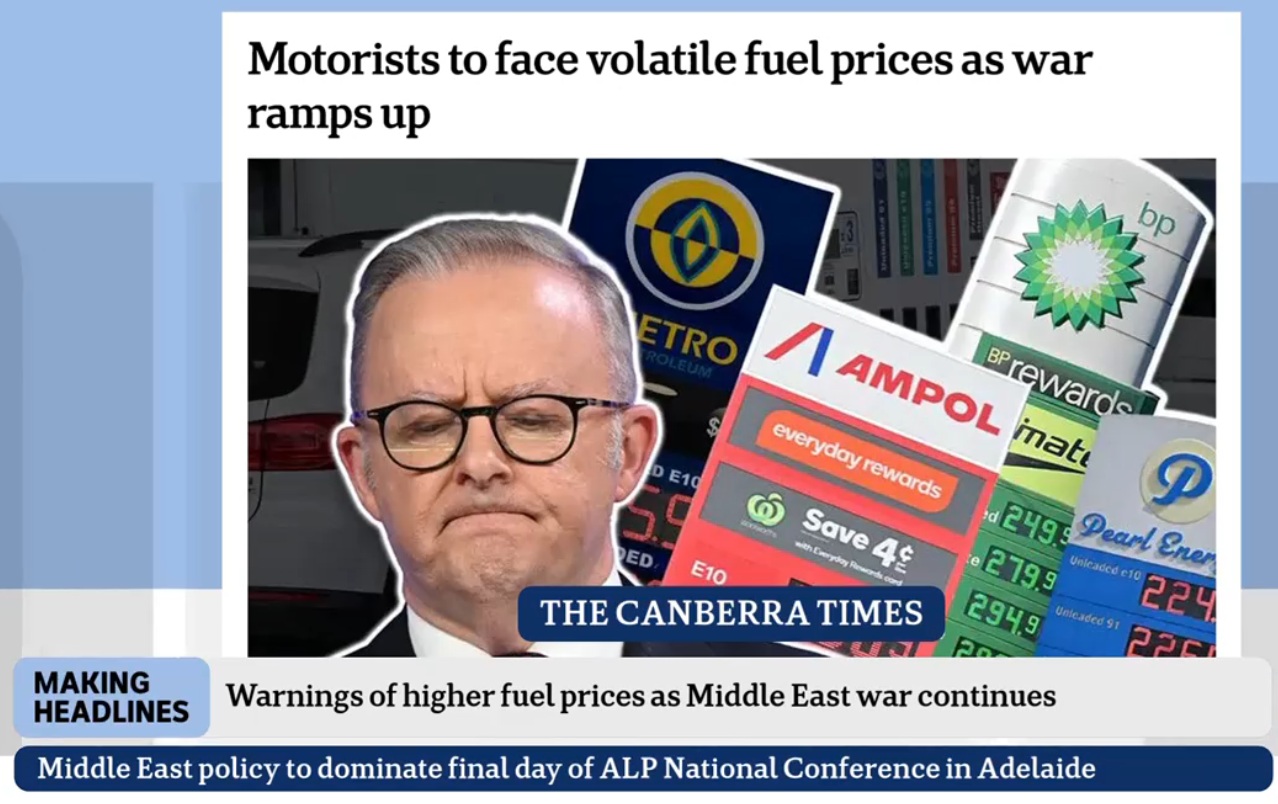 Saturday is the day for fuel supply updates. The ABC Breakfast show linked higher fuel prices with a discussion at the 3-day ALP conference about Middle East policy.
But that was it. The ALP conference got stuck with a debate on Israel and Palestine, not the worsening oil crisis.
In a separate door stop press conference at his electoral office the energy minister gave his fuel update but without much reference to the recent escalation in the Middle East:
Press conference, Fairfield West, New South Wales
25 July 2026
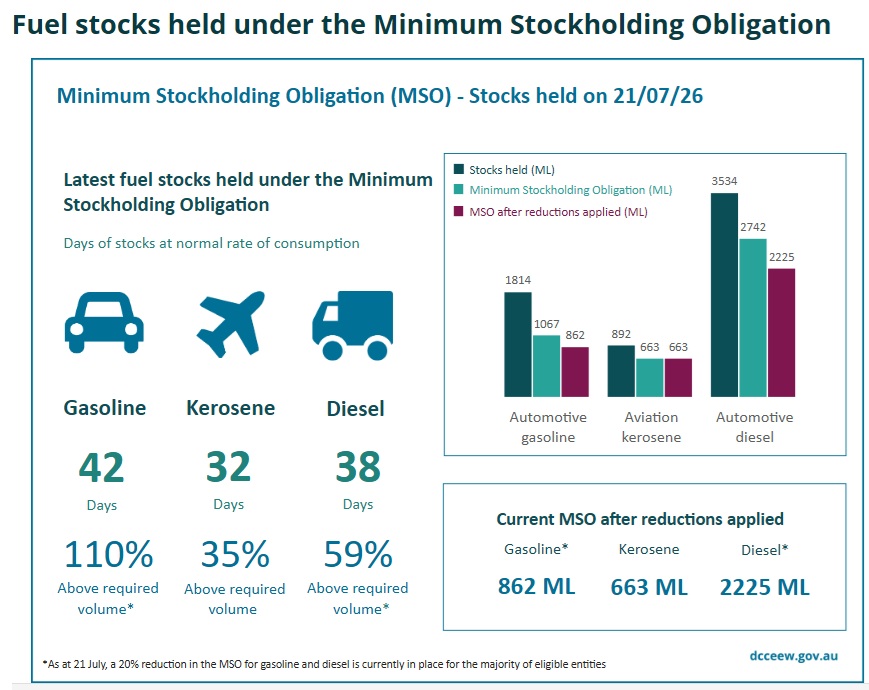
MINISTER FOR CLIMATE CHANGE AND ENERGY, CHRIS BOWEN: Obviously, the situation in the Middle East continues to be uncertain. But one thing Australians can be certain about is that our fuel supply continues to be solid and secure. And today’s Saturday update, I can tell you that we have 42 days’ worth of petrol. 38 days’ worth of diesel and 32 days’ worth of jet fuel. All of these figures are more than we had on the day Iran was first bombed on February 28th. In total, we have 6.2 billion litres of fuel on stock in Australia. That’s 15% more than we had on February 28th.
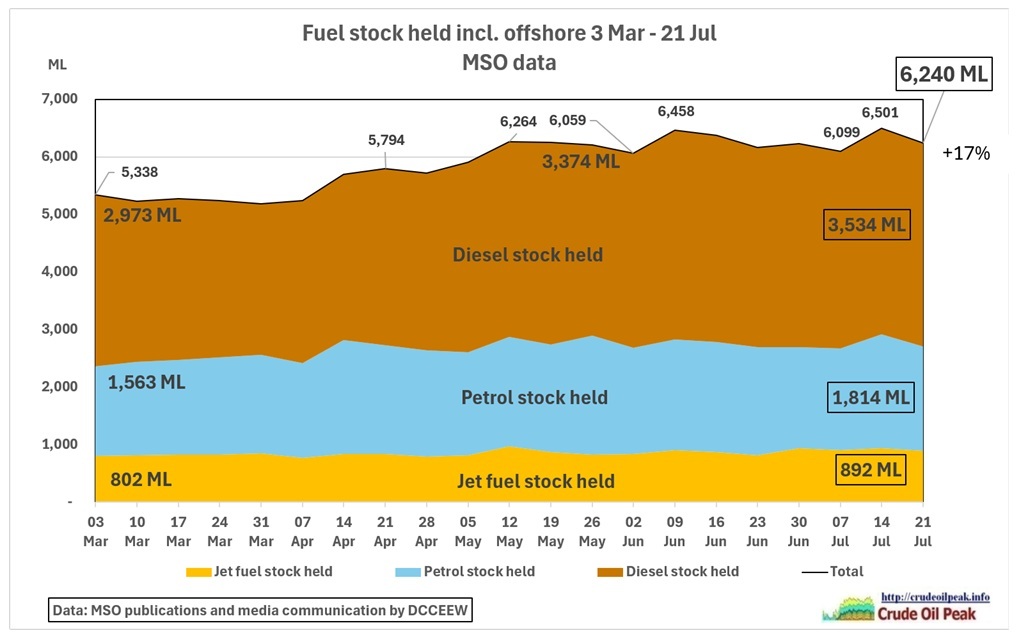 Fig 1: Stock held slightly down from last week, 3,534 ML diesel + 892 ML jet fuel + 1,814 ML petrol = 6,240 ML total fuels. We had >6,000 ML since May
…..We currently have 51 ships on the water on their way to Australia, …..
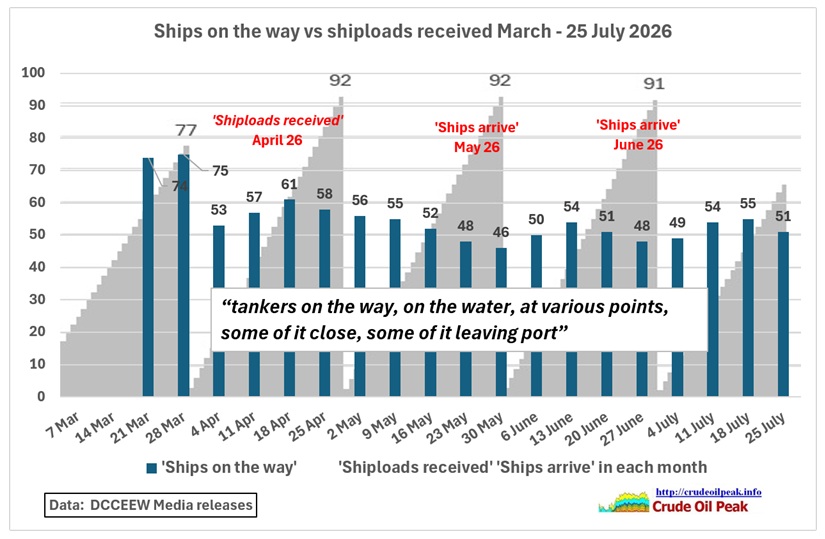 Fig 2: Tankers on the way vs cumulative arrivals in each month
….and we had 3.1 billion litres of fuel locked in to be delivered over the next 4 weeks……
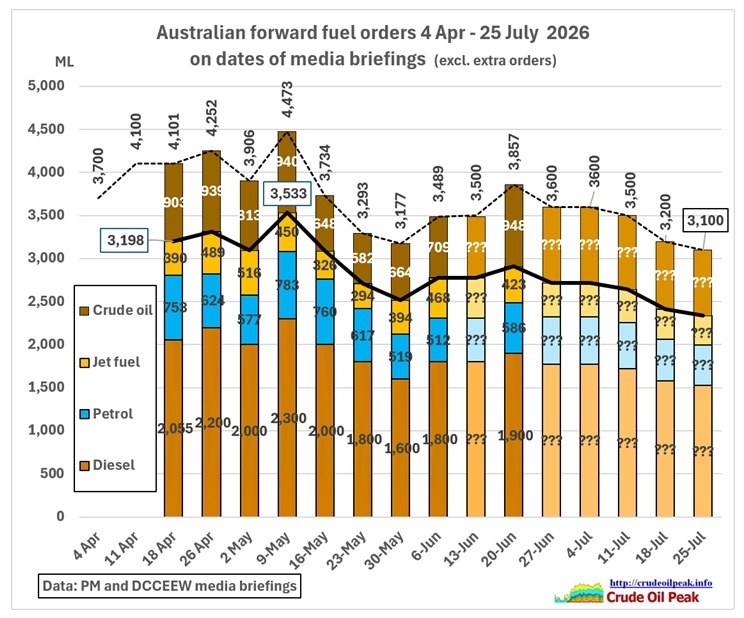 Fig 3: Time series of forward crude oil and fuel orders. 3,100 ML is 31% lower than on 9th May
So it’s the rolling report, I’ve been giving every week for the last few months since February, which provides Australians with certainty that government and industry working together is continuing to see strong and solid fuel supply for Australia. Obviously, as we’ve said consistently, we want to see the situation in the Middle East return to normal. But in the meantime, we’ll continue the efforts and the work with our trading partners, with our refiners, to ensure that Australians can have confidence in our fuel supply. Others said shortages were inevitable. Others called for rationing. Others said that rationing was inevitable. We had the view that a calmer approach was necessary and that calmer approach remains necessary.
Just on another matter, can I just welcome the International Energy Agency Report during the week, which showed that Australia was one of the very few countries to be experiencing reductions in this environment in our wholesale energy costs……
JOURNALIST: Fuel prices are expected to increase off the back of reignited tensions between the Middle East. Do you have concerns or any sort of, a read on that?
CHRIS BOWEN: Well, we’ve said consistently that we want to see the situation in the Middle East return to normal. That will see fuel prices return to more normal levels and fuel supply return to more normal levels. We know that there’s an impact on fuel prices, that’s why we’re taking the actions we’ve taken. Obviously, the sooner the situation returns to more normal arrangements, the better it will be for fuel prices.
JOURNALIST: Those ships that are on the way, will any of them be impacted by those new tensions?
CHRIS BOWEN: No, they’re on the way. Okay, that’s it? That’s a wrap.
https://minister.dcceew.gov.au/bowen/transcripts/press-conference-fairfield-west-new-south-wales-5
The Minister follows a routine scripted briefing with a certain narrative, no matter what happens in the Middle East
- The situation is uncertain in the Middle East but Australians have a calm government to secure fuel supplies
- Read out the days of cover for diesel, jet fuel and petrol and the total stock held in ML. Point out it’s more than before the Iran war
- Report number of ships on the way and total volume of fuels “locked in” for the next 4 weeks. Don’t mention how that compares to previous weeks and don’t give details on how many ML diesel, jet fuel or petrol we can expect in that period. Nothing to see here
- It’s just the usual weekly report. No worries. Wish that the Middle East returns to normal
- Work with trading partners to ensure fuel supplies. No details like extra orders are given. That could raise questions
- Ridicule all those who warned of shortages, not to mention rationing
- Switch to another topic
- Ask for questions in the expectation that journalists will pick up this last topic
- If asked on fuels, answer shortly and don’t give more details than already provided. Don’t describe scenarios to prepare for the uncertainties mentioned
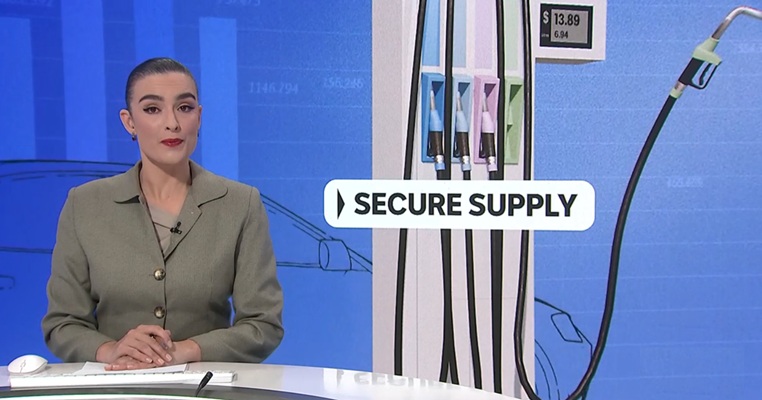
The secure supplies message was worth to bring it in the 7 pm news 25/7/26
Time line graphs
Using data from the Appendix
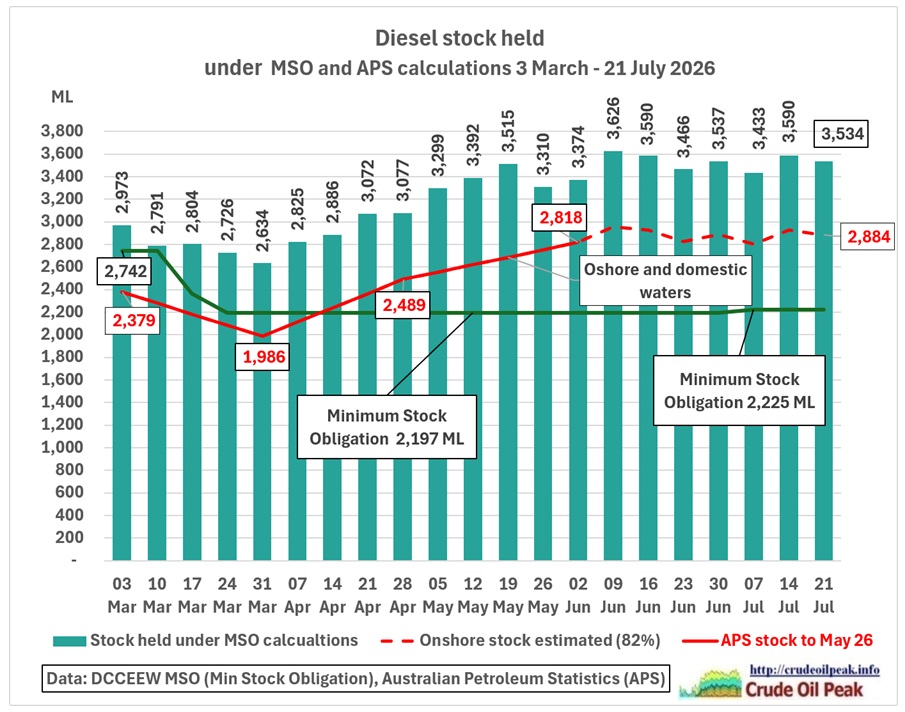 Fig 4: Diesel stock held – maxed out both onshore and offshore (too expensive)
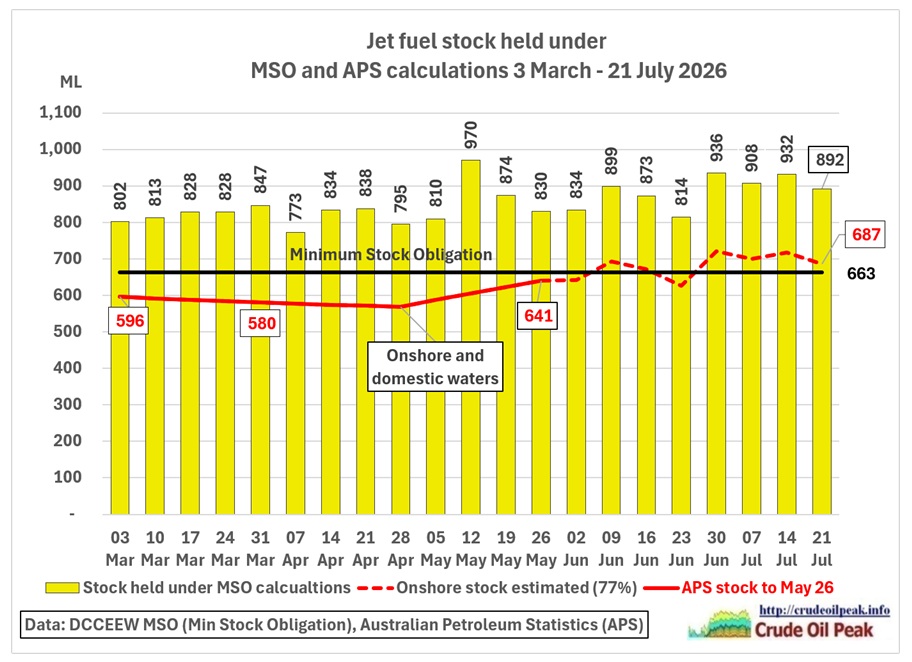 Fig 5: Jet fuel stock held
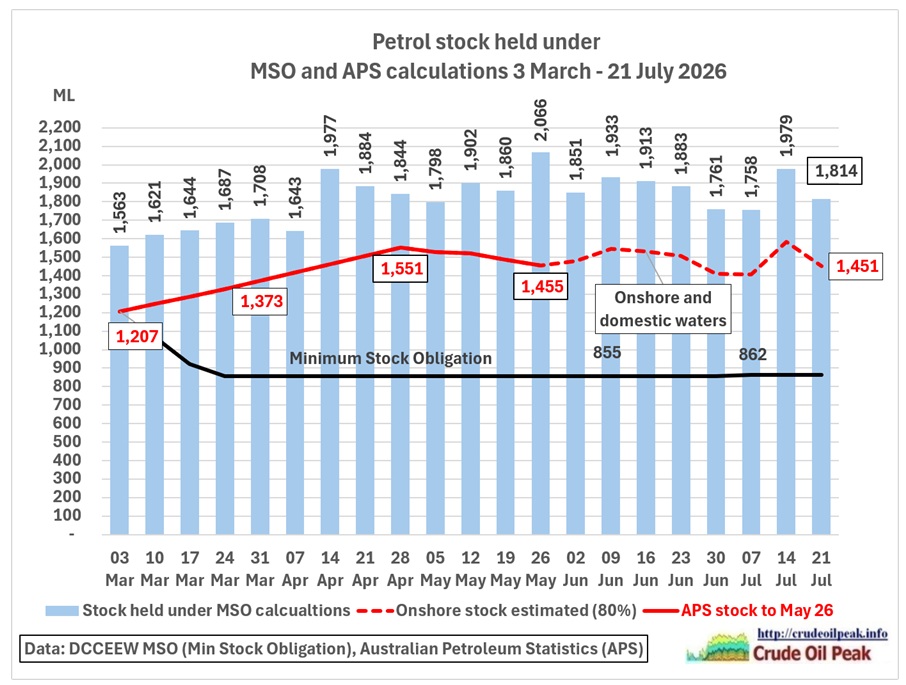 Fig 6: Petrol stock held
Previous article:
19/7/26
Australian forward fuel and oil orders on 18 July 2026 are among the 2 lowest since public records started in April 2026
https://crudeoilpeak.info/australian-forward-fuel-and-oil-orders-on-18-july-2026-are-among-the-2-lowest-since-public-records-started-in-april-2026
Related link:
https://crudeoilpeak.info/tankers-arriving-and-departing-in-sydney
Conclusion:
Forward orders are at the lowest level. We do not know how many ML of diesel are expected in the next 4 weeks.
Onshore tank capacities for fuels seem to have maxed out. And offshore (within the EEZ) can also not be substantially increased because that would mean longer waiting times at ports which are costly and would deter companies to come to Australia. A case in point is the tanker GRAND WINNER 5 which sat offshore Wollongong since 2nd June (appr. 50 ML). She will now finally discharge her fuel at Botany Bay on 27 July. The Minister was successful in avoiding a question on what happened. And the media do not have the staff continuity and the perseverance to follow up particular cases.
The Minister was also unable or unwilling to make any estimates under the realistic assumption that the situation in the Middle East will continue for many months or longer. The result is that State governments continue business as usual and start new diesel consuming projects (like the unnecessary Brisbane stadium – for entertainment!) which are likely to get stuck in high prices or even shortages. The Minister has the duty of care to do the scenario number crunching and communicate these to the State governments.
Appendix