Summary
- Fuel stocks (gasoline, jet fuel, diesel) on 17 Nov 26 were 9.4%, 14.2% and and 5 % lower than in the June quarter
- Diesel imports are dominated by South Korea followed by Singapore, Malaysia and Taiwan
- Diesel imports are 14.5% of the global diesel export market
- Jet fuel stock on 17 Nov 26 was part of a long downward trend with 1.8 standard deviations from the mean.
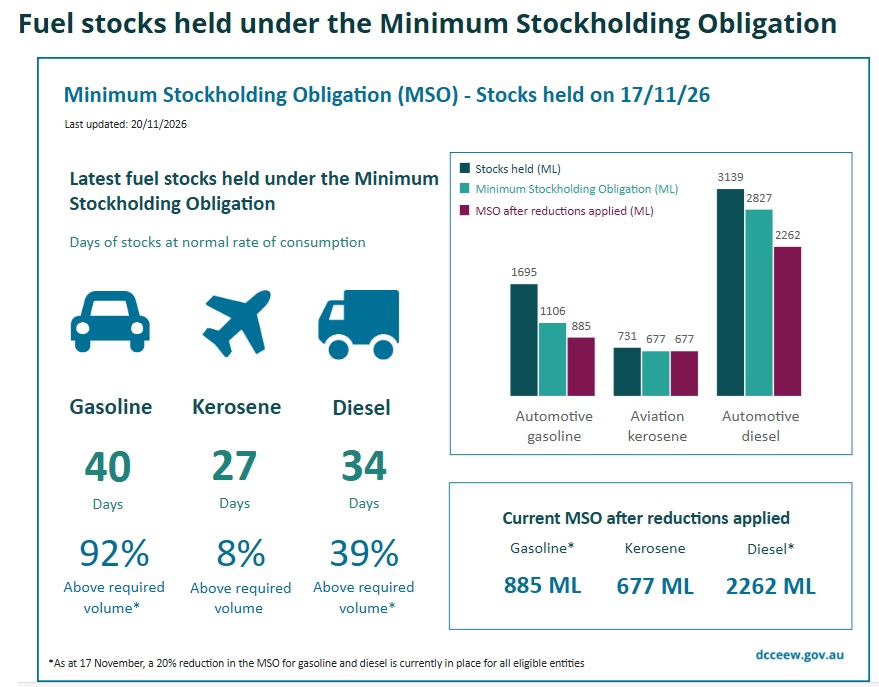 Fig 1: Screenshot 21 Nov 2026
https://www.dcceew.gov.au/energy/security/australias-fuel-security/minimum-stockholding-obligation/statistics
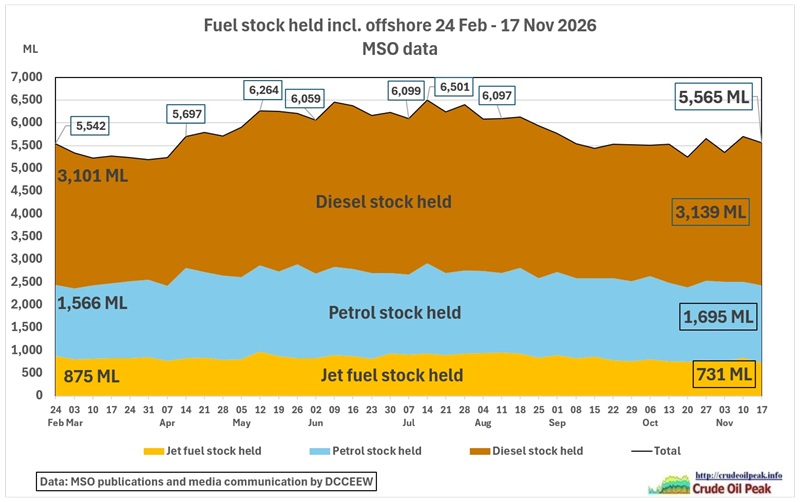 Fig 2: Timeline graph for 3 fuels
Compare the stocks held in ML for 17/11/26 with the June 2026 quarter averages:
Gasoline 1,695 ML < 1,870 ML (-9.4%)
Jet Fuel 731 ML < 852 ML (-14.2%)
Diesel 3,139 ML < 3,304 ML (-5%)
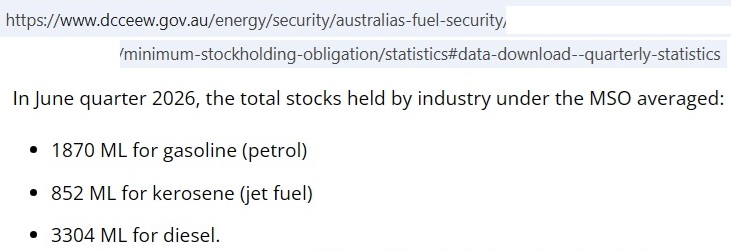 Screenshot from this website:
https://www.dcceew.gov.au/energy/security/australias-fuel-security/minimum-stockholding-obligation/statistics#data-download–quarterly-statistics
Diesel
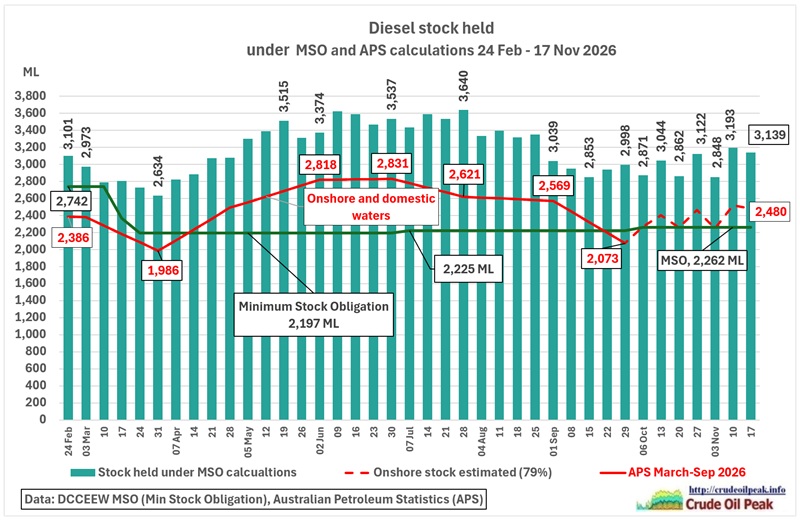 Fig 3: Diesel stock now is on level of end February.
Onshore diesel estimated 2,522 ML – MSO 2,262 ML = 260 ML above MSO = 2.7 days
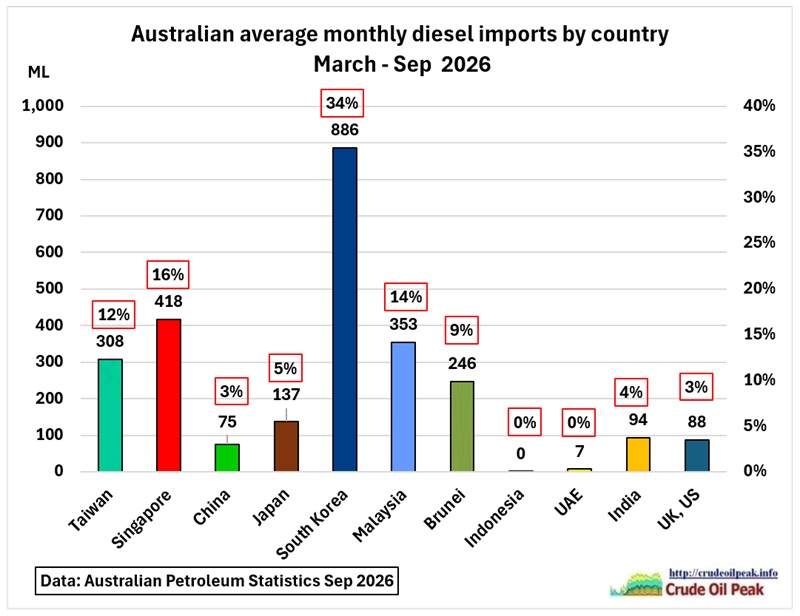 Fig 4: South Korea is number 1
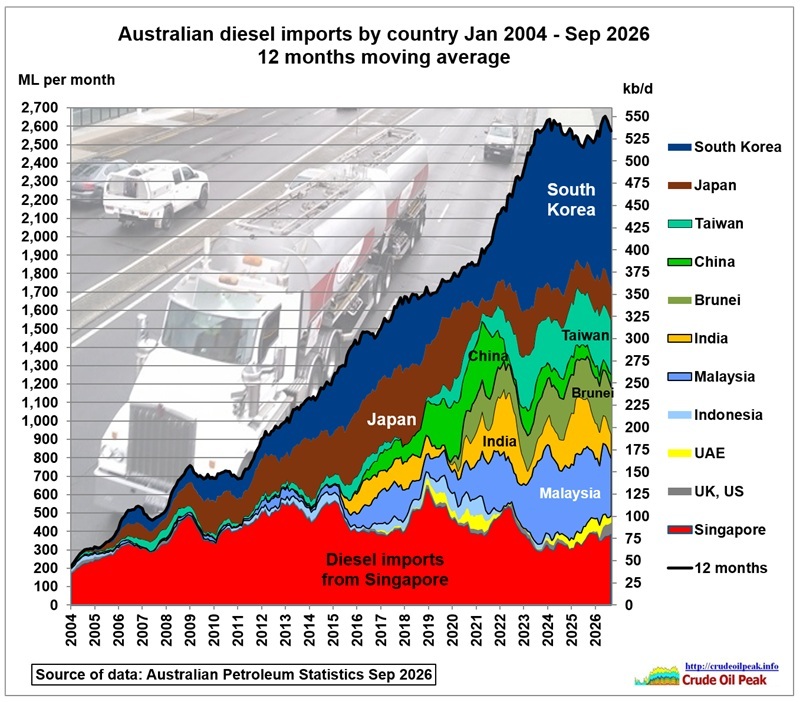 Fig 5: Diesel imports increased as local refineries closed. Now at around 550 kb/d
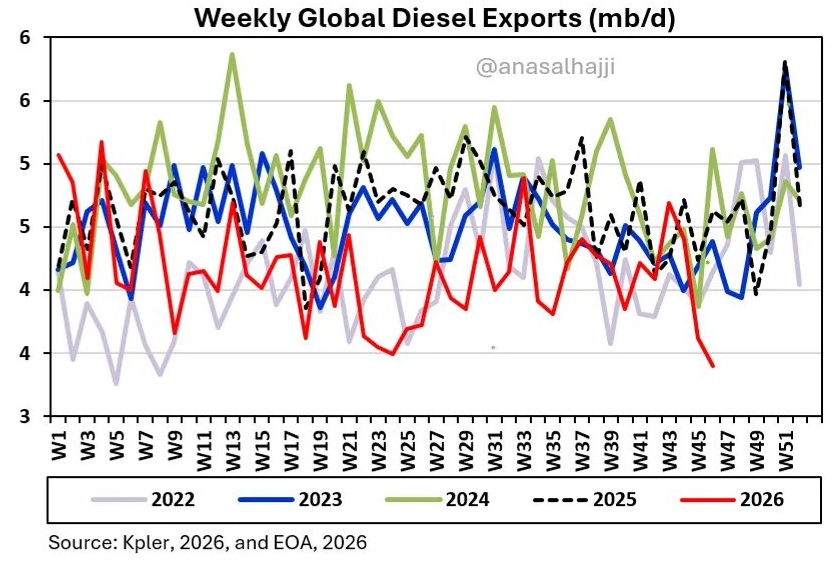 Fig 6: In week 47 global diesel exports dropped below 4 mb/d
Australia’s diesel import share would be 550/3,800 = 14.5%
Jet Fuel
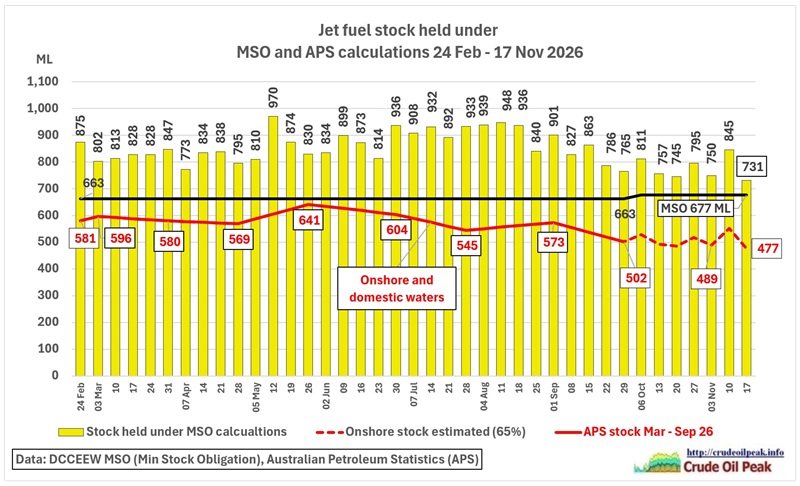 Fig 7: Jet fuel stock timeline
The last value of 731 is in the lowest quartile and not a random freak occurrence or an isolated outlier. It lies approximately 1.83 standard deviations below the dataset’s mean ( µ = 846 and σ=63 ). There is a clear shift from the performing steady state in May – August into a strong, statistically significant downward momentum at the end.
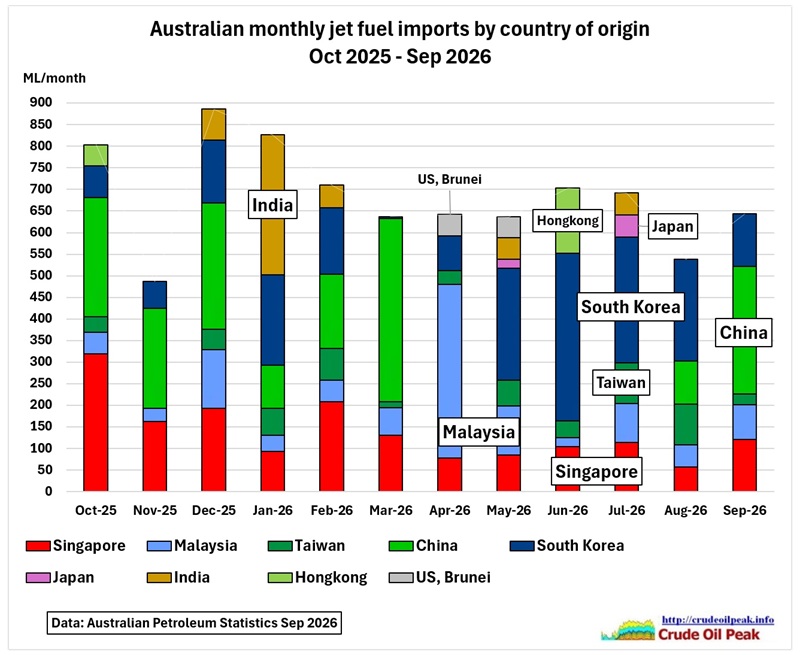 Fig 8: Monthly jet fuel imports in last 12 months
Thank you South Korea and China for exporting jet fuel which is burnt up in frequent flights by their Asian migrants.
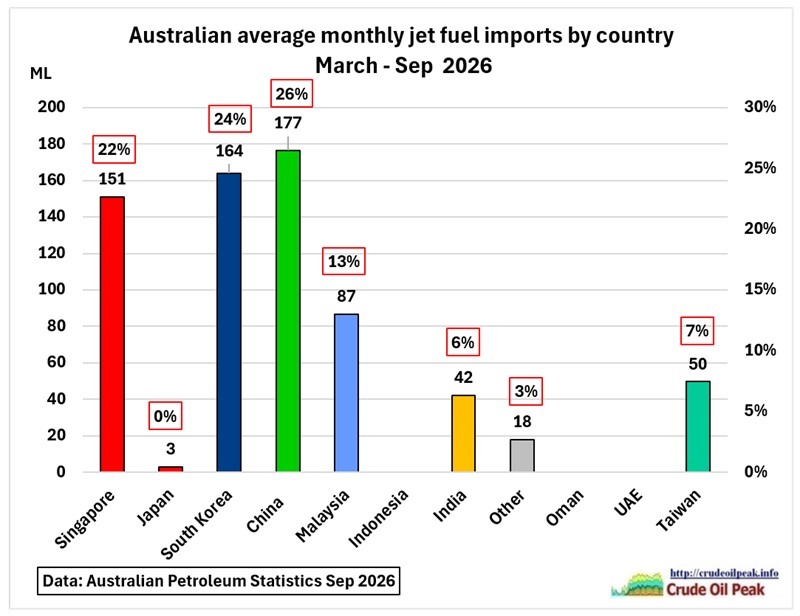 Fig 9: China at the top, closely followed by South Korea
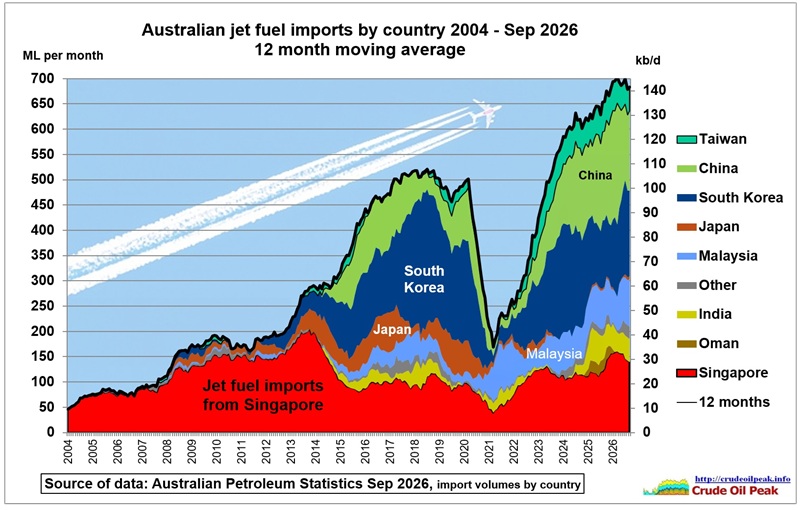 Fig 10: “Recovery” of jet fuel sales after Covid
Quo volas, Australia? The modern Mercury Downunder
 Image: Custom AI illustration of Mercury, the Roman god of speed, commerce, travel, and boundaries.
Riding the skies is the current Australian Albanese government happy with a new international airport in Western Sydney as mentioned in an earlier post. Lecturing COP31 on CO2 emissions.
When looking at the latest jet fuel sales will the change in the growing trend be permanent?
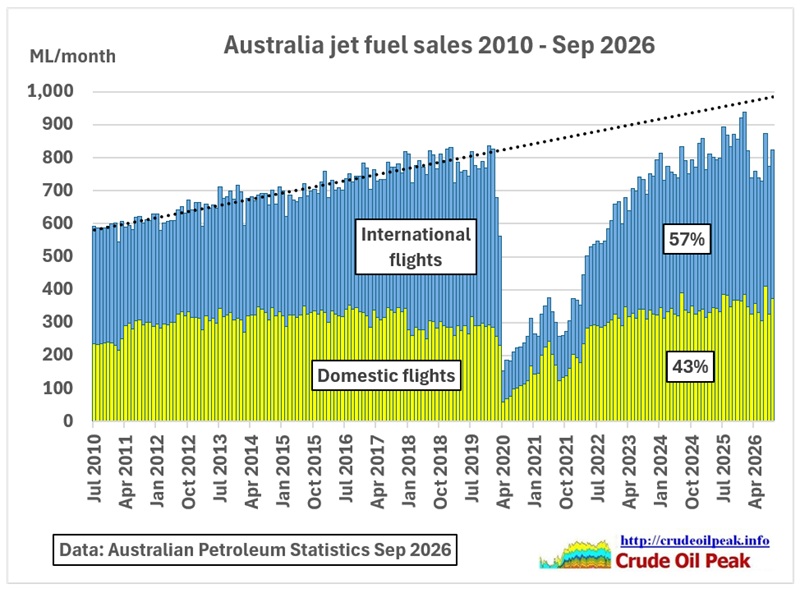 Fig 11: Jet fuel sales 2010 – Sep 2026
The government is pumping in more rich immigrants to keep up demand for international flights.
Global context: conflicting news
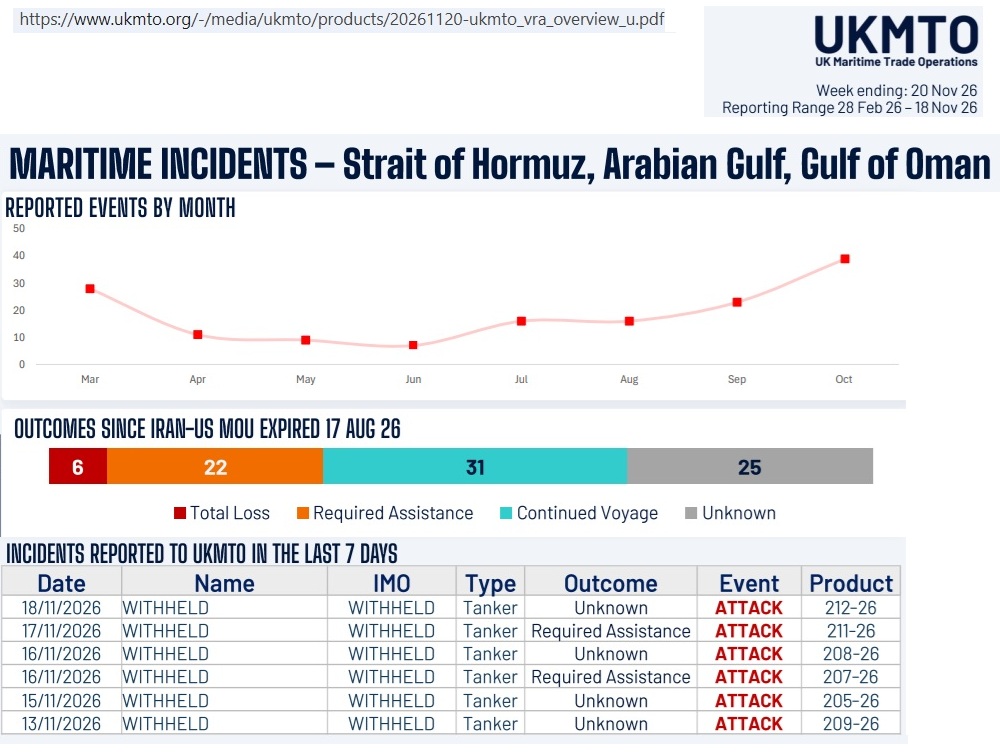
UKMTO weekly report 20 Nov 2026
The Oil Market Is Brimming With Crude Despite Tanker Attacks
Bloomberg
November 16, 2026
By Alex Longley, Anthony Di Paola, Shariq Khan and Mia Gindis (Bloomberg) — More than eight months into the Iran war, smoke continues to billow from oil tankers as Tehran presses ahead with repeated attacks near the Strait of Hormuz.
And yet there’s more than enough crude on the global market.
https://gcaptain.com/the-oil-market-is-brimming-with-crude-despite-tanker-attacks/
Supertanker rates plunge more than 60% from record highs
November 17, 2026
LONDON, Nov 16 (Reuters) – The cost of shipping oil in the largest tankers has declined sharply since the beginning of November, reflecting weaker demand for chartering and an unwinding of the geopolitical risk premium that sent shipping costs to a record high in October.
https://www.reuters.com/business/energy/supertanker-rates-plunge-more-than-60-record-highs-2026-11-16/
Gulf Oil Flow at Risk From Lack of Empty Tankers, Tracker Says
November 17, 2026
(Bloomberg) — The number of empty tankers sailing to collect cargoes of Middle East crude is sliding, a trend that could jeopardize the recent revival in the region’s oil flows to global markets, according to Tankertrackers.com, a firm that monitors vessel movements.
The industry uses two main ship types to get oil from the Persian Gulf to the world: very large crude carriers, which transport 2 million-barrel cargoes, and Suezmaxes that move about half that. The collective capacity of those vessels sailing empty to the region has declined by about 40% since the end of August, according to Tankertrackers.com figures.
https://gcaptain.com/gulf-oil-flow-at-risk-from-lack-of-empty-tankers-tracker-says/
Under fire in Hormuz: Iran’s escalating campaign against commercial shipping
18 Nov 26
Attacks on commercial shipping by Iran in the Strait of Hormuz have become a daily occurrence as the US blockade slowly strangles the Iranian economy
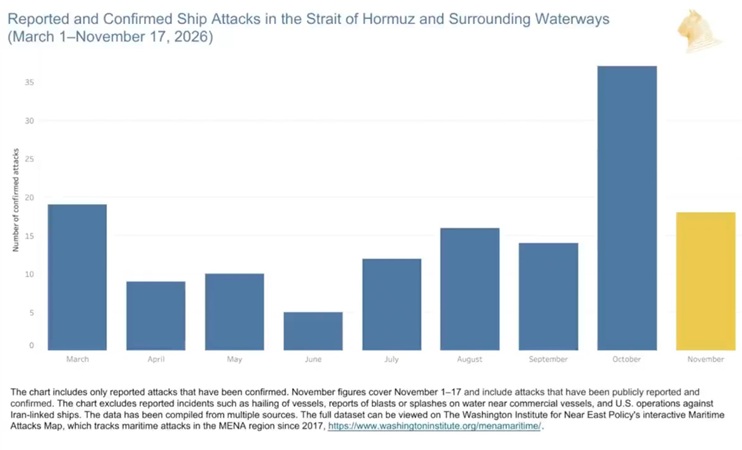
In our latest Maritime Crossroads episode, Marcus Hand, Editor of Seatrade Maritime News and Noam Rayden, a Senior Research Fellow at the Washington Institute of Near East Policy, discuss how Iran’s battle to control the Strait of Hormuz and surrounding waters has intensified over the last month and a half.
Smaller Tankers Join Hormuz Shuttle Trade to Keep Oil Flowing
November 18, 2026
(Bloomberg) –Oil is increasingly moving through the Strait of Hormuz on smaller vessels, helping sustain exports as attacks on supertankers squeeze availability of the ships that typically dominate the trade.
The volume shipped through the waterway by Suezmaxes and Aframaxes has climbed over the past two months, hitting a wartime high of more than 2 million barrels a day in October, according to Vortexa. That helped elevate overall daily exports to 11.4 million barrels, the highest since the conflict began.
https://gcaptain.com/smaller-tankers-join-hormuz-shuttle-trade-to-keep-oil-flowing/
US shipping expert Sal Mercogliano sums it all up in this video
What*The*Hormuz: Why Tanker Attacks Are Surging While Oil Rates Drop
20 Nov 2026
https://www.youtube.com/watch?v=w-Zz34gA_Tk
Appendix:
Press conference, Brisbane
21 November 2026
MURRAY WATT, MINISTER FOR THE ENVIRONMENT AND WATER: Well, thanks very much for coming along today. The main purpose of this press conference is to provide the weekly update on fuel supplies into Australia. So I’ll just run you through a few figures to explain the current situation. What these figures show is that fuel supply into Australia remains very solid, despite the difficult international circumstances that we continue to face regarding fuel supply. Australia currently has 40 days worth of petrol, which is one day more than last week, 34 days worth of diesel, which is one day less than last week, 27 days of jet fuel, which is four days less than last week. And putting that all together, we have a total of 5.5 billion litres of fuel in Australia right now. There are 50 ships on the way to Australia with fuel supplies, and we have 3 billion litres worth of fuel locked in for delivery over the next four weeks. That includes 1.4 billion litres worth of diesel. Ninety-five ships arrived in Australia containing fuel in October, and that was the equal highest for the year, and already in November, we’ve seen 63 ships arrive containing fuel. So, putting that all together, the international situation does remain uncertain. This is why Australia and our government continues to engage with the rest of the world. It demonstrates why it’s important that we continue to deal with the rest of the world to obtain the fuel that we need in the short term, while also continue work to build up Australia’s resilience for our fuel supply needs into the future.
https://minister.dcceew.gov.au/watt/transcripts/press-conference-brisbane-4