At the weekly fuel security update on 31st October, a journo asked following question:
JOURNALIST: Iranian state media is today reporting that four oil tankers had caught fire and exploded in the Strait of Hormuz while attempting to use what it described as unauthorised routes. Is there any further information on this?
ENERGY MINISTER CHRIS BOWEN: No, I’ve seen those reports. I’m aware of those reports. I think it just goes to the general uncertainty in the region and the difficulty of getting fuel out of the Straits of Hormuz. While ever this war is continuing, you’re going to see those sorts of reports. Might go to Connor on the phone.
https://minister.dcceew.gov.au/bowen/transcripts/press-conference-fairfield-west-nsw-9
By the time of the press conference, UKMTO had already published tanker-incident reports relating to the Strait of Hormuz and had issued its weekly regional assessment.
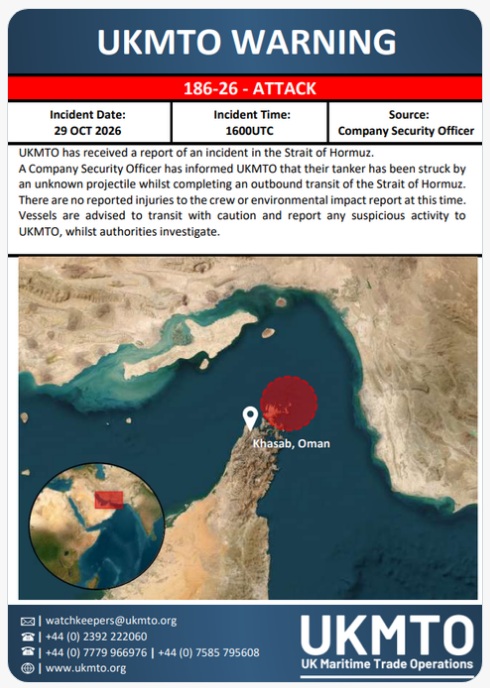 https://x.com/UK_MTO/status/2115867442144477452
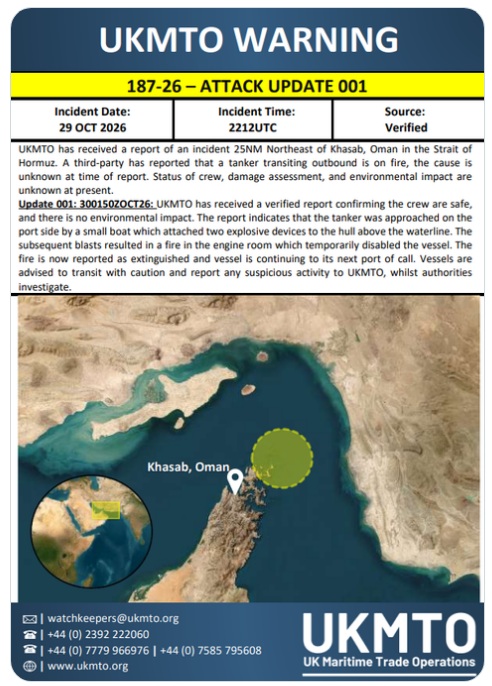 https://x.com/UK_MTO/status/2116007177714336103
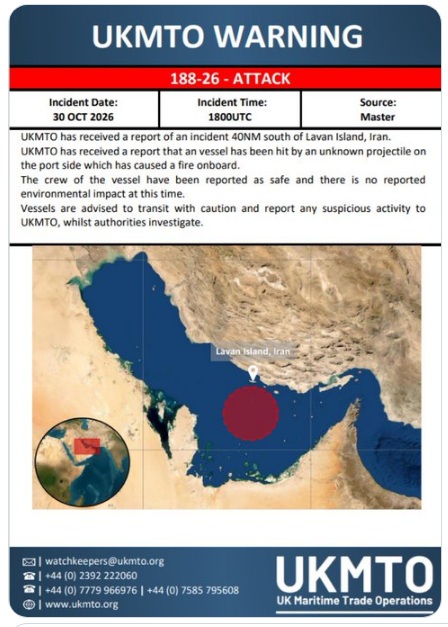 https://x.com/Info_Fusion_Ctr/status/2116321682780835889/photo/1
Iran’s IRGC Navy Says Four Tankers Catch Fire in Strait of Hormuz
30 Oct 2026
https://www.usnews.com/news/world/articles/2026-10-30/irans-irgc-navy-says-two-tankers-stopped-south-of-hormuz-after-incidents
UKMTO Weekly overview 30 Oct 2026
https://www.ukmto.org/-/media/ukmto/products/20261030-ukmto_vra_overview_u.pdf?rev=ab1922ebc6a345828a2add12a2cdd40d
The journalist asked a straightforward question in a press conference which was about the security of Australia’s fuel imports.
The Minister put the question immediately in the “general uncertainty” drawer, thereby avoiding to address the downstream consequences for Australia.
The answer gave no indication whether those reports had been reviewed, that such impacts needed to be assessed, what factors would be examined, or how renewed disruptions in the Strait of Hormuz might affect Australia’s fuel supply chains through major refining centres such as South Korea.
In order to stop any further questioning on this issue, the Minister quickly moved on to the next journalist.
The Minister’s press conference follows a well established pattern:
Read out stock data in days of consumption cover, number of tankers on the way to Australia and expected fuel volume on order for the next 4 weeks. Irrespective of what happens in the Middle East, tell the public that Australia’s fuel situation remains secure due to government action and that everyone can continue business as usual including starting/continuing diesel and jet-fuel guzzling projects which will increase fuel demand once completed (like airports/extensions, stadia). Not to mention immigration with additional fuel demand.
The Minister repeated his self-praise that Australia’s fuel security is primarily the result of actions taken in Canberra. Yet Australia’s fuel security also rests on the foresight of governments in countries such as South Korea that have maintained substantial oil inventories and supply buffers. Without those reserves, there might be considerably less imported fuel available in Australia during times of international disruption.
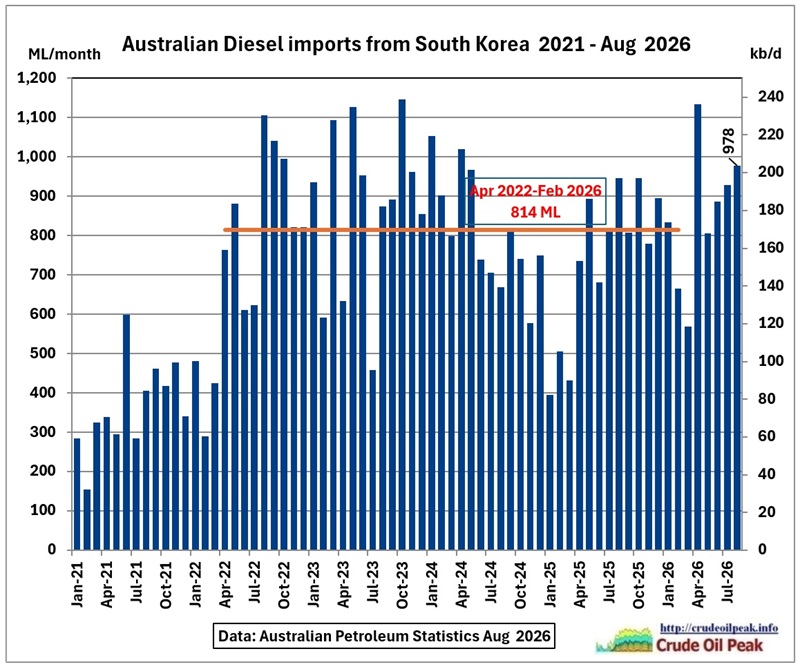 Fig 1: Australian diesel imports from South Korea
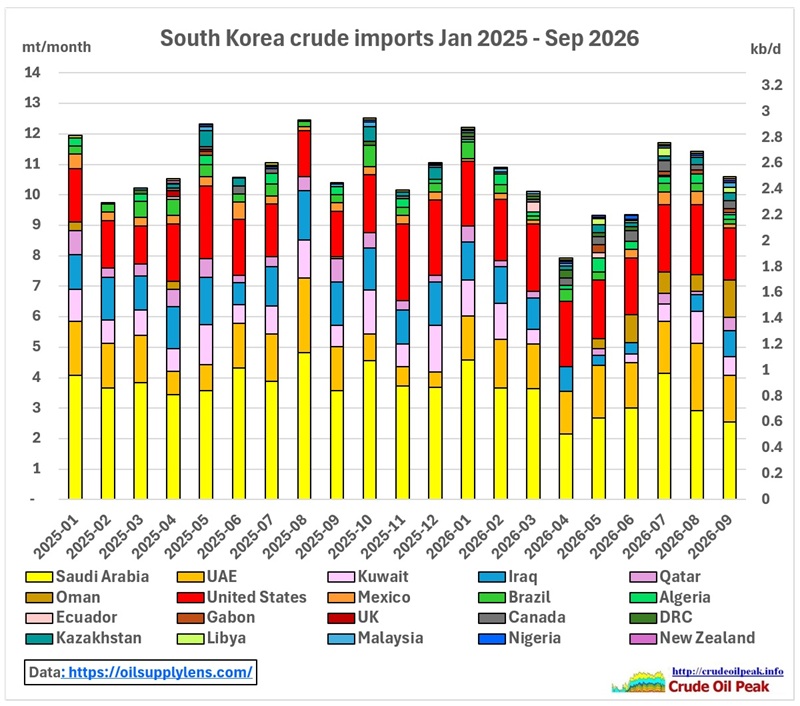 Fig 2: South Korea’s crude oil imports by country of origin
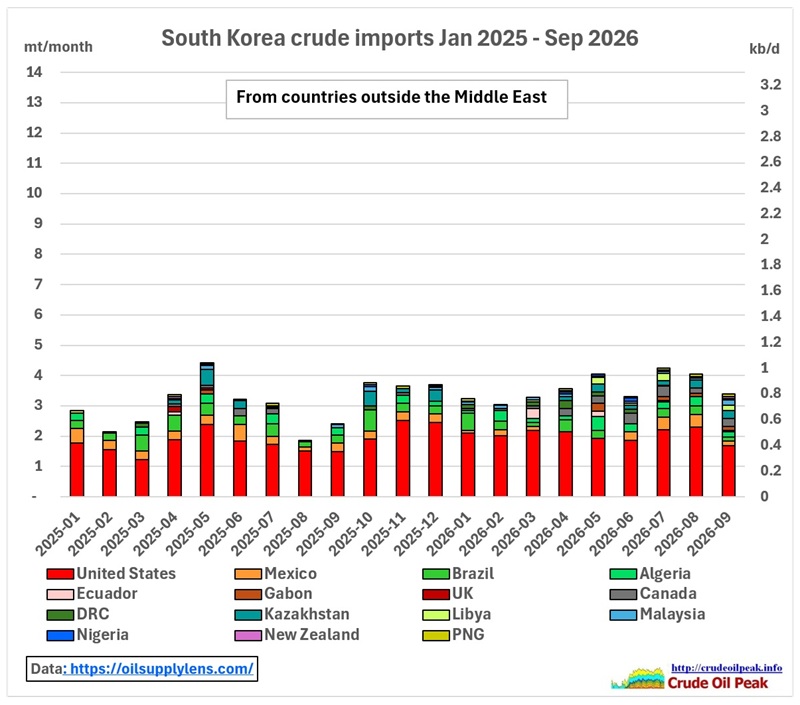 Fig 3: South Korea crude imports from outside the Middle East
Fig 3 shows that from April 2026 South Korea was able to increase its imports of smaller volumes of crude from many different countries.
South Korean imports from the US are not the result of the Middle East crisis. They started after the US lifted its export ban and really took off in late 2018. They were added on top of Saudi and other ME oil. Note that light US shale oil generally contains less middle distillates needed for diesel production. However, the following Spglobal article of Jan 2025 mentions that WTI Midland is $2 cheaper and has excellent middle distillate yields.
https://www.spglobal.com/energy/en/news-research/latest-news/crude-oil/012825-south-korea-data-us-crude-imports-reach-record-high-in-2024-as-refiners-monitor-dubai-price-spike
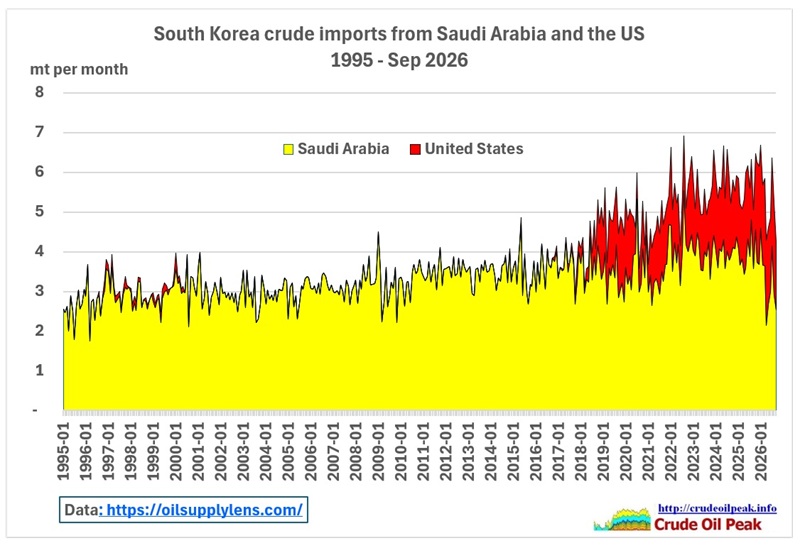 Fig 5: South Korean crude imports from South Africa and the US
This means Australia relies on and profits from, not only South Korea’s energy-security infrastructure and continuing industrial policy but also its refinery expertise and refinery capital stock built over many years. The Energy Minister should acknowledge this.
Now to the Australian fuel update numbers.
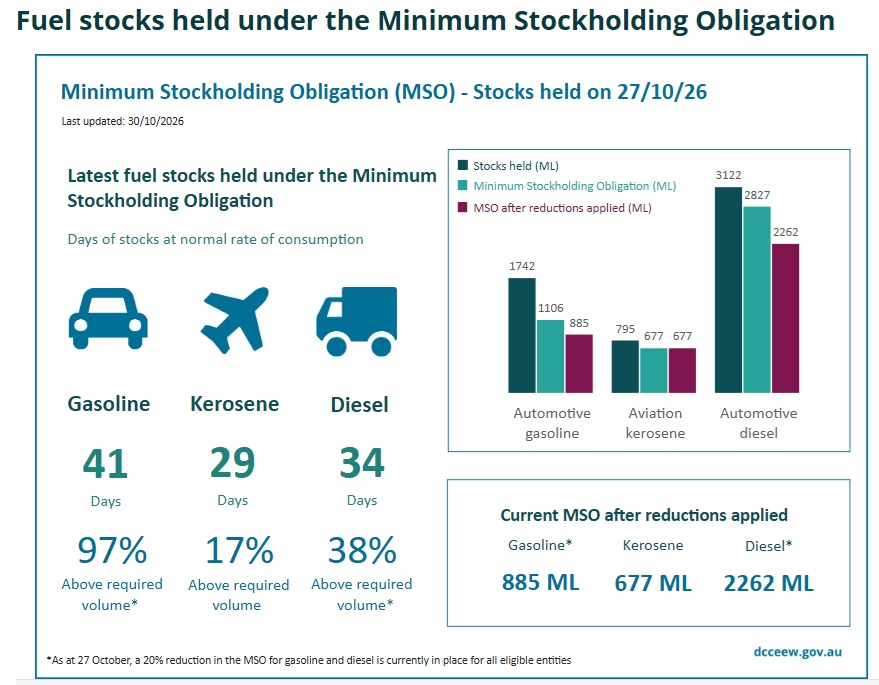 Fig 6: DECCW chart dated with data from 27th Oct
Fuel stock improved over the previous week.
What the Energy Minister never mentions is the number of days above MSO levels as calculated in this post:
28/10/2026
Jet fuel stocks just 2.6 days above the Minimum Stockholding Obligation as new Western Sydney Airport enthusiasm soars
https://crudeoilpeak.info/jet-fuel-stocks-just-2-6-days-above-the-minimum-stockholding-obligation-as-new-western-sydney-airport-enthusiasm-soars
The update is as follows:
The DEECCW website has these average daily fuel consumption numbers:
Gasoline: 1,870 ML / 44 days = 42.5 ML/day
Jet fuel: 852 ML / 31 days = 27.5 ML/day
Diesel: 3,304 ML / 36 days = 91.8 ML/day
Now let’s calculate how many days the stock is above MSO on 27 Oct 26:
Gasoline: 1,742 – 885 = 857/42.5 = 20.1 days
Kerosene: 795 – 677 = 118/ 27.5= 4.3 days (improved from 2.6 days)
Diesel: 3,122 – 2262 = 860/ 91.8 = 9.4 days
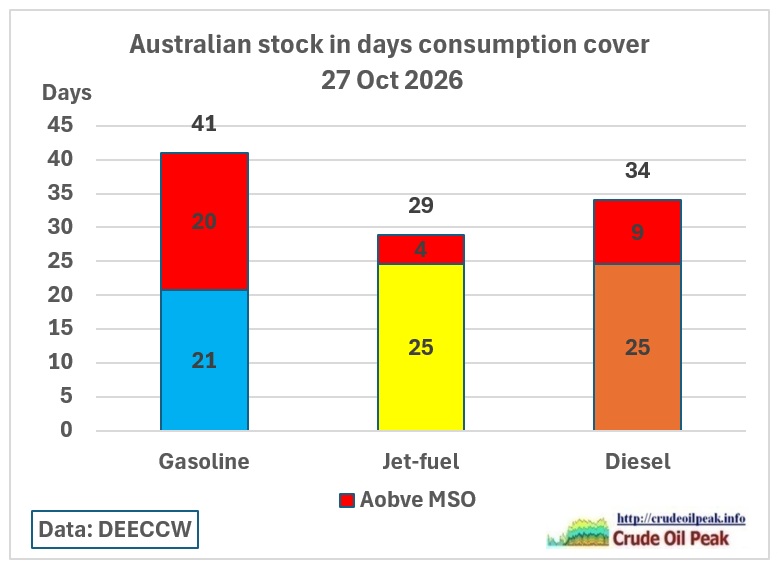 Fig 7: Days consumption cover above MSO
Why is this important? Because if stocks drop below the MSO level, the government will be forced to lower the MSO, an embarrassing situation for the Energy Minister in a press conference.
Let’s continue with updated time series graphs:
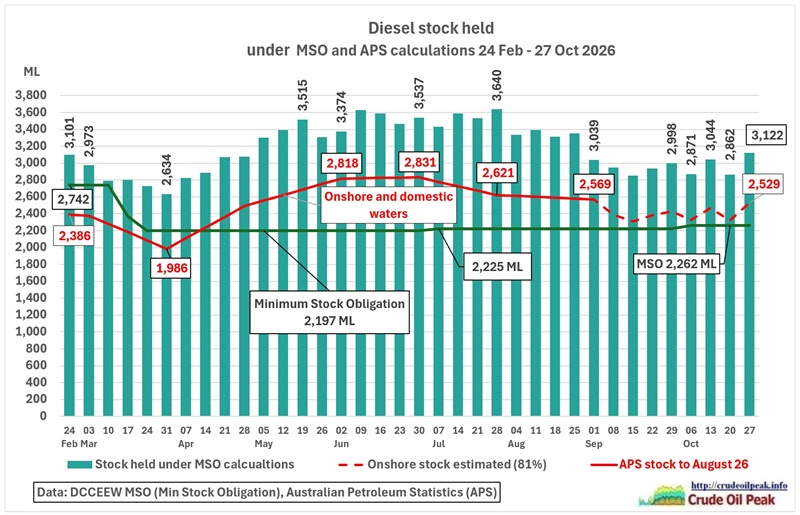 Fig 8: Diesel stock compared to MSO levels and APS data
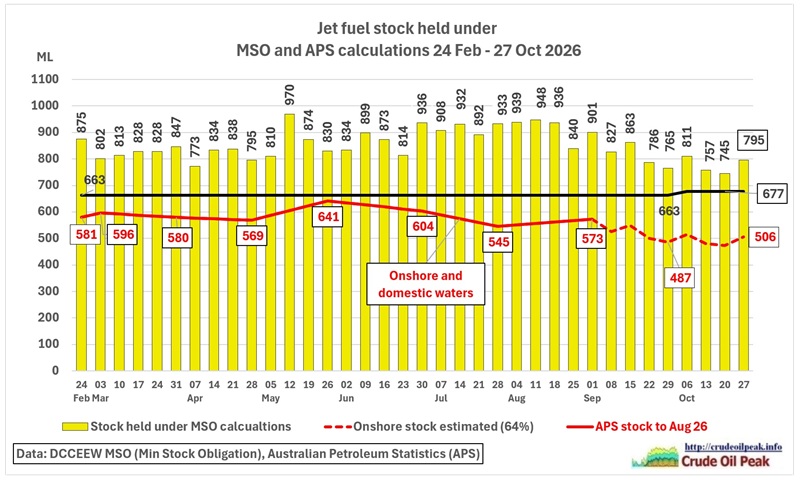 Fig 9: Jet fuel stock compared to MSO levels and APS data
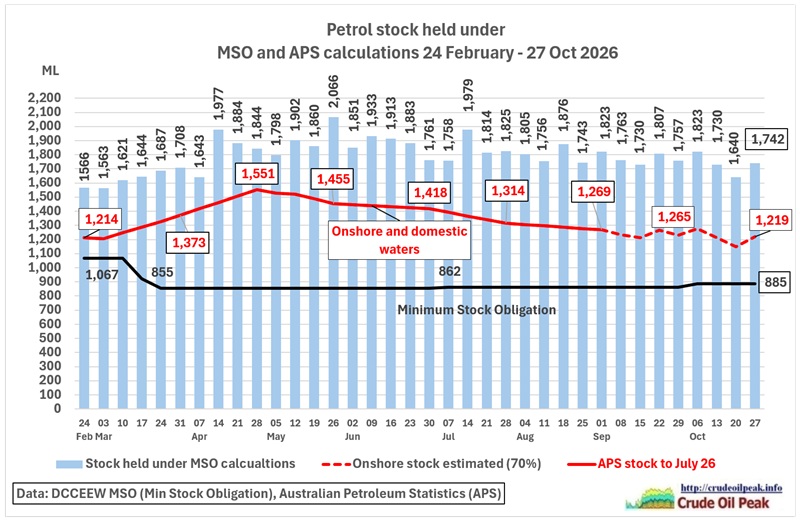 Fig 10: Gasoline stock compared to MSO levels and APS data
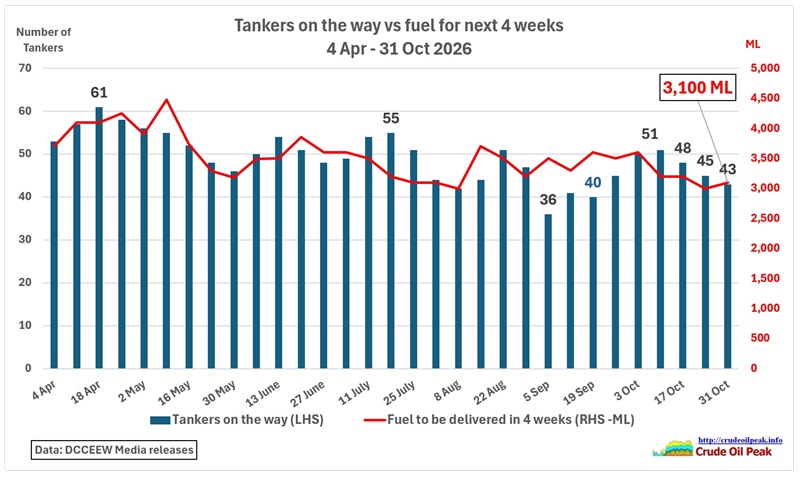 Fig 11: Tankers on the way and forward orders
The number of tankers dropped in the last 4 weeks
While writing this article we had the rare situation that all ports in Sydney were vacant and only 1 LPG tanker offshore, heading for Brisbane.
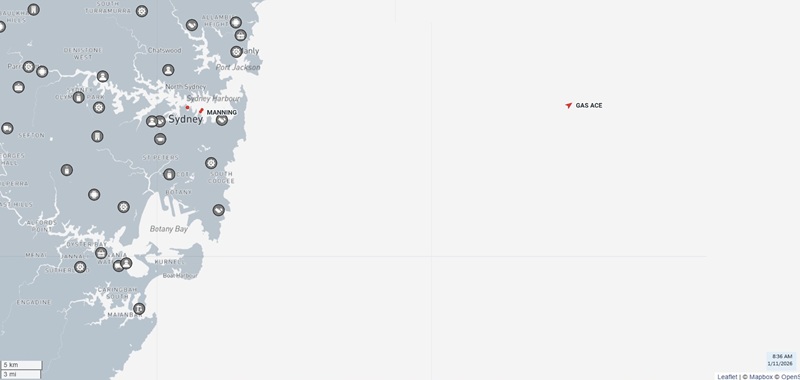 Fig 12: No ships today on 1 Nov 26
Were the tanks all filled or were there problems getting tankers to Sydney? Next to arrive is Aframax (LR2), dwt 109,999 t with an interesting voyage: Ulsan (2 Sep), Brisbane (19 Sep), Botany Bay (23 Sep), Jurong Island – Singapore (dep 16 Oct).
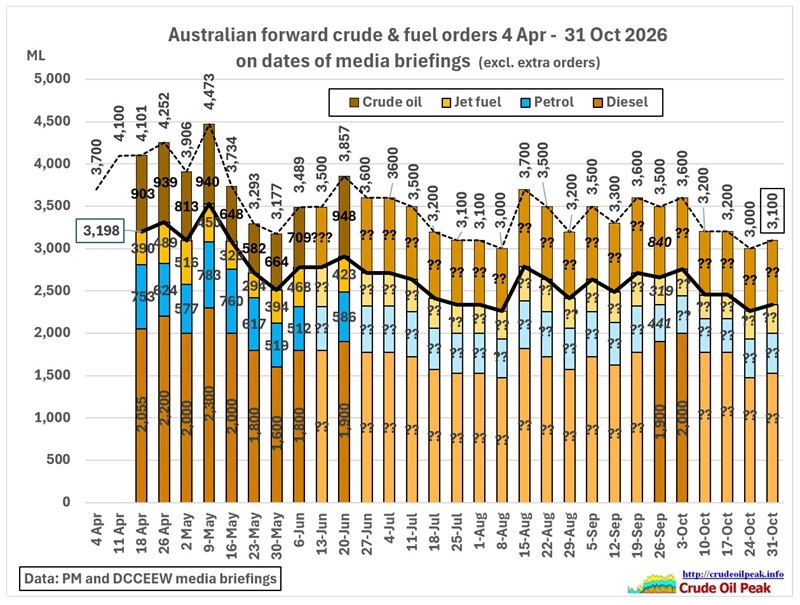 Fig 13: Forward orders are down from a maximum in mid August
Conclusion:
More information from the Minister, not just cherry-picking, is needed to allow prudent forward planning of fuel intensive projects and operations.