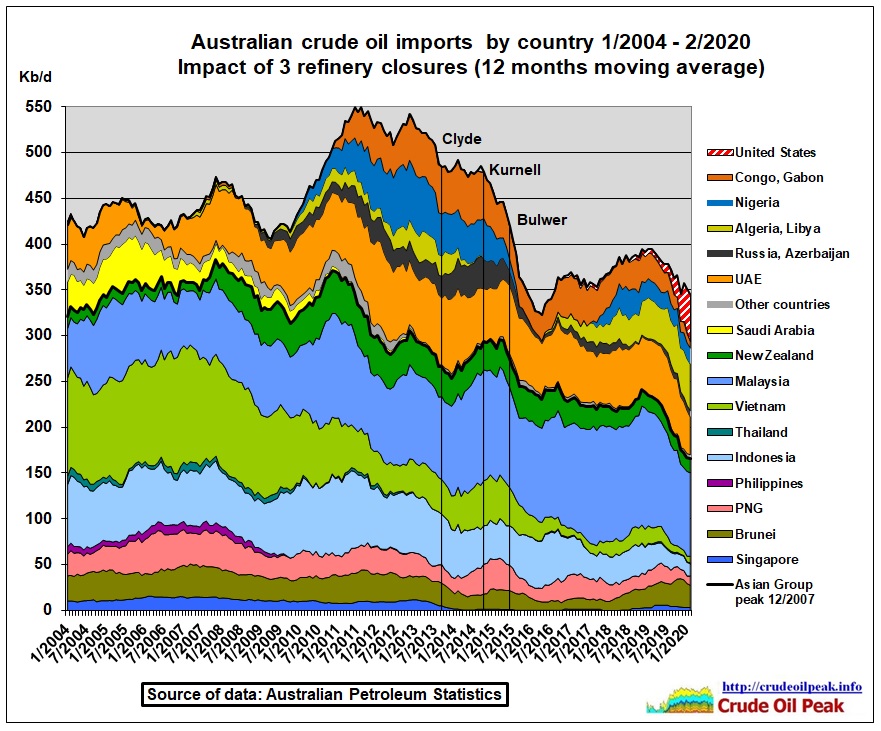
The Australian Petroleum Statistics with data up to July 26 were recently published. Imports are recorded from Customs data when tankers arrive in ports or in domestic waters. Floating storage in the EEZ is not included.
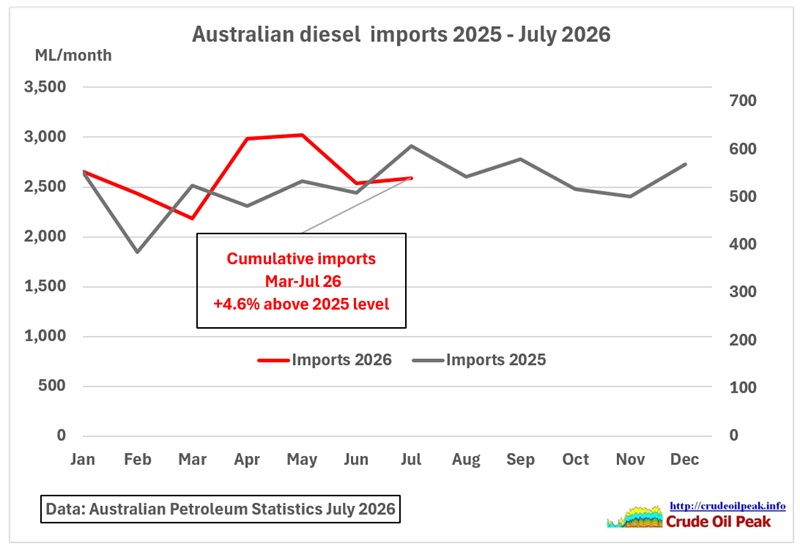
Fig 1: Cumulative diesel imports up to July were 4.6% higher than in 2025
This is a remarkable achievement given the reduced flows in Hormuz and the supply crunch for Asian refineries. However, the situation after July has deteriorated as the Memorandum of Understanding has collapsed.
20/9/2026 Australian onshore diesel stock on 15 Sep 2026 very likely near or below
MSO level
https://crudeoilpeak.info/australian-onshore-diesel-stock-on-15-sep-2026-very-likely-near-or-below-mso-level
24 Sep 2026
Diesel rationing possible within weeks if US goes ahead with [diesel export] ban
https://www.abc.net.au/news/2026-09-24/diesel-rationing-possible-within-weeks-if-us-goes-ahead-with-ban/107189268\
It is important to know from which countries Australia imports its diesel from. So this post will contain many graphs.
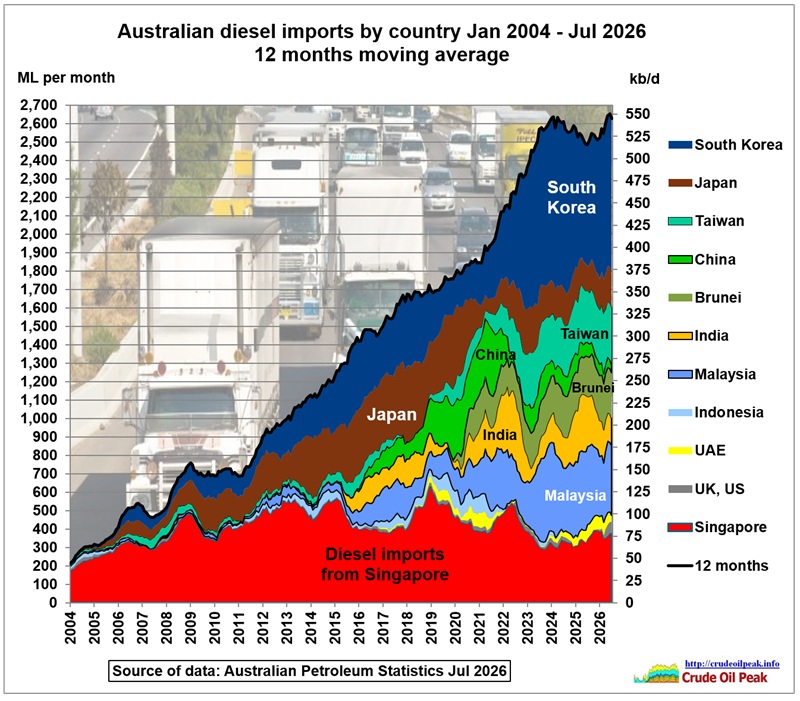 Fig 2: Diesel imports 12 months moving average stacked
Sorted by volume of imports. All graphs have the same scale so that the volumes from different countries can be visibly compared.
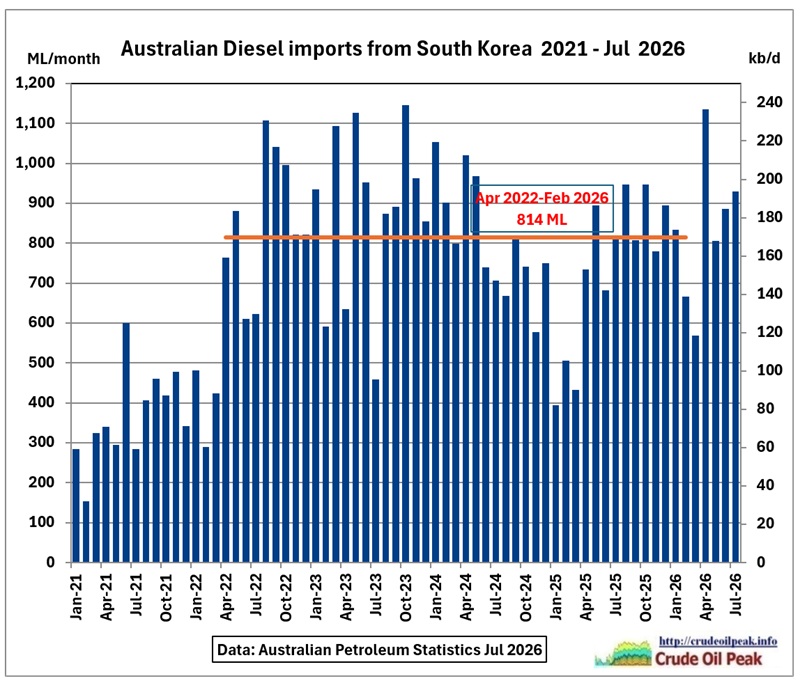 Fig 3a: Diesel imports from South Korea
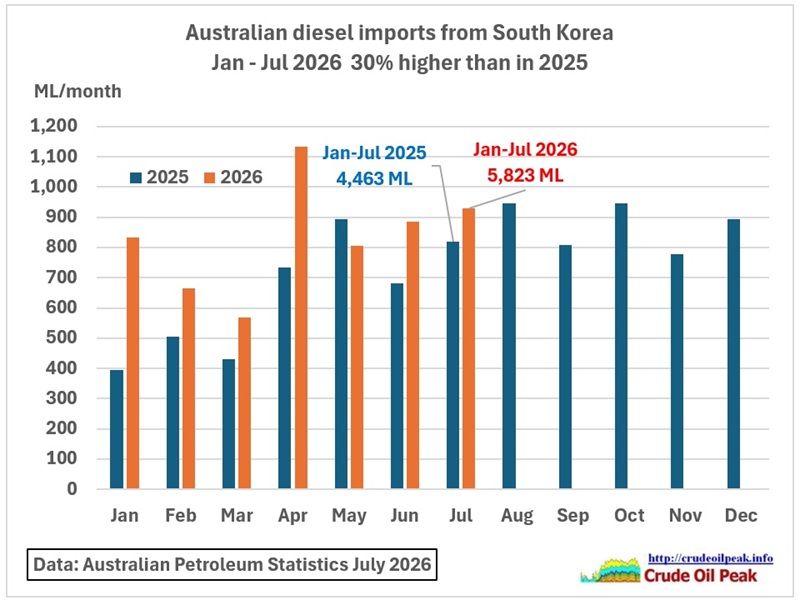 Fig 3b: Comparison Jan – Jul 2026 with 2025
Diesel imports from South Korea were so far higher than in the corresponding months in 2025.
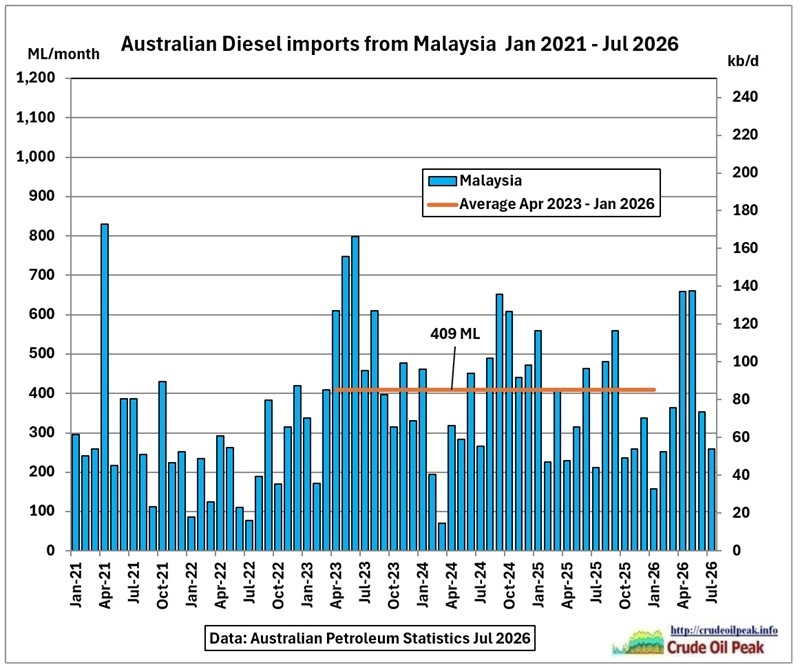 Fig 4: Diesel imports from Malaysia
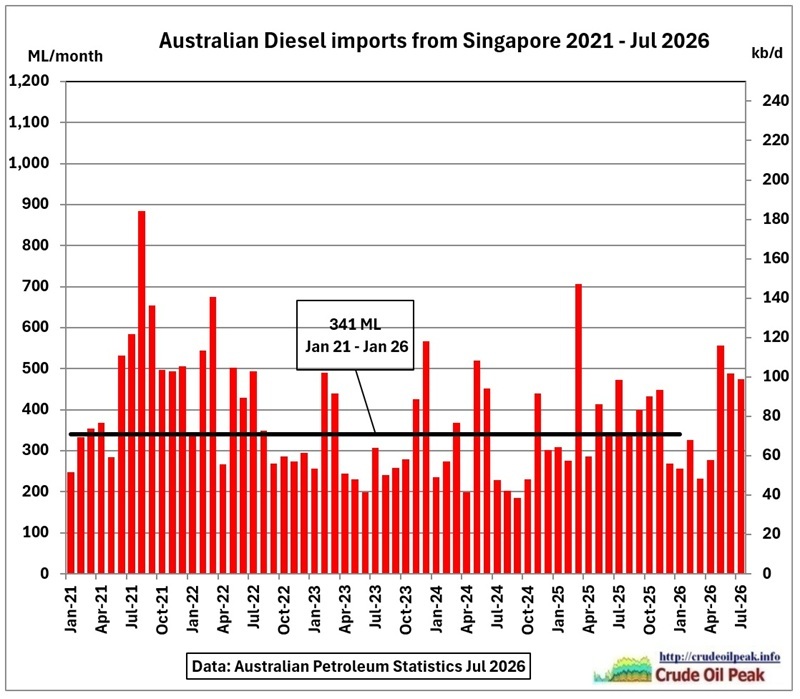 Fig 5: Diesel imports from Singapore
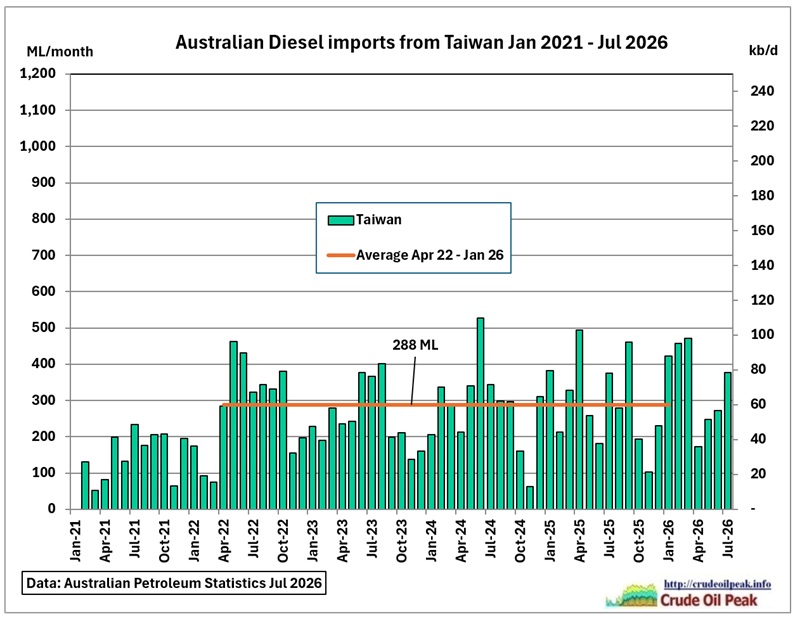 Fig 6: Diesel imports from Taiwan
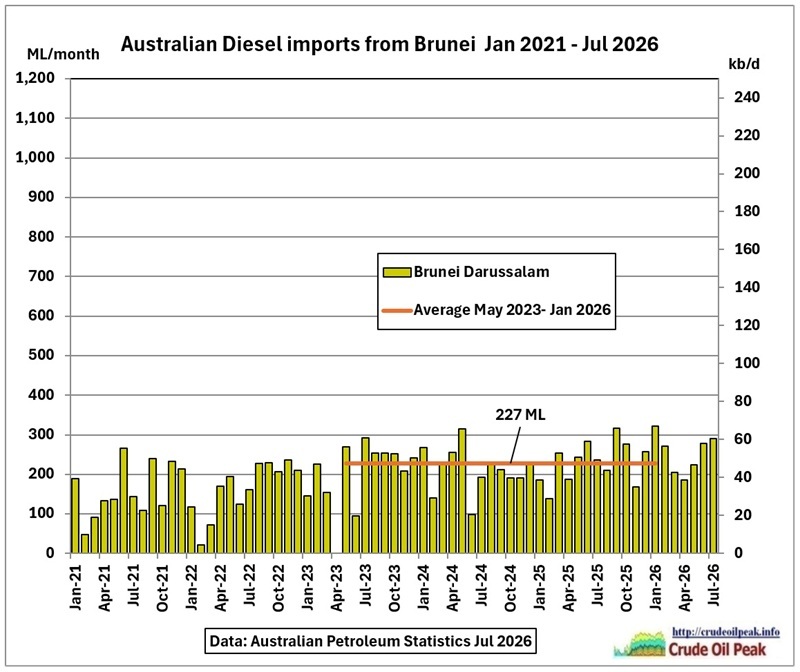 Fig 7: Diesel imports from Brunei
Remember this:
19/4/2026 Australian crude and fuel imports from Brunei
https://crudeoilpeak.info/australian-crude-and-fuel-imports-from-brunei
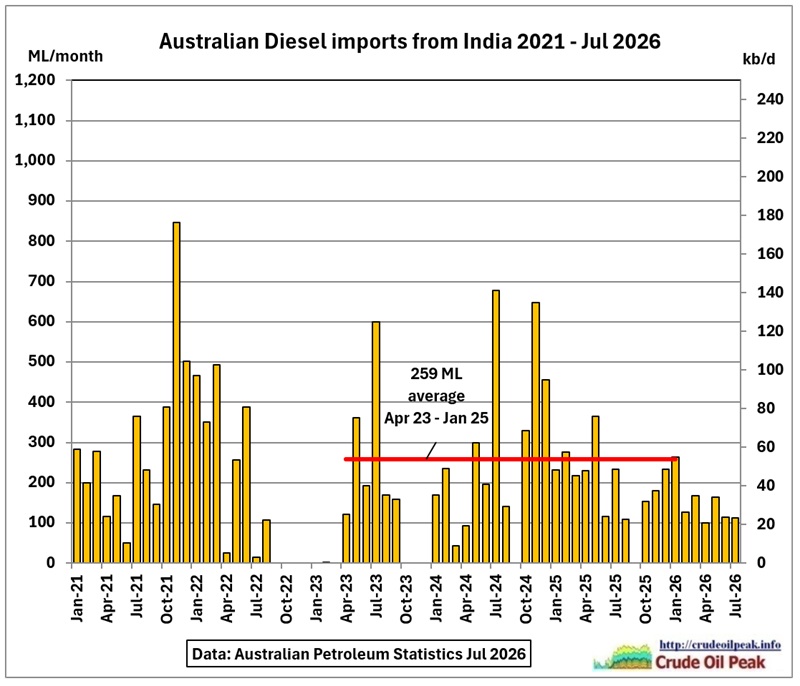 Fig 8a: Diesel imports from India
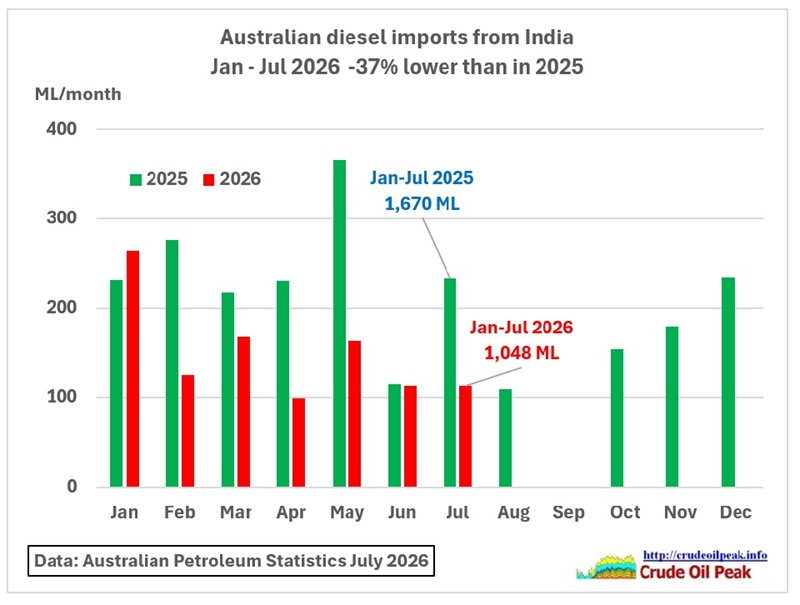 Fig 8b: Comparison Jan – Jul 2026 with 2025
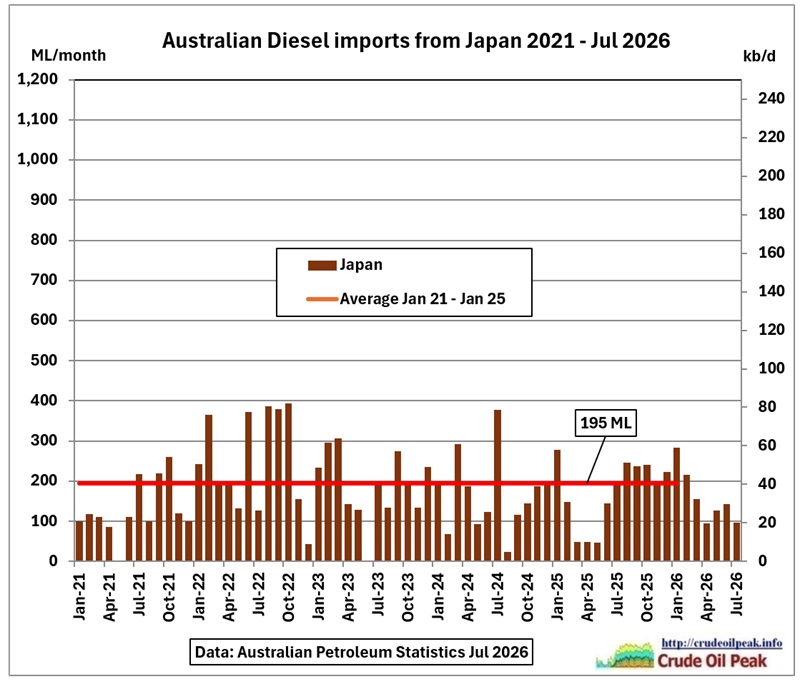 Fig 9: Diesel imports from Japan
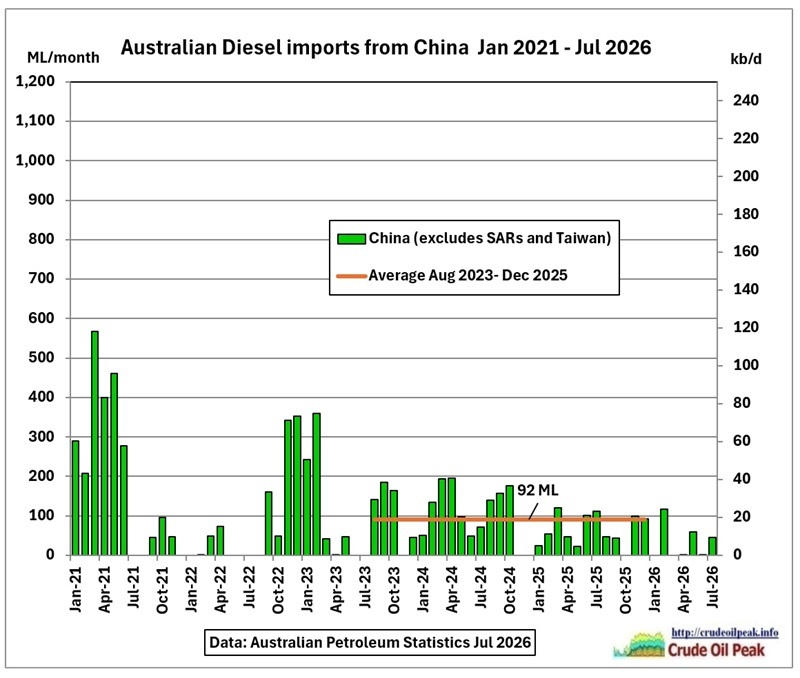 Fig 10: Diesel imports from China
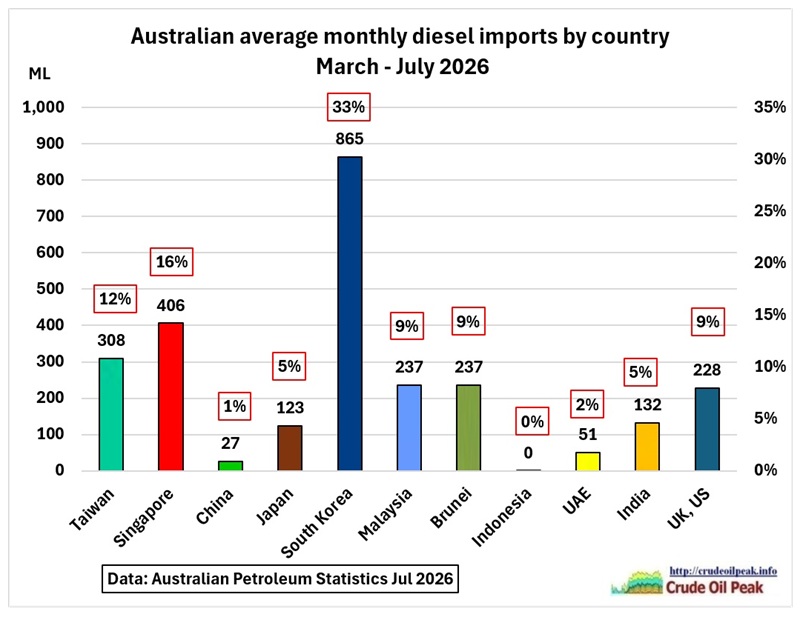 Fig 11: Average monthly diesel import shares March – July 2026
Conclusion:
We can see #1 is South Korea followed by Singapore and Taiwan. Malaysia, Brunei and the US/UK have 9% each, Japan and India 5%. China has a very low share