Total diesel stock on 15 July is slightly less than on 3 March. But the big change is that the estimated onshore share has decreased by 14%, very likely near or below MSO (Minimum Stock Holding Obligation) levels. Onshore tank farms are only filled to 58% capacity. Under current conditions that shortages can be expected the fill level should be between 70% and 80%
We can do an updated estimate of the onshore share because the APS for July has also come out now.
https://www.energy.gov.au/publications/australian-petroleum-statistics-2026
APS measures stock strictly onshore, on tankers in coastal waters (12 nm) or moving between Australian ports even if temporarily outside the 12 nm. MSO reporting extends to EEZ limits (200 nm).
APS measured diesel stock end of July was 2,621 ML (down by 210 ML from the previous month – the maximum in this calendar year). In contrast, MSO reporting for 28 July was 3,640 ML (including offshore in EEZ). This means that the onshore share was 2,621/3,640=72% by end July.
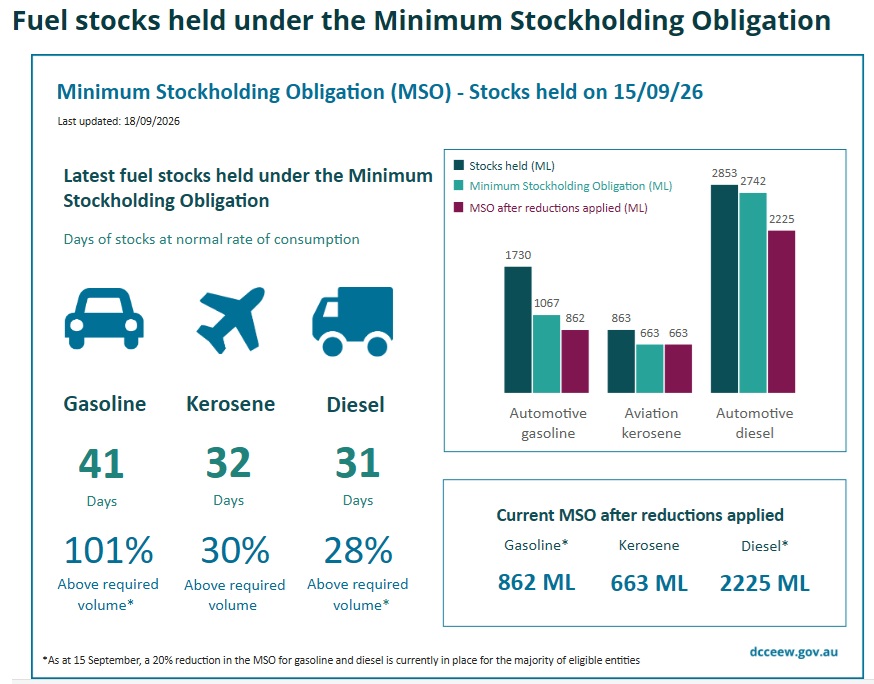
If we apply this percentage to the diesel stock of 2,853 ML reported for 15 Sep then the onshore part of this would be 2,853 x 72% = 2,054 ML, below the MSO threshold level of 2,225 ML.
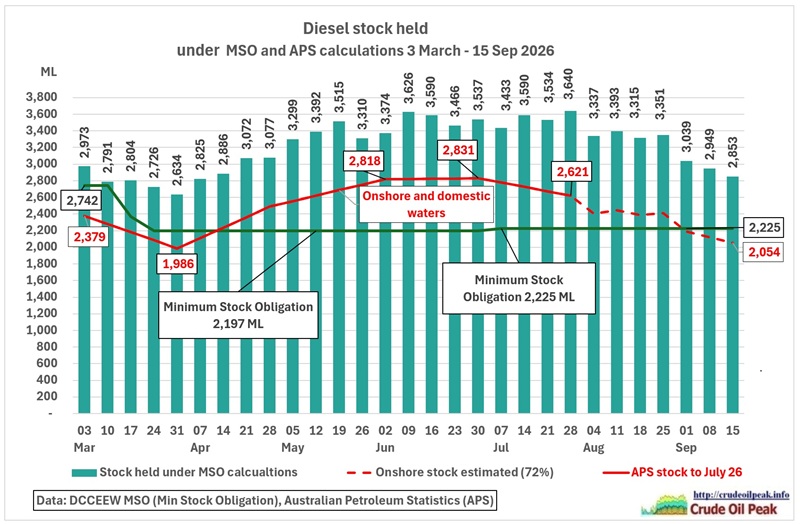 Fig 1: Diesel stock onshore + offshore (MSO, green columns), onshore (APS, red line)
Did the Energy Minister make that clear to the public? Of course not. It doesn’t fit his simple narrative.
Also note that the likely onshore stock of around 2,000 ML is far below the 3,500 ML safe storage level of onshore diesel tank farms.
 Fig 2: Diesel stock vs onshore tank capacity
In the above Fig we have following stock components
bold border is the MSO requirement
dark green is stock held onshore, inside MSO
dark green backward diagonal stripe pattern is offshore, also within MSO
dark green forward diagonal stripes are offshore, on top of MSO (in March)
light green forward diagonal stripes are offshore, on top of MSO (in July)
Press conference, Smithfield, Sydney
19 September 2026
Well, thanks for coming.
Australia’s fuel security remains very solid in the face of the most difficult international circumstances.
We have 41 days’ worth of petrol, which is the same as last week. We have 31 days’ worth of diesel, which is one day less than last week. And we have 32 days’ worth of jet fuel, which is two days more than last week.
https://minister.dcceew.gov.au/bowen/transcripts/press-conference-smithfield-sydney-2
.
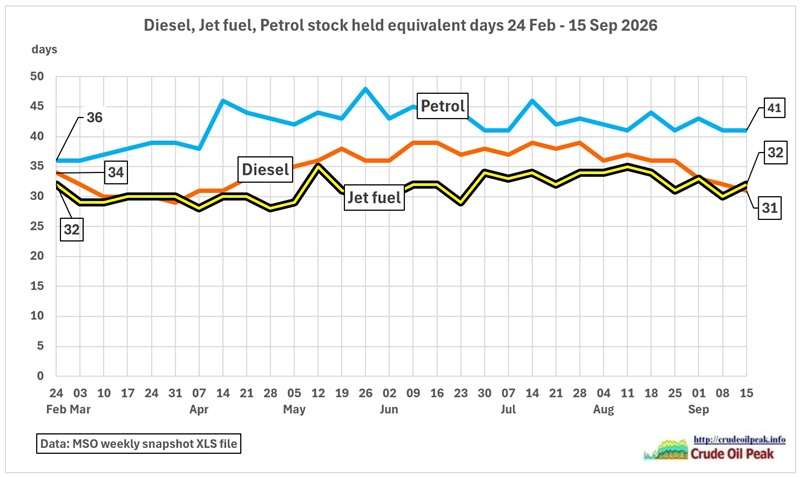 Fig 3: Timeline: fuel stock in days of consumption cover
Only petrol stock is higher than end February when the Iran war started.
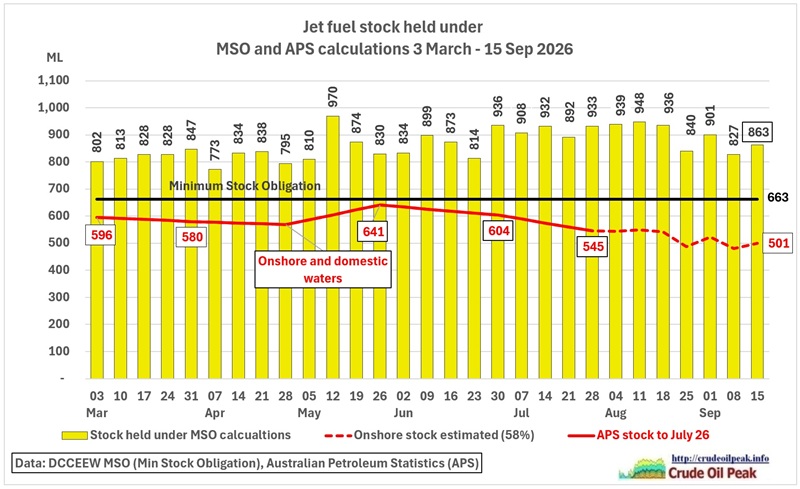 Fig 4: Jet fuel stock onshore + offshore (MSO, yellow columns), onshore (APS, red line)
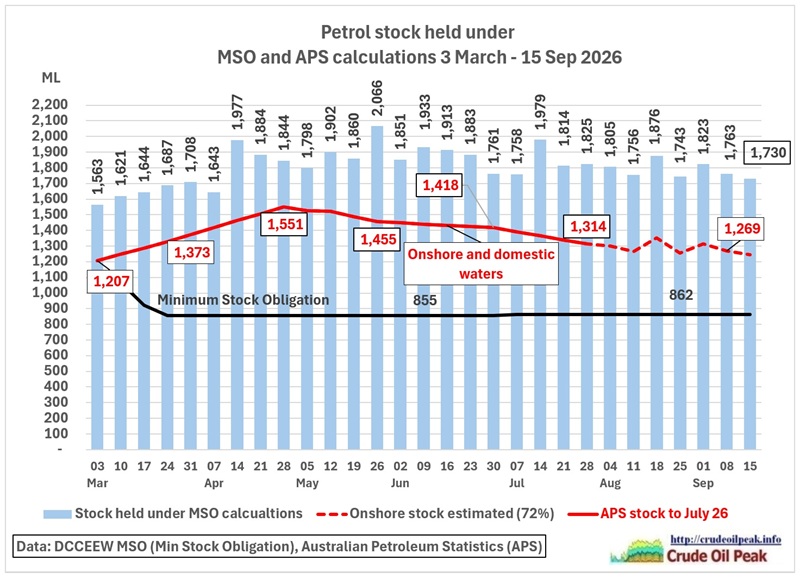 Fig 5: Petrol stock onshore + offshore (MSO, blue columns), onshore (APS, red line)
Ships on the way and Forward orders
About 40 ships are on the way to Australia with fuel, and 3.6 billion litres of fuel is locked in to be delivered, contracted to be delivered over the next four weeks. That’s 300 million litres more than my update last week.
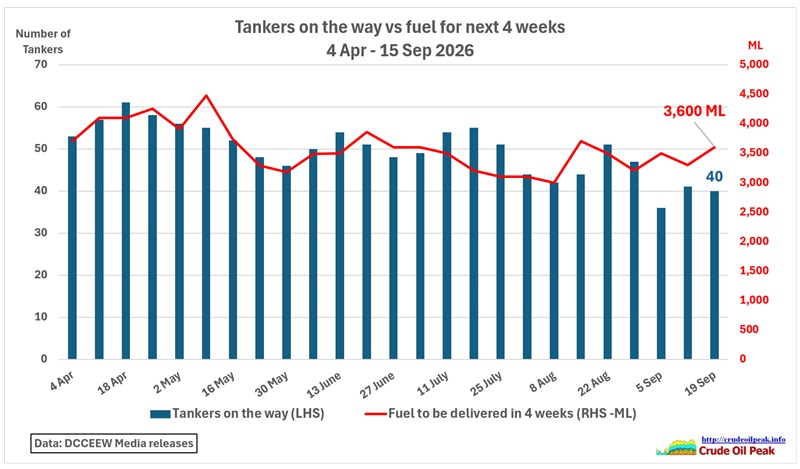 Fig 6: Tankers on the way vs fuel for next 4 weeks
What’s that gap opening up there between number of tankers and fuel volumes? No explanation was given by the Minister.
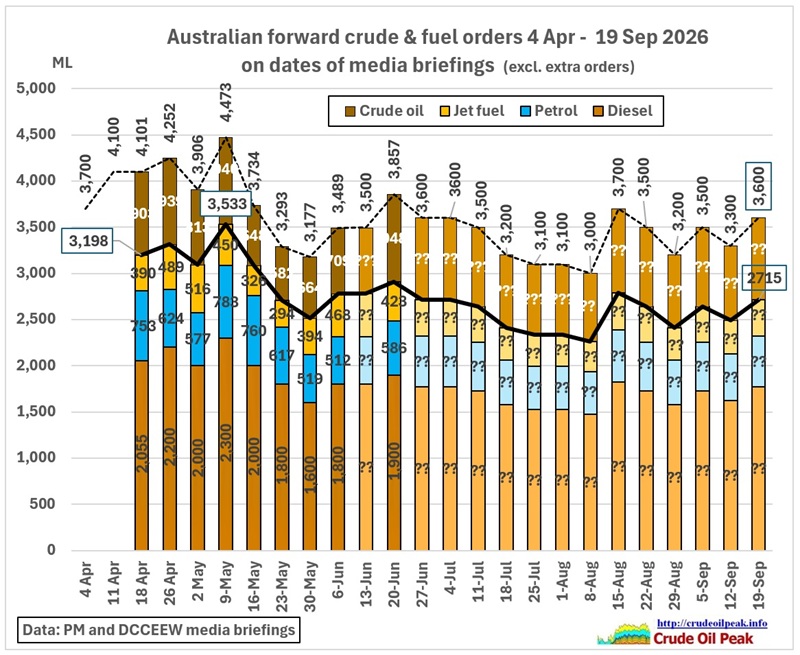 Fig 7: Forward orders crude and fuels
Question marks denote numbers not given by the Minister for months now
I’ve been giving these updates every Saturday for the last six months. We continue to have more fuel in Australia today than when the fuel crisis and the war in Iran began.
But just
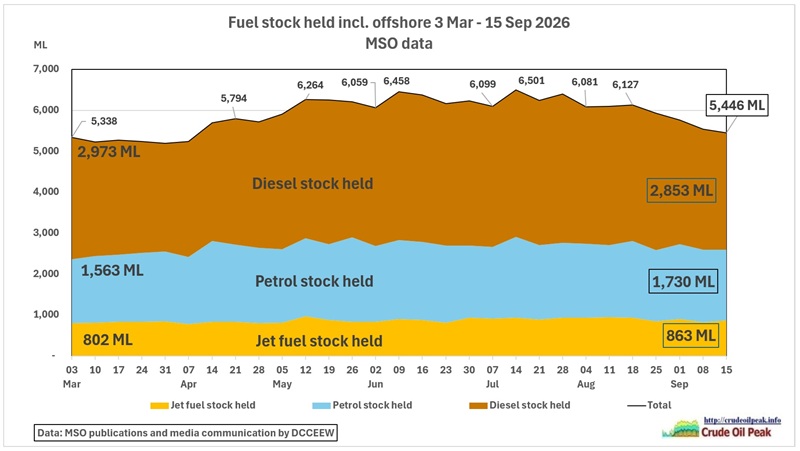 Fig 8: Fuel stock held 3 March – 15 Sep 26
Fuel stock on 15 Sep is just 108 ML higher. That’s just 2-3 tankers or a little bit more than 1 day diesel consumption. And for the most important fuel, diesel, this statement is outright false (see Figs 1 and 2). The public is given a wrong impression.
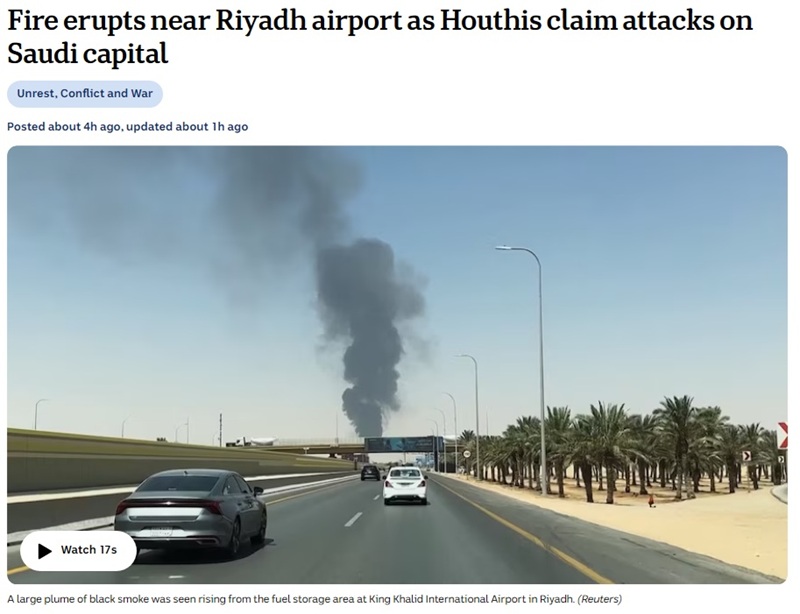
So later this week I will be leaving for direct meetings and consultations with my Saudi Arabian counterpart, Prince Abdulaziz, to discuss the situation and get the latest information from his point of view about the flow of oil from Saudi Arabia to refineries around the world.
We wish him a safe trip. He will be flying from his calm world right into the hotspot of Middle East fighting.
Fire erupts near Riyadh airport as Houthis claim attacks on Saudi capital
20/9/2026
I’ll also be visiting India for consultations with my Indian counterparts, both Minister Yadav and other ministers in the Indian government.
Good luck. India is in peak oil mode
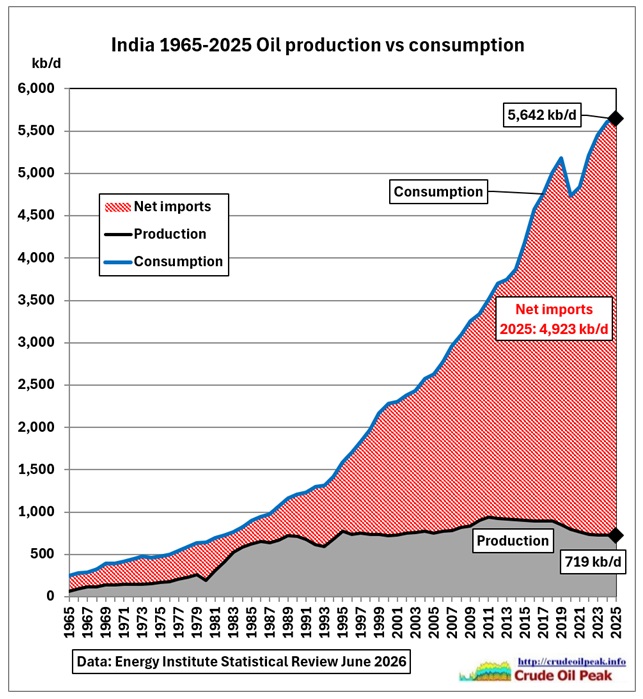 Fig 9: Memo for the Australian Energy Minister
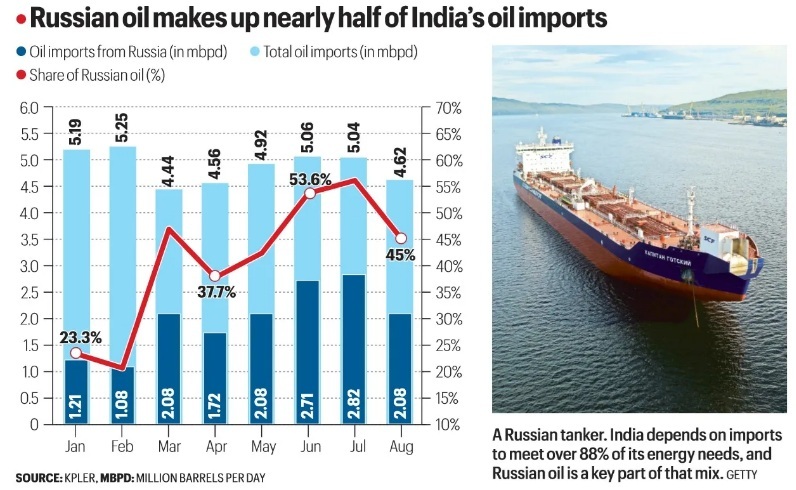
India faces 100% tariff threat over Russian oil after US House vote
17/9/26
https://www.bbc.com/news/articles/c3lyrn4p870yo
And hopefully Chris Bowen will NOT continue negotiations to bring more flights to the 2nd International Airport in Western Sydney. As a climate change Minister he should not promote this climate killer.
We’ll continue to provide the Australian people with full information about the fuel situation so we can give them the confidence they need that the Australian Government will continue to work calmly, methodically, with our trading partners and with Australian refiners to ensure Australia’s fuel security.
Full information? Where are the data of forward orders by fuel? We do not know how much diesel we can expect in the next 4 weeks. And why this continuing emphasis on “calm”? While in fact this is very hard work.
Media
We’ve seen fewer media releases come out on that front. Are they still continuing to come in? Is the Government still securing those same batches of fuel?
CHRIS BOWEN: Are you referring, Connor, to the Export Finance Australia transactions?
JOURNALIST: Yeah, that’s right.
CHRIS BOWEN: Sure.
No, we’ve been in a situation recently where our fuel storage has been full. You simply can’t get more fuel into our fuel tanks.
So we haven’t been pursuing those EFA cargoes in recent weeks.
As soon as we feel that it’s appropriate, and we have the legislation in place, we can turn that back on in a day if necessary and secure extra fuel.
This is a useful clarification that no more EFA cargoes were pursued. This website asked this question may times. The following table shows when it all ended:
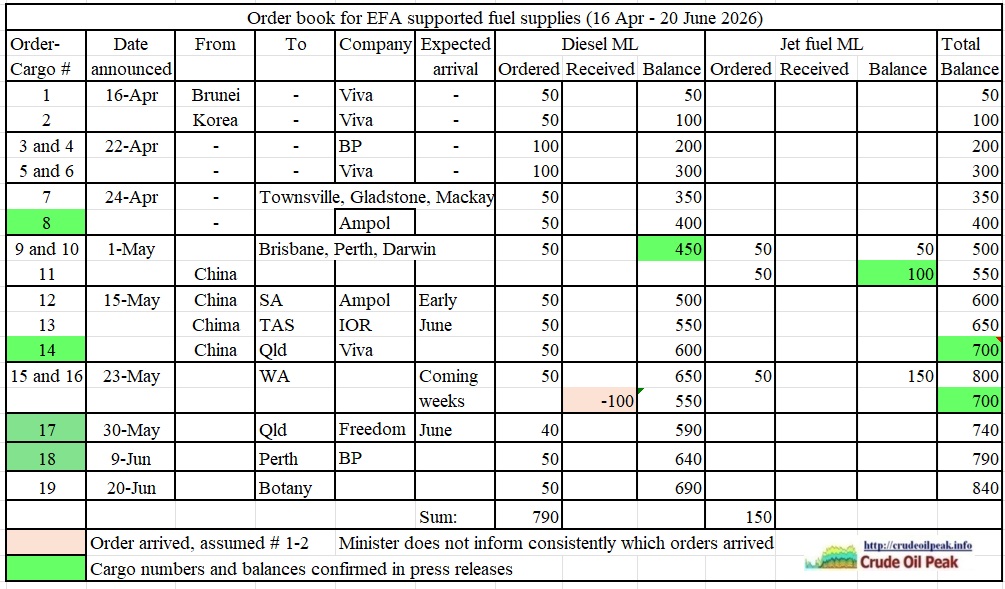
And that’s why in Fig 7 it says “without extra orders”. But that the fuel storage is full is not correct at least a far as diesel is concerned. When tankers like GRAND WINNER 5 and recently HAFNIA MIKALA were sitting offshore for 2 months many other tankers were refilling onshore tanks in the meantime, so it can’t be that storage was full. These must have been contractual problems. Again, this is another example where the Minister is NOT giving the full information to understand what happened.
Labor’s plans to source more fuel leaves shipments stranded at sea
https://www.afr.com/companies/energy/labor-s-plans-to-find-more-fuel-leaves-shipments-stranded-at-sea-20260802-p60krh
Then follows a question by the same journo who apparently missed the announcement that the Government will establish an Australian Fuel Security Reserve
This is the weblink:
Building long-term fuel resilience through the $3.2 billion Australian Fuel Security Reserve and increasing the Minimum Stockholding Obligation (MSO), to increase Australia’s reserves of diesel and jet fuel to 50 days
12 August
https://minister.infrastructure.gov.au/c-king/media-release/strengthening-australias-fuel-resilience
18 August
https://consult.dcceew.gov.au/australias-fuel-security-and-resilience-package
The consultation period is now closed. I’ll be making further announcements before the end of the year about our plan for a government-owned fuel reserve.
Not so much for this crisis, Connor, but for future crises, because the world is a complex place. We should assume that what’s happened in Iran over recent months will happen again somewhere else in coming years.
So, as we announced in the May Budget, that work is well advanced. But as you understand, you don’t build massive storage tanks in weeks or months. It takes time.
It seems the Minister assumes the Iran crisis will end and that there will be a distinctively different crisis. Yes, it can be shipping around Taiwan if there were a military confrontation. That will be on top of what is happening in the Middle East. So the building of new tank farms is very urgent. Plus take away rail capacity from storage tanks around ports.
Look at one of the last tanker trains to Australia’s very capital:
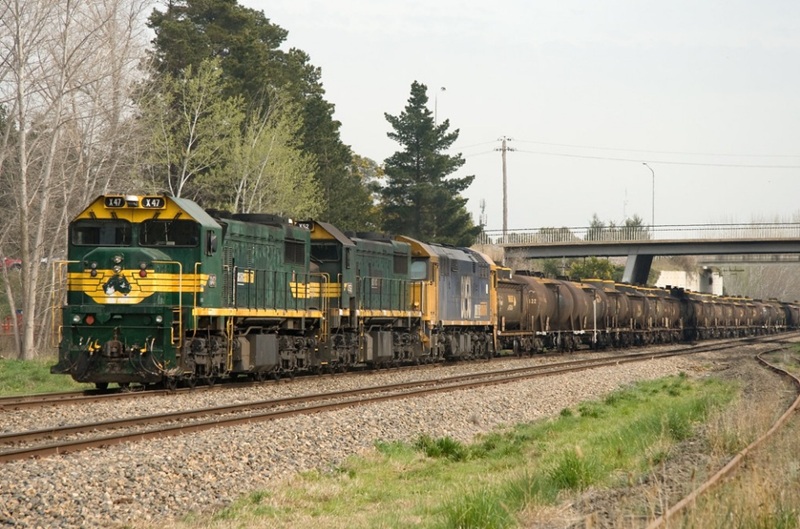 Bi-weekly Sandown (Sydney, Clyde) to Fyshwick (Canberra) fuel trains in Oct 2009
https://www.flickr.com/photos/raichase/4013851362/in/album-72157622408620832/
Fuel by Rail – A Victim of Progress
February 22, 2010 by Raichase Nicholson
In January of this year, the final movement of commercial fuel on rail was undertaken without any major fanfare or send off. For decades, fuel has been transported by rail to various locations around the state, to places as diverse and far away as Wagga Wagga, Goulburn, Cooma, Tamworth, Dubbo, Canberra and so on
https://trackside.wordpress.com/2010/02/22/fuel-by-rail/
This supply chain ended when the Sandown gantries https://www.facebook.com/groups/NSWRailwaysPastandPresent/posts/25578444751754663/
were dismantled with the closure of the Clyde refinery.
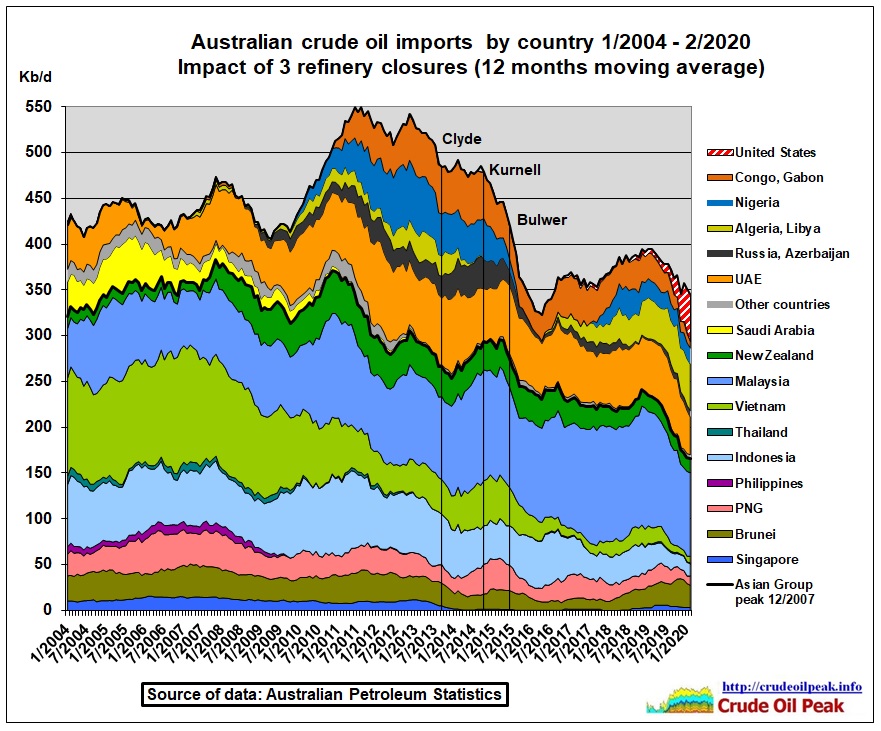
13/4/2011 Australia’s fuel import vulnerability increases as Sydney’s Clyde refinery is closing
http://crudeoilpeak.info/australias-fuel-import-vulnerability-increases-as-sydneys-clyde-refinery-is-closing
Wrong decisions were made when the conventional oil peak hit starting in 2005/06, even to this very day as decision makers still have not understood how all this was and is interconnected.
Related post:
13/9/2026
Analysis tanker traffic in Sydney August 2028
https://crudeoilpeak.info/analysis-tanker-traffic-in-sydney-august-2026