Skip to content

Crude Oil Peak

Menu
  • Home
    • About
    • Disclaimer
  • OECD imports
    • France
    • Germany
    • Italy
    • Japan oil imports
    • OECD Europe
    • OECD Pacific
    • South Korea
    • UK
    • US Imports
  • Australian graphs
    • Australian electricity supply graphs
    • Australian crude oil production
    • Australian crude oil reserves
    • Oil import dependency
    • Oil and fuel imports
    • ULP prices
    • Industry stocks
    • End use of oil
    • WA crude oil
    • WA domestic gas
    • East coast conventional gas
    • Geoscience Australia March 2010
    • Geoscience Australia 2005/2006
    • Gippsland
    • LPG
    • Petrol rationing in WW2
  • Oil reserves
    • OPEC paper barrels
    • Kuwait Reserves
    • Strategic Oil Reserve
  • Global Peak
    • Algeria peak
    • Angola peak oil
    • Argentina peak
    • Azerbaijan peak
    • Brazil
    • Brunei peak
    • Canada and tar sands
    • Caspian peak
    • China Peak Oil
    • Deepwater peak
    • Egypt
    • Gabon peak
    • India peak oil
    • Indonesia peak
    • Iran Peak
    • Libya peak oil
    • Malaysia-peak
    • Mexico peak
    • Norway peak oil
    • Qatar peak
    • Russia peak
    • Saudi Arabia export peak
    • Sudan Peak
    • Syria
    • Tunesia
    • UAE peak
    • UK Peak
    • US Peak
    • Vietnam peak
    • Venezuela peak
    • Yemen
  • Energy Transitions
    • Germany energy transition
    • Japan Energy Transition
    • UK Energy Transition
    • US
  • Fuel Shortages
    • China Fuel Shortages
    • Egypt Diesel shortages
    • India petrol price hike
    • Malawi fuel shortage
    • Nepal
    • Nigeria fuel shortage
    • Pakistan petrol shortage
    • Russia
    • Tanzania fuel shortage
    • Uganda Fuel Shortage
    • Yemen fuel shortages
  • I told you so
    • Top Ryde Shopping Centre
    • North South Bypass Tunnel (Clem7) Brisbane
    • Airportlink Brisbane
    • Cross City Tunnel
    • Lane Cove Tunnel
    • Too late for Metro tunnels
    • Australian car manufacturing closing down
    • How the first phase of peak oil brought Virgin Australia into minus after 2008
  • Solutions
    • Night trains
    • Electric Rail on Freeways
    • LNG locomotive conversion
    • Electric trolley buses
    • Walk to school
  • Oil crises
    • Oil crisis 1973
    • My experience oil crisis 1979
    • Historical Oil Disruptions
  • Food and Oil
    • Farm Costs Australia
    • Food crises and political instability
  • Global warming
    • Storms of my Grandchildren
    • Extreme weather events
    • Global warming and petrol lines
    • Compensation claims from global warming damage
    • Sea level rises
    • Why coal seam gas will not reduce CO2 emissions
Menu

Peak Oil in South East Asia and India – Part 1 Production and Consumption – Update 2022

Posted on July 17, 2023

The Energy Institute published its first Statistical Review on 25 June 2023, thereby replacing the BP Statistical Review

https://www.energyinst.org/statistical-review

Let’s have a look at oil production and consumption in South East Asia and India. After all, this is one of the key regions in the world where perpetual growth is expected.
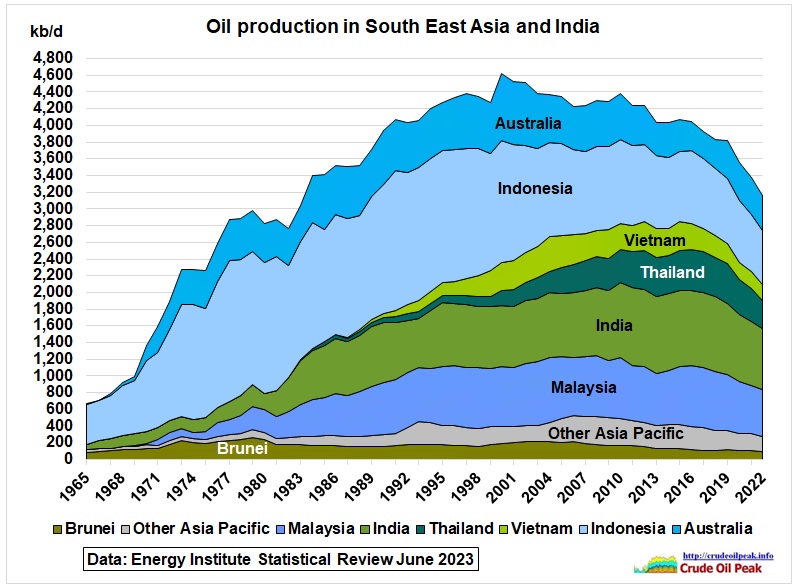
Fig 1: Oil production peaked in 2000

This peak year came about by a production spike in Australia which peaked in that year. Without Australia we observe a bumpy production plateau between 1995 and 2016 (20 years). Annual decline rates in the last 3 years have accelerated to 5% – 7% pa. We do not know how much of that is due to Covid.
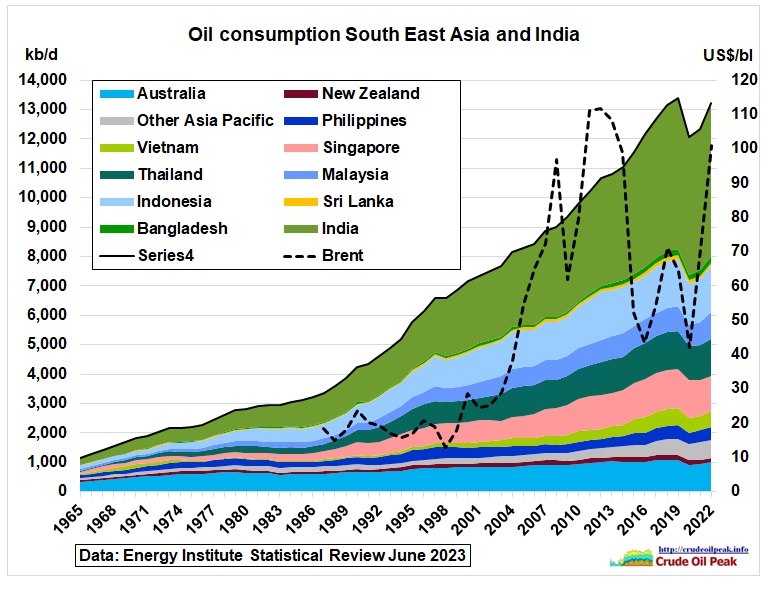
Fig 2: Oil consumption in South East Asia and India

The Wuhan virus stopped unsustainable oil consumption growth much more than any other crisis before. That tells us that dramatic events must happen to reign in oil demand.
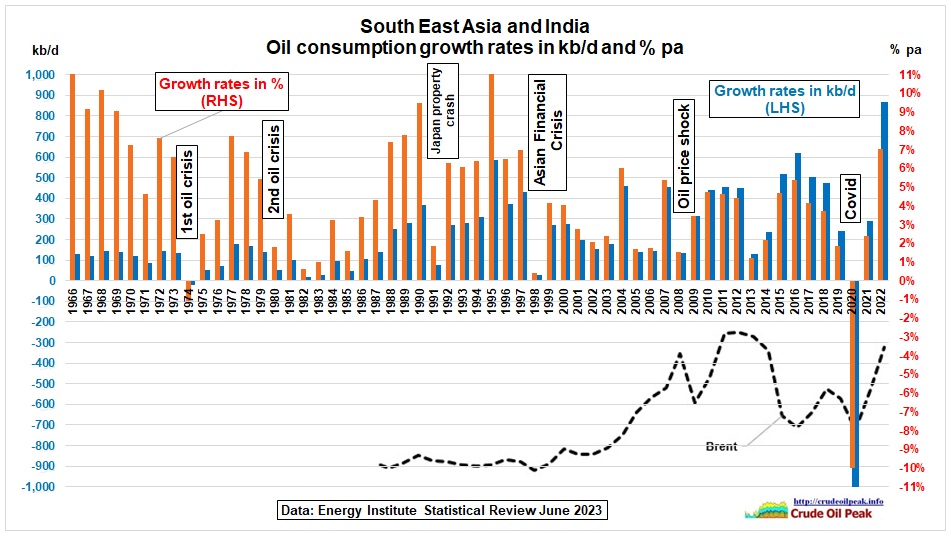
Fig 3: Oil consumption growth rates in kb/d and percent

Oil consumption took off in the mid 1980s when growth rates were 6.5% pa on average. The 1997 Asian financial crisis (originated in Thailand) reduced the growth rates by half. After the 2008 oil price shock, growth varied between 1 % and 7%. Covid was a roller-coaster. Note that consumption is now so high, that a 3% increase in 2022 is 400 kb/d. If that continued for another 10 years the cumulative growth would be more than the total current annual production.
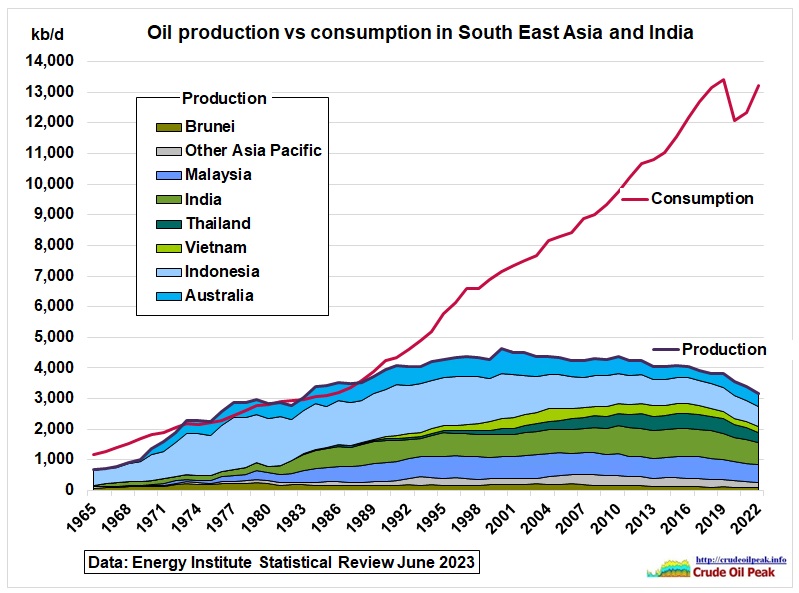
Fig 4: Consumption vs production

Up, up and away: consumption in 2022 was more than 4 times production equal to a 76% import ratio which was just 35% in the peak production year 2000. Compared to that year, the oil production decline was 1.5 mb/d while the oil consumption increase was 8.6 mb/d. This means the peak oil problem is around 6 times more an oil import problem than a production problem.

Let’s have a look at individual countries:
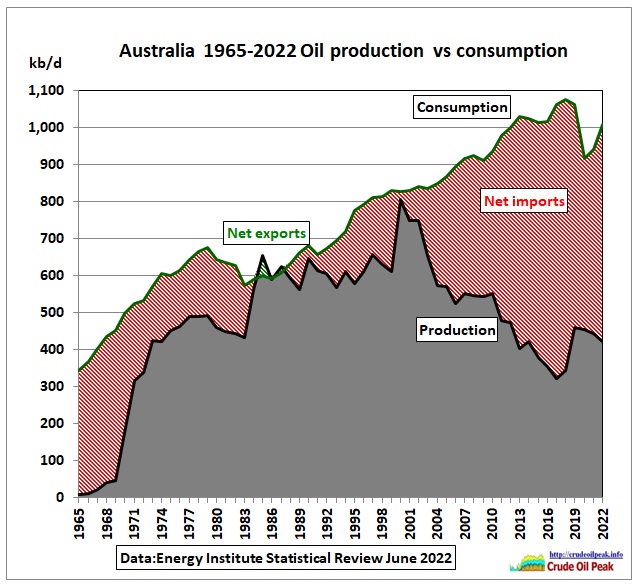
Fig 5: Australia import ratio 58% (-2% pa last 5 years)
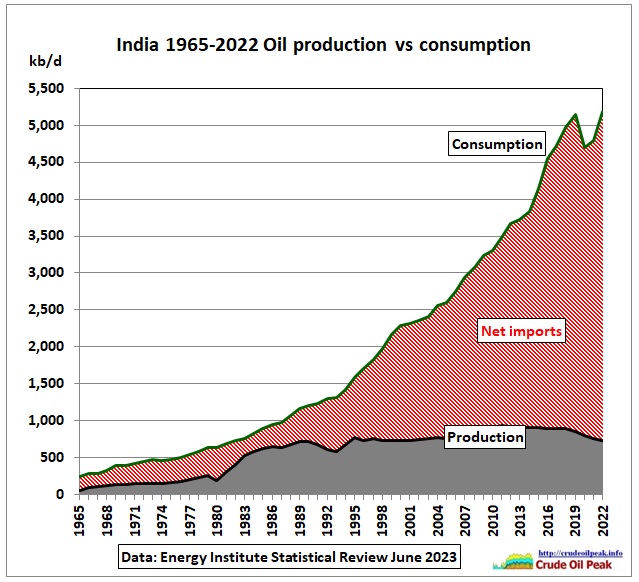
Fig 6: India import ratio 86% (+0.7% pa last 5 years)
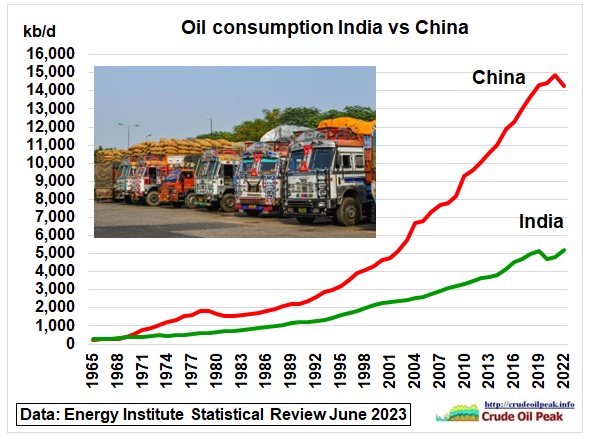
Fig 7: Oil consumption India vs China

All those who think India will become a 2nd China, should think hard where the oil will come from.
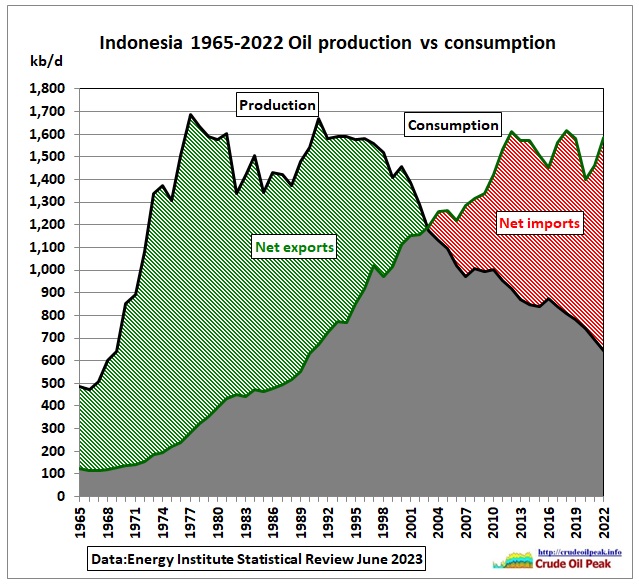
Fig 8: Indonesia import ratio 59% (+1.9% pa last 5 years)
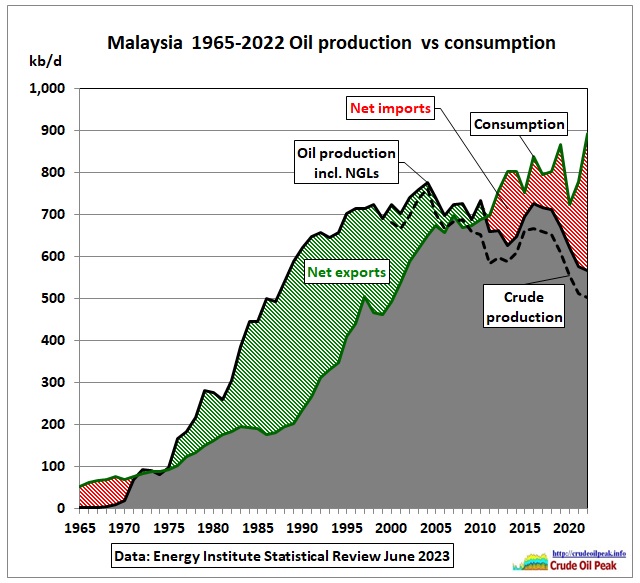
Fig 9: Malaysia import ratio 37% (+5.1 % pa last 5 years)
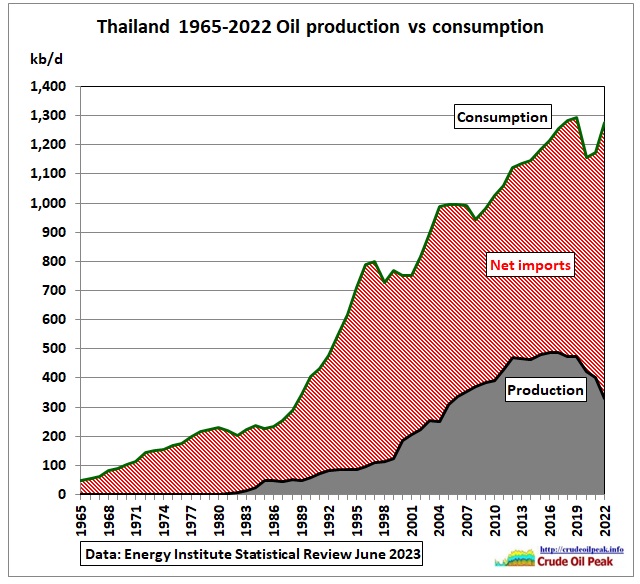
Fig 10: Thailand import ratio 74% (+2.2 % pa last 5 years)
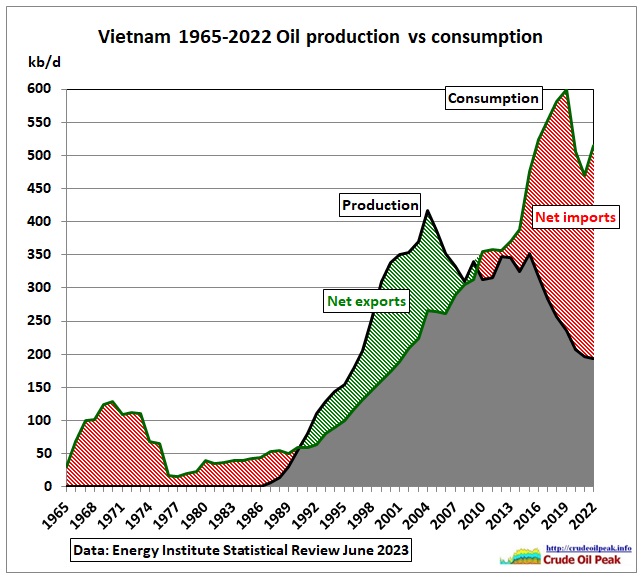
Fig 11: Vietnam import ratio 62% (+1.3% pa last 5 years)

Preview part 2: Asian oil imports

EI statistics do not have import data on South East Asia separately but on 6 regions/countries as shown along the x-axis in the following graph:
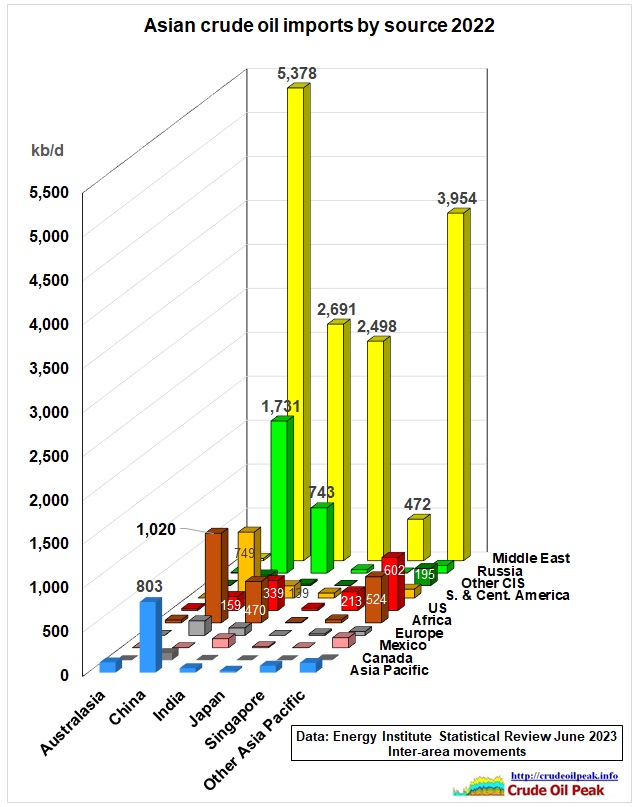
Fig 12: Asian crude imports by source

The crude trade in the above graph is 24.3 mb/d (57% of the global total). The import dependence on the Middle East is 62%, on Russia 11%.

Key data & graphs

  • Net oil importers
  • Oil Exports
  • Crude oil imports
  • Downloads
  • Latest Graphs
  • Oil price analysis
  • US drilling rig count
  • International drilling rig count
  • Australian fuel prices
  • Diary
  • International oil companies
  • US tight oil production
  • China peak oil
  • World liquids supply – demand balance
  • Tankers arriving and departing in Sydney
  • Australian oil and fuel imports

Latest posts

  • Australian Energy Minister – Asked About Reports of Three Tankers Burning in Hormuz – Sees Only “General Uncertainty”
  • Jet fuel stocks just 2.6 days above the Minimum Stockholding Obligation as new Western Sydney Airport enthusiasm soars
  • Asia Pacific peak oil update 2025, consumption 5x higher than production
  • Australian jet fuel stock floating offshore while fuel prices are flying away
  • Australian Diesel imports in August dropped from high in May
  • First early hot summer day in spring 2026 and power prices spike at a whopping AUD 23k per MWh

Archives

©2026 Crude Oil Peak | Design: Newspaperly WordPress Theme