In a lucky-down-under episode of the BBC series “Yes, Minister”
https://www.bbc.co.uk/programmes/b006xtc3
we try to verify the Energy Minister’s repeated statements like this one:
Press conference, Brisbane, QLD
20 March 2026
CHRIS BOWEN, MINISTER FOR CLIMATE CHANGE AND ENERGY
I’m pleased that fuel continues to arrive in Australia. Every expected delivery has delivered, and the refineries are continuing to produce at full time.
https://minister.dcceew.gov.au/bowen/transcripts/press-conference-brisbane-qld
2 days later:
Six fuel ships to Australia cancelled or deferred, energy minister confirms
22 March 2026
Energy Minister Chris Bowen says six fuel tankers that were scheduled to deliver oil to Australia next month were recently cancelled or deferred, out of about 81 ships expected from mid-April to mid-May.
https://www.abc.net.au/news/2026-03-22/six-fuel-ships-cancelled-oil-supply-iran/106483424
Let’s check what is happening. We need to look at 3 websites:
Port Botany vessel movements
https://www.portauthoritynsw.com.au/port-operations/port-botany/port-botany-daily-vessel-movements
Sydney Harbour vessel movements
https://www.portauthoritynsw.com.au/port-operations/sydney-harbour/sydney-harbour-daily-vessel-movements
Marine Traffic
https://www.marinetraffic.com/en/ais/home/centerx:151.6/centery:-34.0/zoom:10
After this interview…..
10 March 2026
CHRIS BOWEN, MINISTER FOR CLIMATE CHANGE AND ENERGY
….. at this point, not one single shipload of diesel, petrol or jet fuel to Australia has been interrupted. They’ve all arrived on time, on schedule, as expected. And we expect that to be the case, at least for the immediate future.
https://minister.dcceew.gov.au/bowen/transcripts/interview-sally-sara-abc-radio-national-0
…….it was time to look at the arrival of tankers.
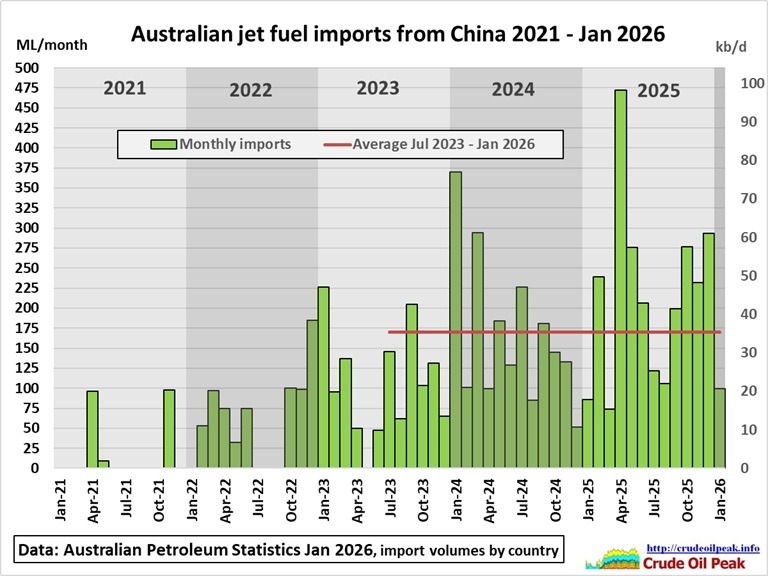
And since China started to suspend fuel exports on 5th of March…..
China urges refiners to suspend fuel exports amid Mideast war, sources say
SINGAPORE, March 5 (Reuters) – China has asked refiners to halt signing new contracts to export fuel and to try to cancel shipments already committed as tight oil supply due to the Iran war curbs refinery output, several people with knowledge of the matter said on Thursday
https://www.reuters.com/business/energy/china-urges-refiners-suspend-fuel-exports-amid-mideast-conflict-sources-say-2026-03-05
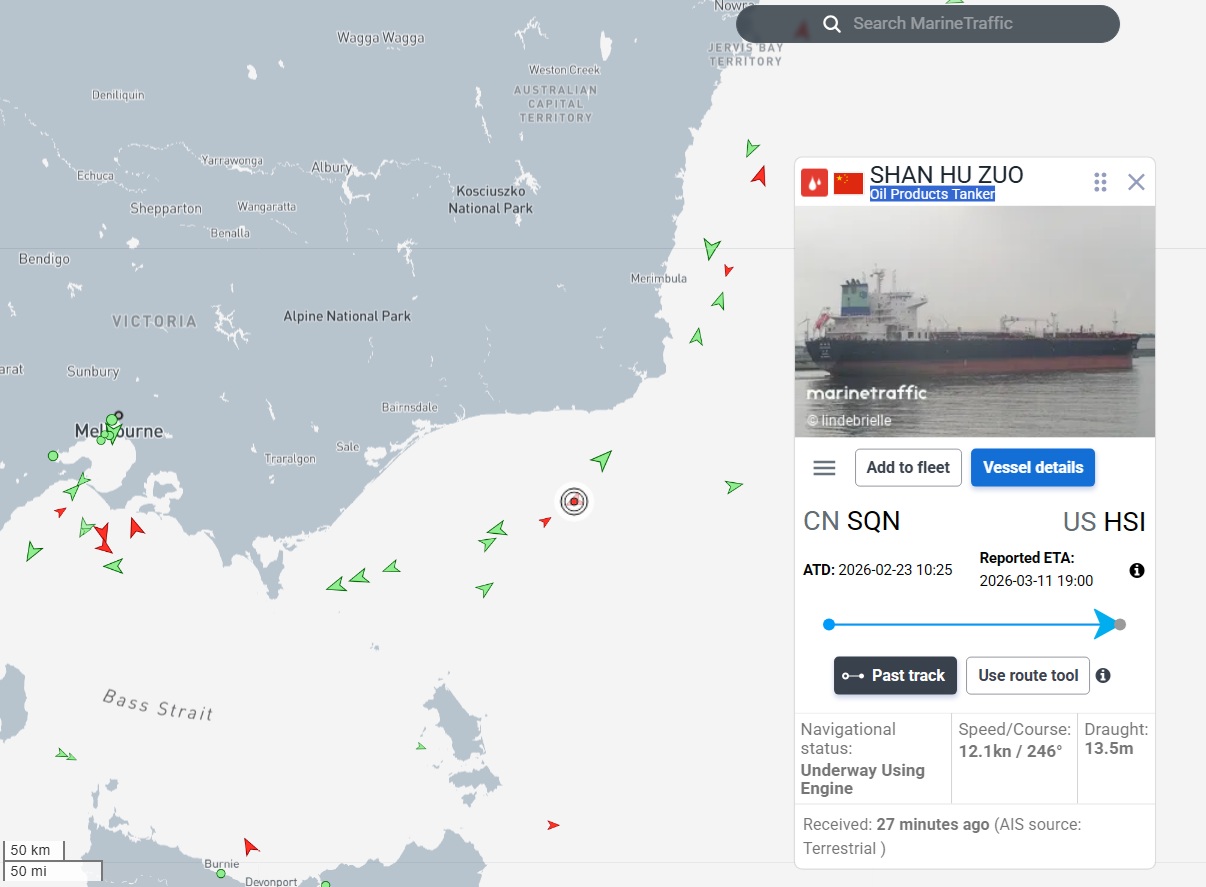
…it will be necessary to see when that will start to impact on Australia. This Chinese tanker was a good example:
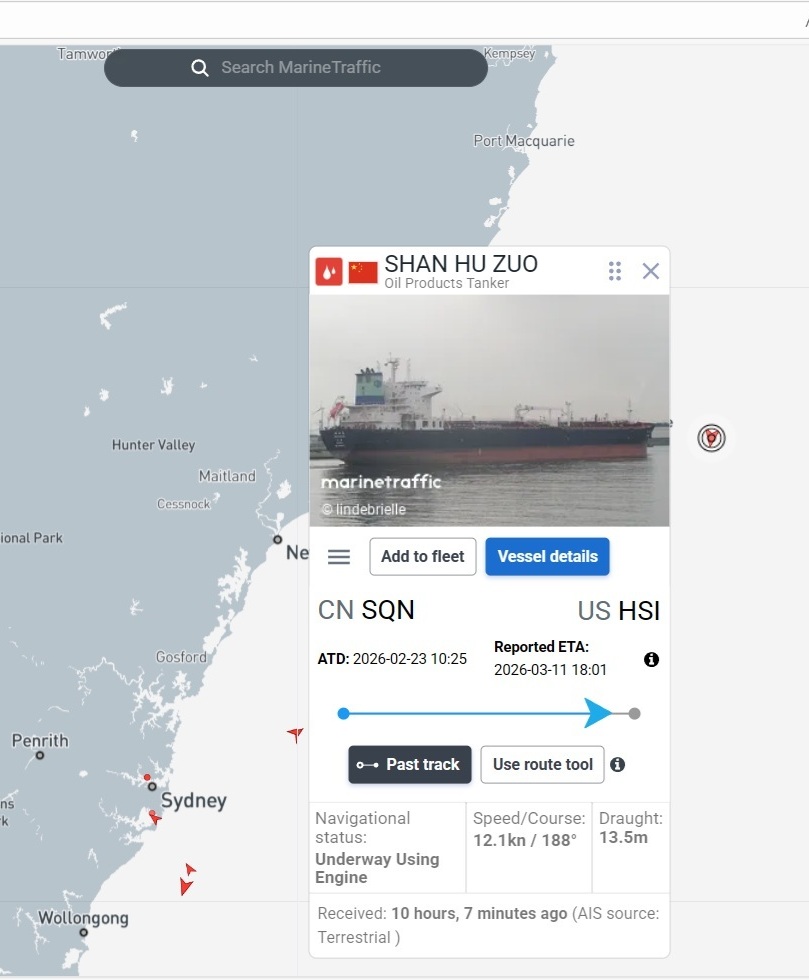 SHAN HU ZUO on 10 March north east of Newcastle heading south with a draught of 13.5 m
Look at the destination: US HSI. That looks dodgy. Is this tanker already diverted being that far south? Google AI tells us that the crew might have entered “Hastings” (Victoria) which an automatic UN/LOCODE tracker matched with the Hastings Marina, Minneapolis.
https://www.marinetraffic.com/en/ais/details/ports/21314?name=HASTINGS&country=USA
Departure 23 February 2026 from Shenquan (Guangdong province), 5 days before the Iran war started
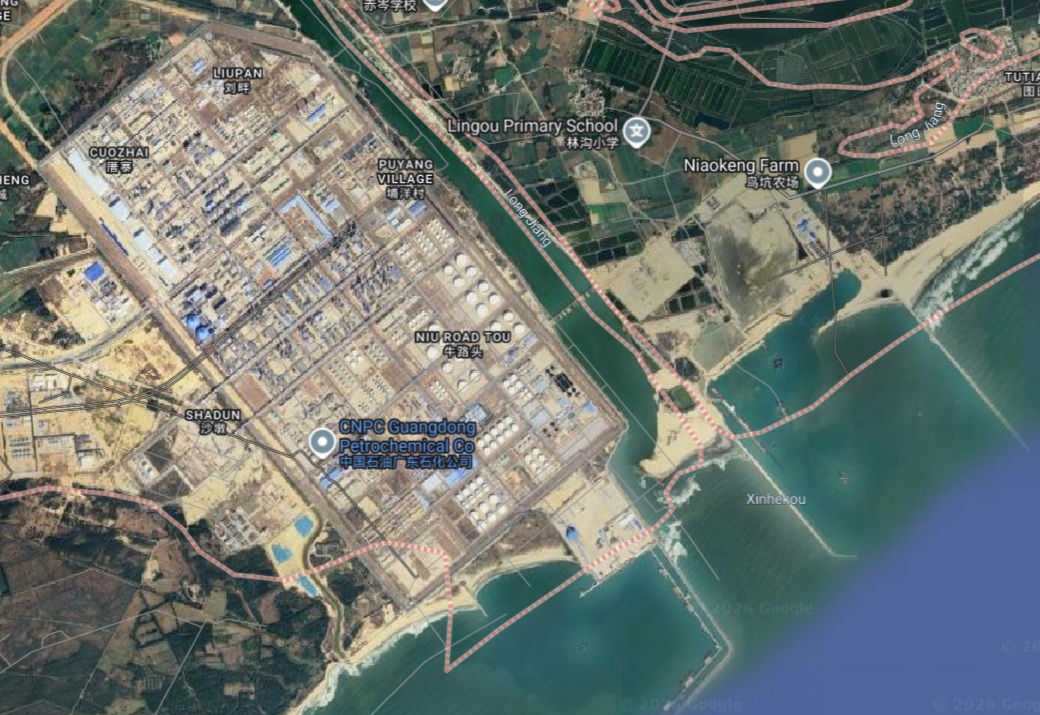 CNPC (PetroChina) Guangdong Petrochemical is a large, modern refinery with 400 kb/d
These are the tanker’s specs:
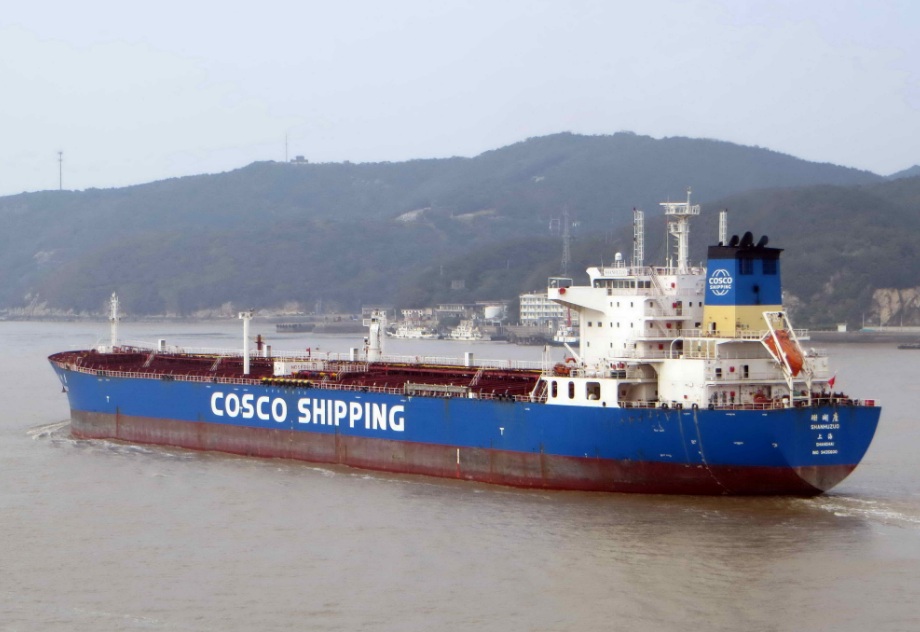
SHAN HU ZUO (IMO: 9435600) is a Oil Products Tanker and is sailing under the flag of CHINA. Owned by COSCO. Panamax (Long Range 1). Her length overall (LOA) is 228 meters and her width is 32 meters. Year built 2010. Draft (summer) 14.7 m. Deadweight 75,596 t. Liquid capacity 85-90 ML.
12 segregated epoxy coated tanks allow multiple type of fuels (petrol, diesel, jet fuel-strict purity requirements) without cross contamination.
https://www.marinetraffic.com/en/ais/details/ships/shipid:555886/mmsi:413181000/imo:9435600/vessel:SHAN_HU_ZUO
So what type of fuel is in the tanker? It is really guesswork
Petrol (ULP): ~0.74 kg/L x 85-90 ML = 63-66 kt
Jet Fuel: ~0.80 kg/L x 85-90 ML = 68-72 kt
Diesel: ~0.84 kg/L x 85-90 ML = 71-76 kt
Considering that the draft is 13.5 m and not 14.7 m we have to use the TPC (tons per centimetre) for this type of tanker which is 70 t per centimetre. So we have 1470-1350 = 120 cm x 70 t = 8,400 t to be deducted from the deadweight which makes 67 kt. This would suggest a full load of petrol. But since Australia rarely imports petrol from China it is most likely jet-fuel.
On March 11th, SHAN HU ZUO has arrived on the south coast of Victoria, in Bass Strait.
It has to wait for a berth in Hastings Harbour. There is Crib Point berth 1 and Long Island Point jetty. Both are occupied. And then there are strong winds. If they exceed 20 knots a specific risk assessment must be conducted between the Harbour Master and the Pilot. Berthing is suspended at 25-30 knots.
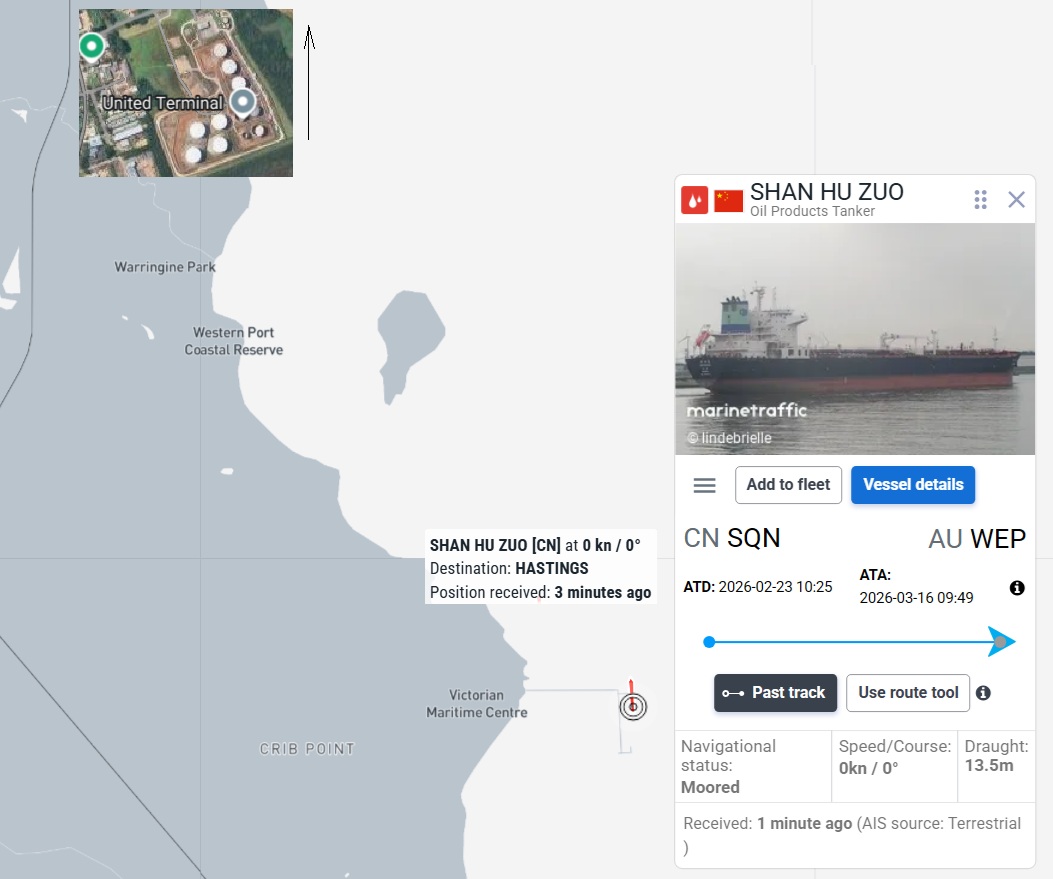
On 16th of March, the tanker can finally dock at Crib Point and the fuel is pumped in a 9.5 km long pipeline to storage tanks of United Petroleum Hastings in Barclay Crescent. The tanker’s AIS now shows as destination AU WEP (Western Port). The pumping takes 2 days and the draft goes down to 10.1 m.
The tank farm there has a storage capacity of 190 ML.
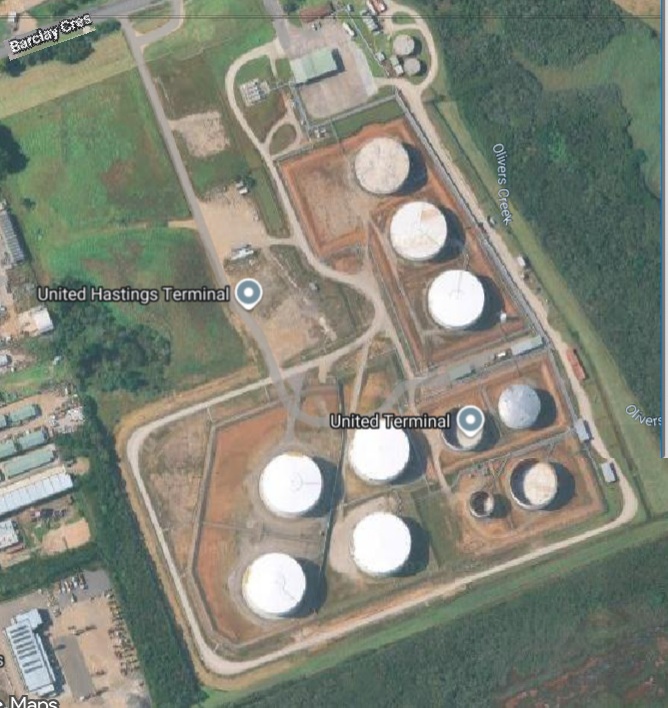 https://www.youtube.com/watch?v=CvQhrSfIY7U
Product: Diesel and Jet Fuel, 2 x 25 ML
https://brockmaneng.com.au/project/united-petroleum-diesel-storage
Primary Destinations
Melbourne Airport (Tullamarine) jet fuel is transported from the terminal to the airport by truck to support refuelling services.
Regional and Secondary Airports: While major airports are often serviced by pipelines, regional airports typically rely on road transport from terminals like Hastings. United services these locations through its extensive regional network.
Commercial and Industrial Sites: United delivers aviation fuel directly to bulk storage tanks for customers in industries such as agriculture and mining.
Aviation Club Partnerships: United has partnerships with local aviation groups, such as the Royal Victorian Aero Club (RVAC), providing community fuel discounts for members at their retail and operational sites.
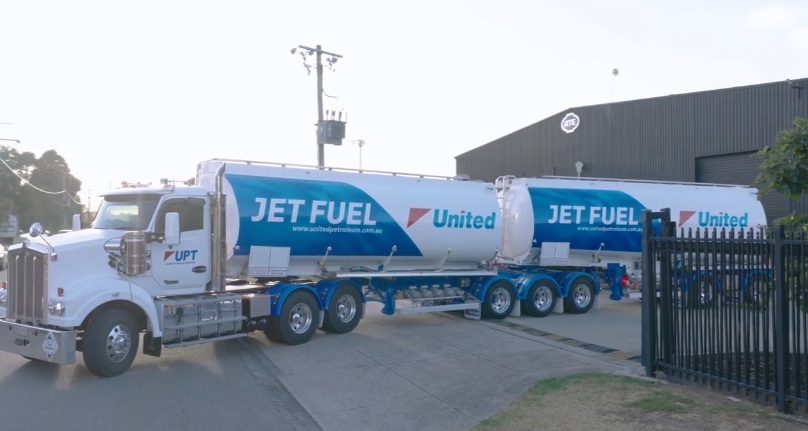
Built in ATE’s Sunshine Facility for United Petroleum Pty Ltd, this 20m B-Double was built for one job – to move jet fuel from the Hastings Terminal to Tullamarine Airport. https://www.linkedin.com/posts/ate-tankers-australian-tank-engineering-pty-ltd_roadtankers-australianmade-supportlocal-activity-7435160216058486784-oMH5/
Then SHAN HU ZUO ships back up the coast, this time with a proper destination AU BTB (Botany Bay). Arrival on the 21st March. Then again waiting because GASCHEM HOMER had to leave first. Then finally SHAN HU ZUO docked at Botany Berth 1.
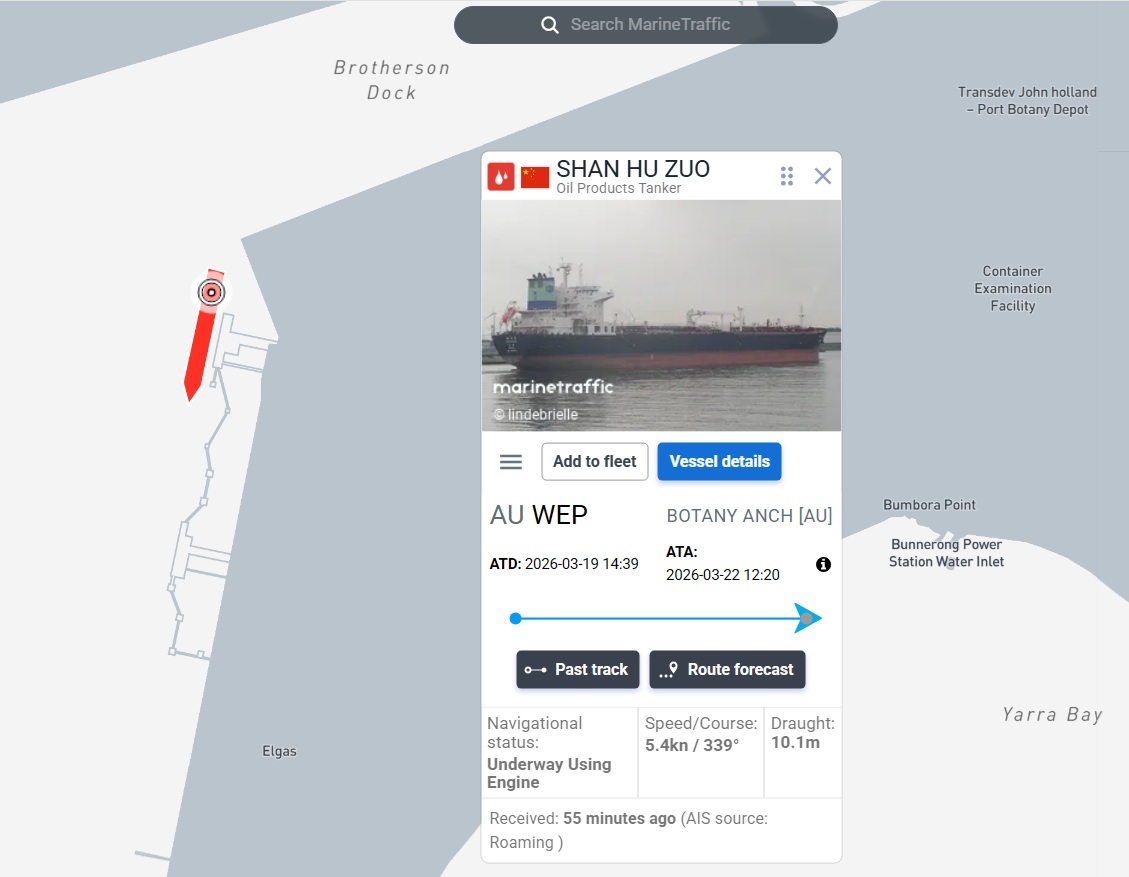 SHAN HU ZUO finally at bulk liquid berth (BLB1) in Botany Bay on 22 March 1 month after departure
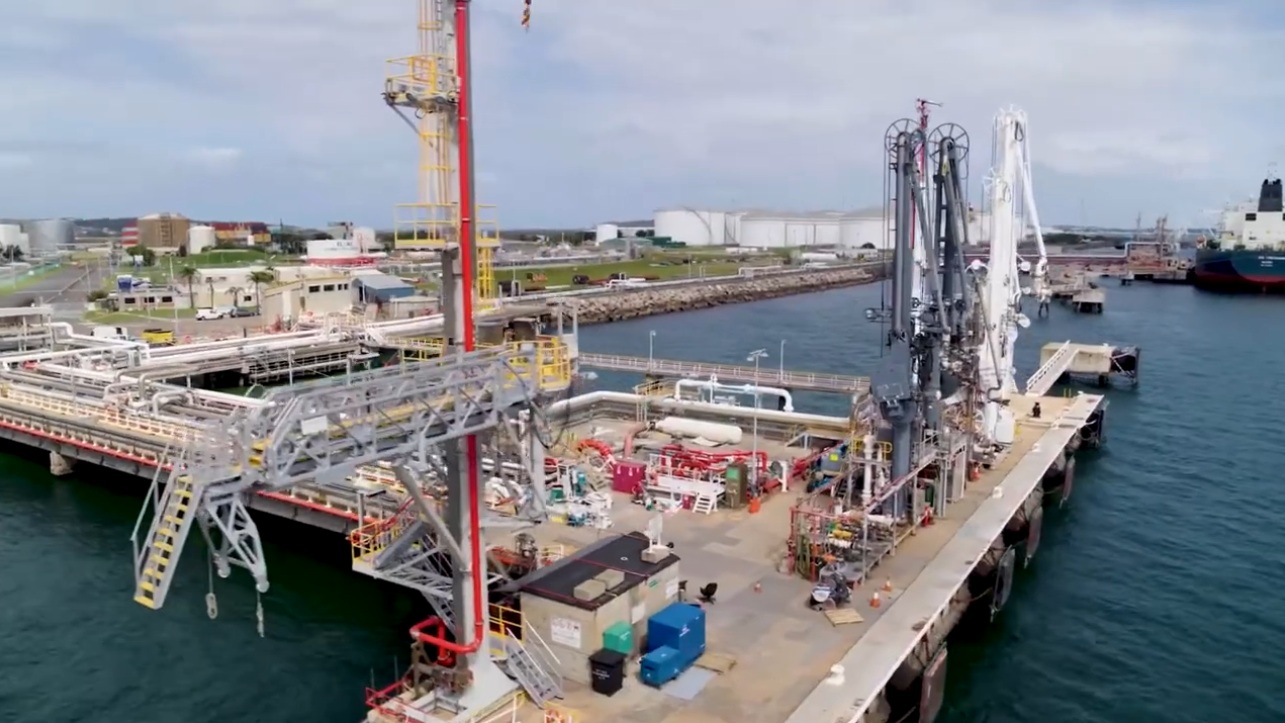 NSW PORTS – Bulk Liquids Berth 1 (BLB1) Rehabilitation Project
https://www.youtube.com/watch?v=8FGeFI2oPKk
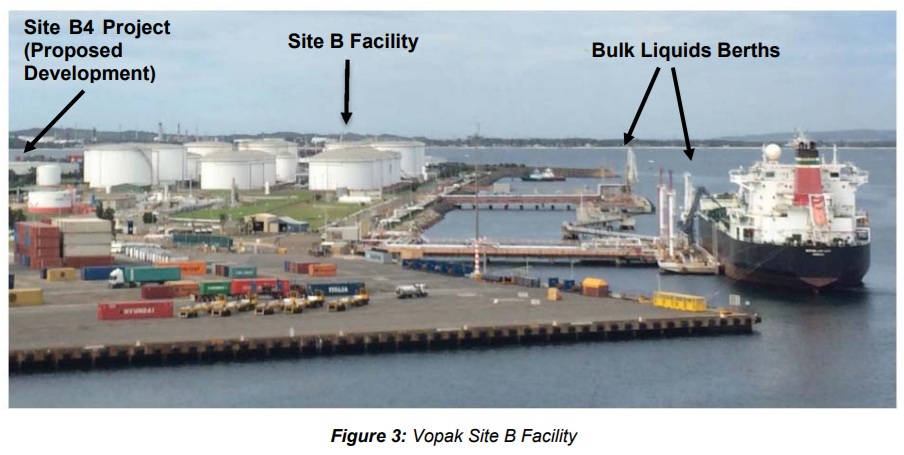
So that jet-fuel is pumped (in all likelihood) to VOPAK B tanks (91 ML capacity for jet fuel of the total capacity of 350 ML) which are connected to the Sydney Airport by “JUHI” (Joint User Hydrant Installation) system.
In 2019, approximately 1,500 aircraft were refuelled each day at Sydney Airport, with an average daily jet fuel demand sitting at around 10 million litres.
5 storage tanks with a maximum capacity of 29 megalitres of aviation fuel
https://www.sydneyairport.com.au/corporate/planning-and-projects/jet-fuel
Let us assume there was half of the tanker it’s just 4-5 days
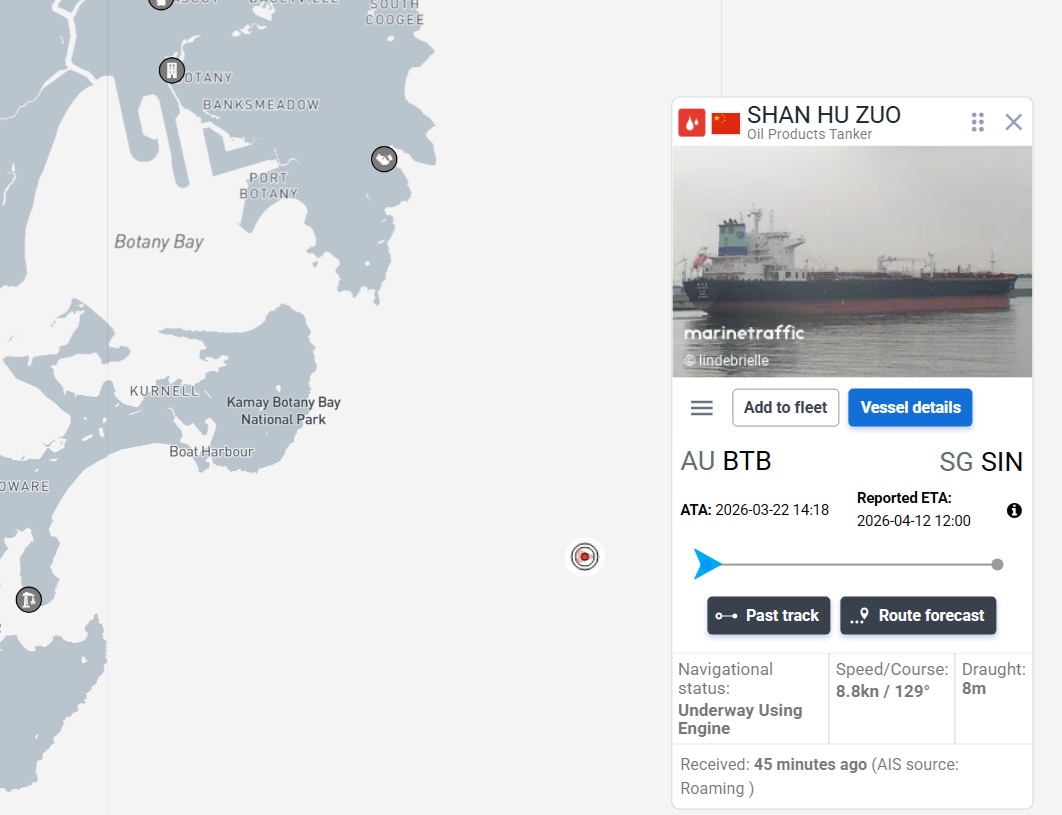 SHAN HU ZUO is off to Singapore 24 March 7 pm
Minister Bowen informed the public the weekly MSO report is out (as of 17 March)
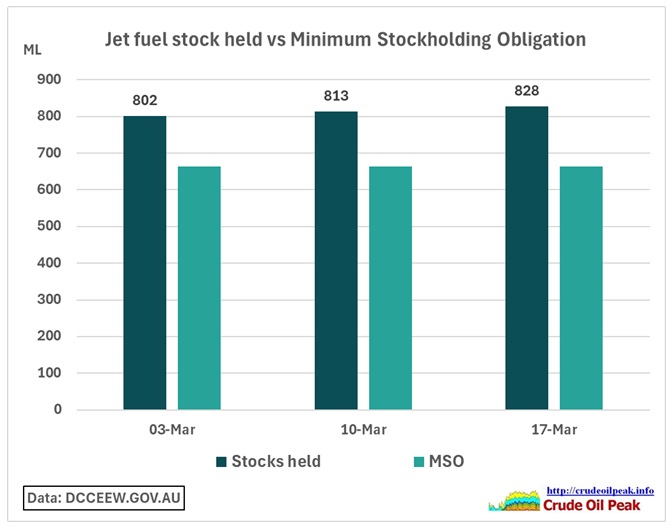
The stocks of jet fuel held have practically not changed. The differences are well within the accuracy of reported data. Demand for jet fuel may even come down as air fares skyrocket and air traffic restrictions continue in the Middle East.
Conclusion:
Imagine you have to follow 80 tankers a month.
Public data are very scarce and – if available – cumbersome to get at and will change very quickly:
• Type and quantity of fuels carried in tankers and their ports of origin
• Size of tanks at ports and the type of fuel they are designed for
• Storage levels in tank farms
MSO requirements must be set region by region, state by state and even by supply chain areas starting at ports.