The deficiency of fuel supply updates highlighted in previous articles seems to become permanent.
https://minister.dcceew.gov.au/bowen/transcripts/press-conference-fairfield-west-nsw-1
 Fig 1: Forward orders by fuel 4 Apr – 22 Aug 2026
In the above quote, the numbers for each fuel are missing. The many question marks describe the problem. The height of the columns in the graph starting with 27 June are guesstimated, i.e. it is assumed that the ratios as given by the numbers on 20 June have not changed. This is unsatisfactory. For example, we do not know how many ML of diesel we can expect in the next weeks. That is strange because the Fuel Task Force would calculate forecasts by fuel anyway, adding them up to the total. While up to now we have muddled through there might come a point where the 4-week moving window hits the next phase of the Middle East crisis.
And where is the shipload of jet fuel from Thailand? Extra orders have not been disclosed by the Minister since June 20th.
Albo is so happy: Thai Prime Minister Anutin Charnvirakul brought a special gift: jet fuel
19/8/26
And I want to thank the Prime Minister personally for his generous offer of access to jet fuel, as well, from Thailand, which is particularly welcome at this difficult time.
https://www.pm.gov.au/media/joint-media-statement-parliament-house-canberra-19-aug-2026
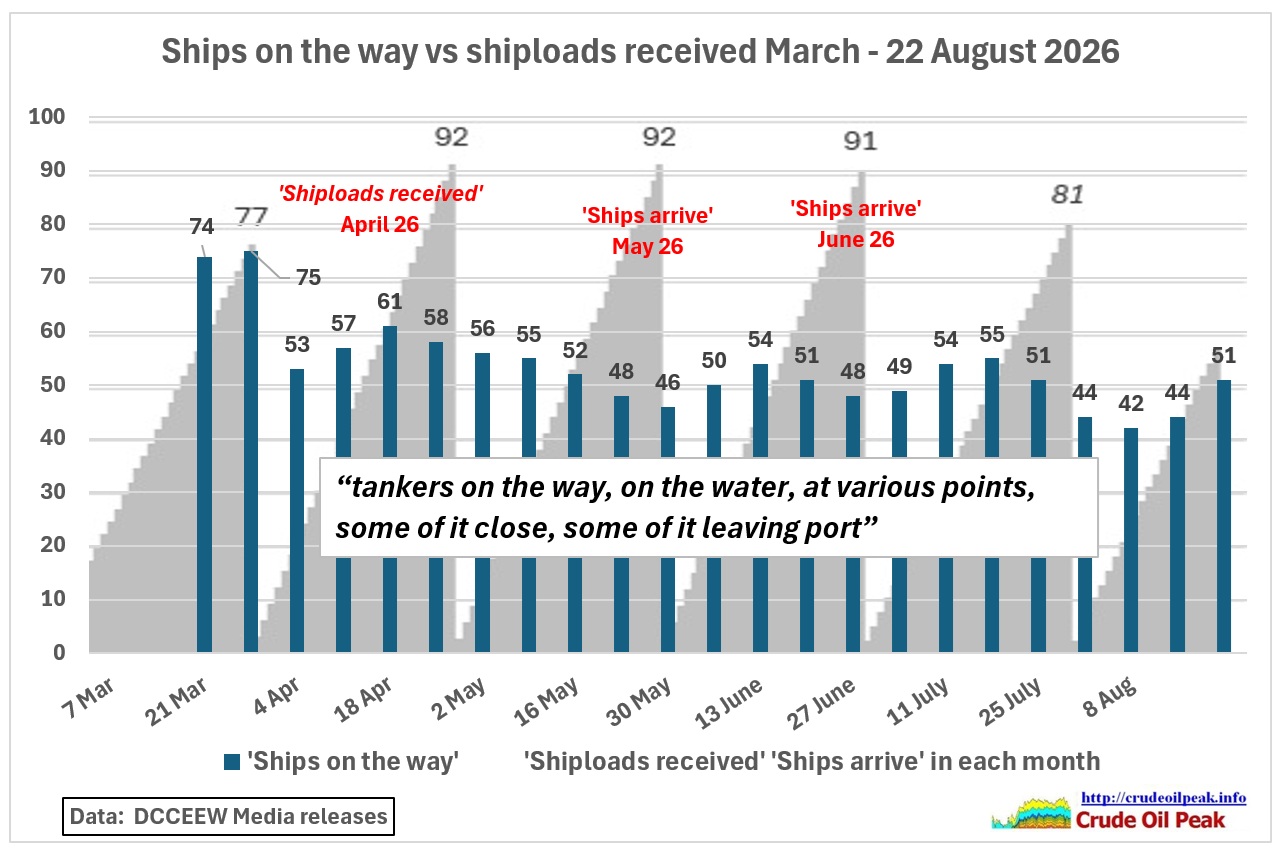 Fig 2: Ships on the way
The grey columns are cumulative shiploads received in a month. Here also the Minister did not give the number of the previous month. 81 for July is guesstimated.
Nil return
This laissez faire attitude is also visible in the delay this information was provided.
Usually, there is a fuel update on Saturdays. There are 2 steps:
(1) Between 9 am and 10 am, the website
https://www.dcceew.gov.au/energy/security/australias-fuel-security/minimum-stockholding-obligation/statistics
is updated with a new MSO chart based on data up to the previous Tuesday, in this case 11 August.
(2) Later in the day, there is a press conference by the Energy Minister who reads out numbers from this chart. Additionally, he will announce tankers on the water for Australia and the fuel expected in the next 4 weeks. Up to 20 June, he would disclose these fuels by fuel type (diesel, jet fuel, petrol). But no more
On Saturday, 22 Aug there was an MSO nil return. The above website was not updated until Monday, 24th. The press conference was moved to Sunday, 23 August. Clearly, the reporting standards are going downhill.
Fuel stock held in graphs
.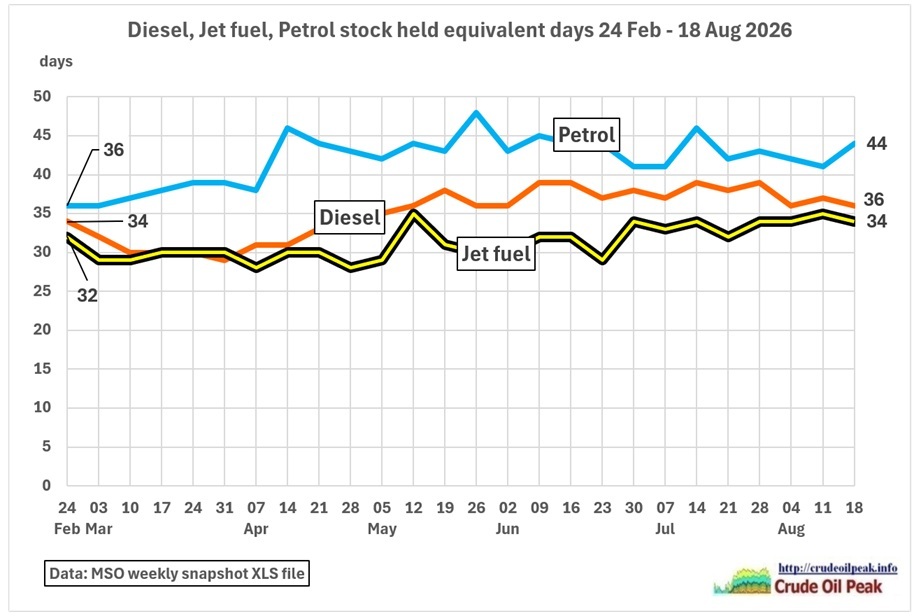 Fig 3: Stock held in equivalent consumption days
The most important fuel, diesel, has only 2 days more compared to end February. This means that Australia is not much better prepared when the current crisis worsens (global inventory depletion).
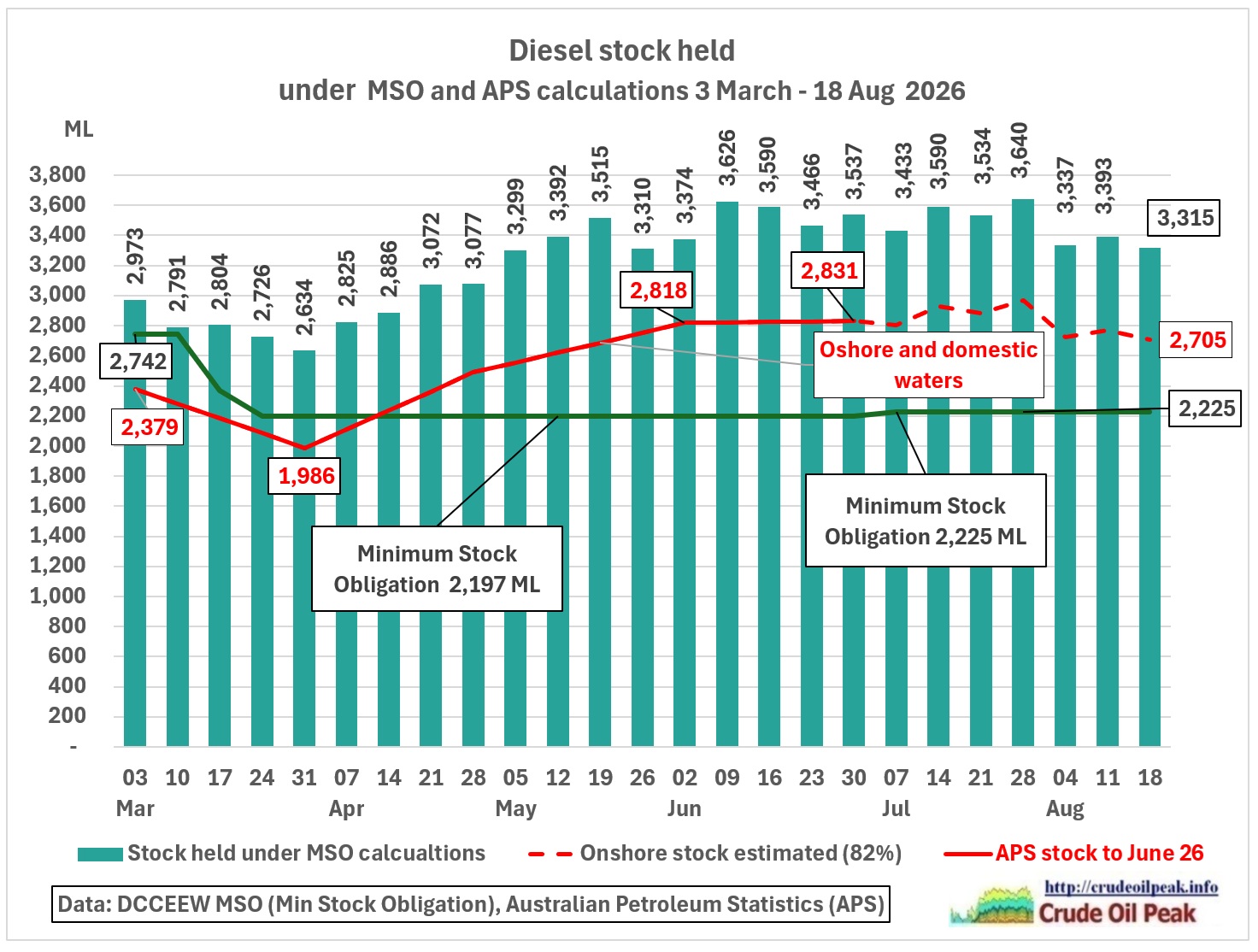 Fig 4: Diesel stock held on/offshore
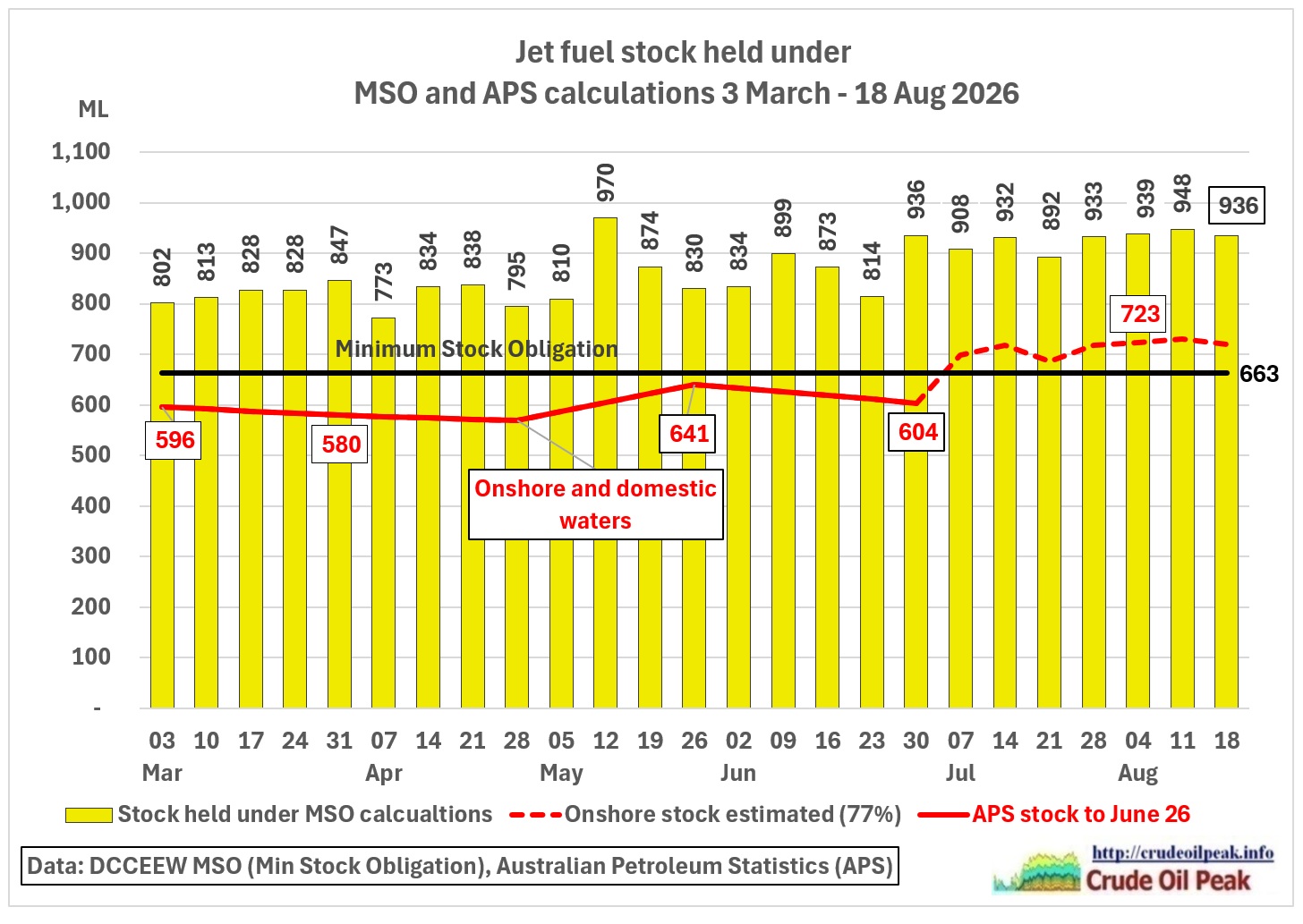 Fig 5: Jet fuel stock held on/offshore
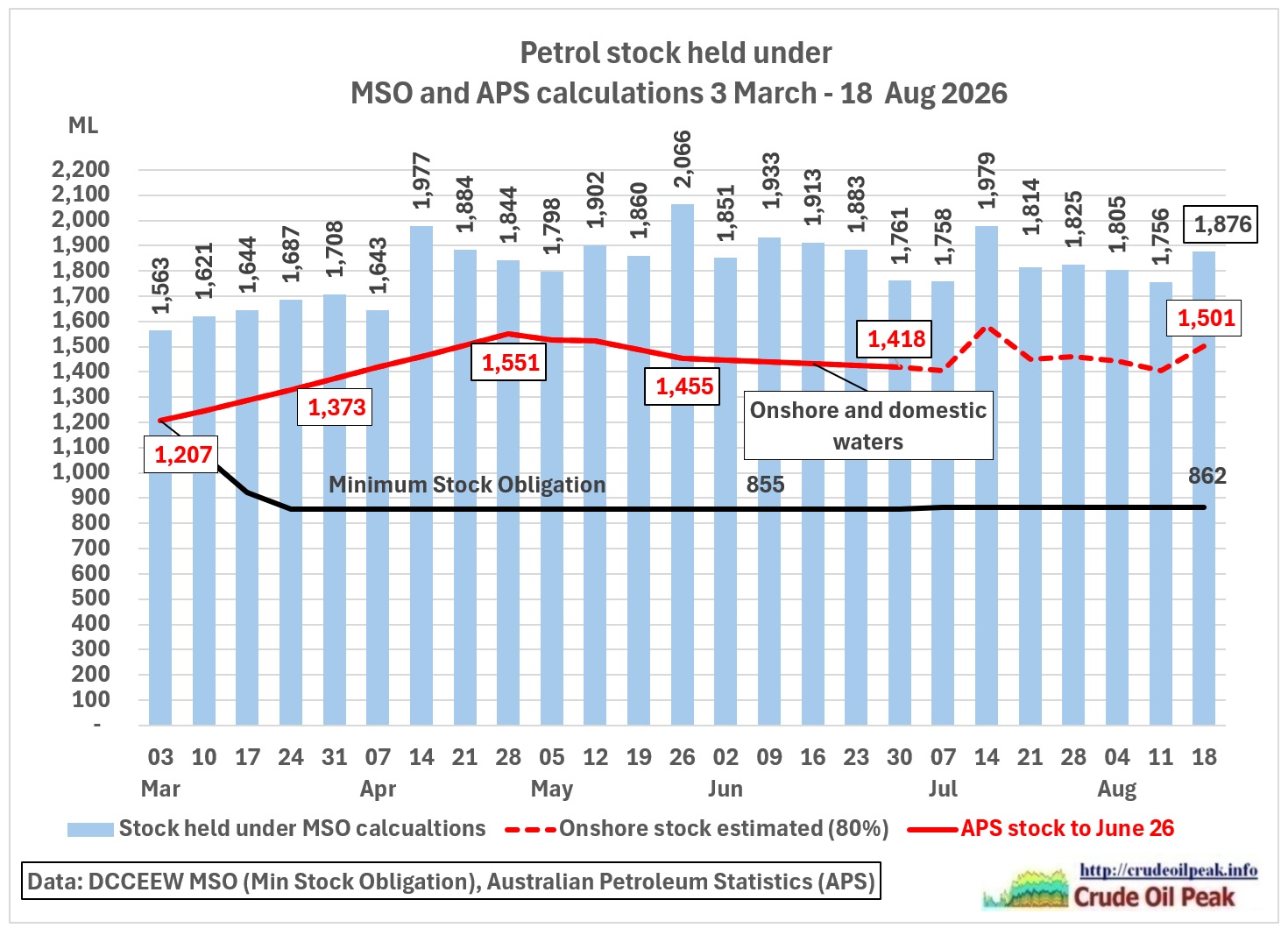 Fig 6: Petrol stock held on/offshore
Wishful thinking
The wording “This international situation remains ongoing” implies the assumption that the “situation” will one day change for the better. But what if it doesn’t?
Art Berman’s inventory monitoring
Watch Art Berman’s video
19 Aug 2026
Art Berman: Iran War Causing ‘Phase-Shift’ in Oil Markets, ‘Will Never’ Return to Normal
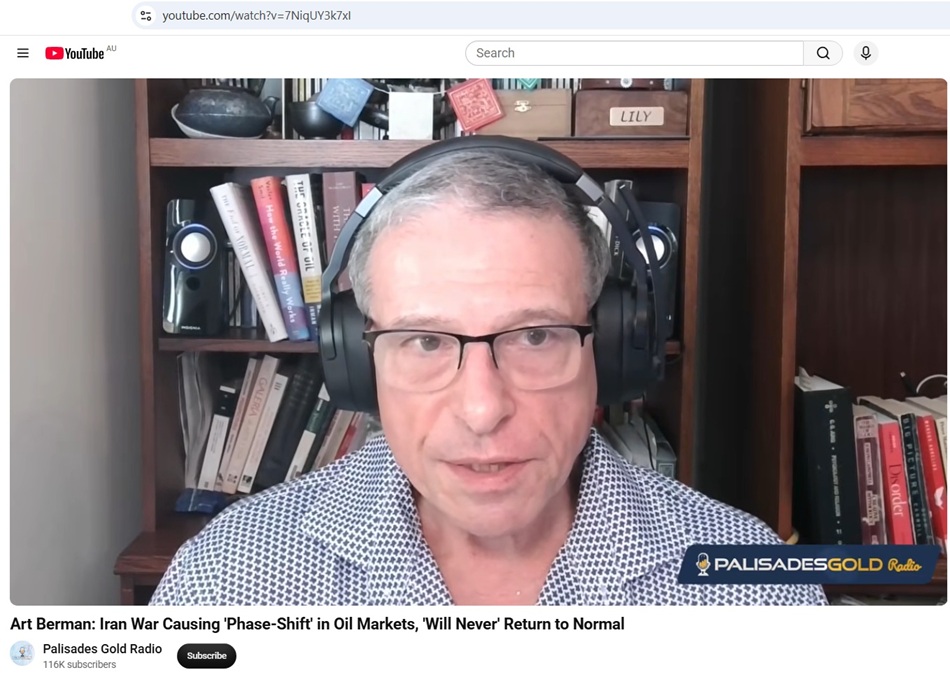
https://www.youtube.com/watch?v=7NiqUY3k7xI
00:44 – Iran War Energy Disruptions
03:00 – China Demand Destruction Analysis
05:24 – Diesel Prices Regional Impacts
06:52 – Stocks Versus Flows Distinction
09:04 – Savings Account Analogy
18:14 – Global Inventories Assessment
22:37 – Persian Gulf Production Losses
33:15 – Lost Production Focus
39:51 – Phase Shift Market Scenario
50:53 – Refinery Tightness Crack Spreads
59:03 – Comparative Inventory Tool
Art is oil geologist from Houston, Texas, and has used his comparative inventory method to estimate crunch time in November 2026
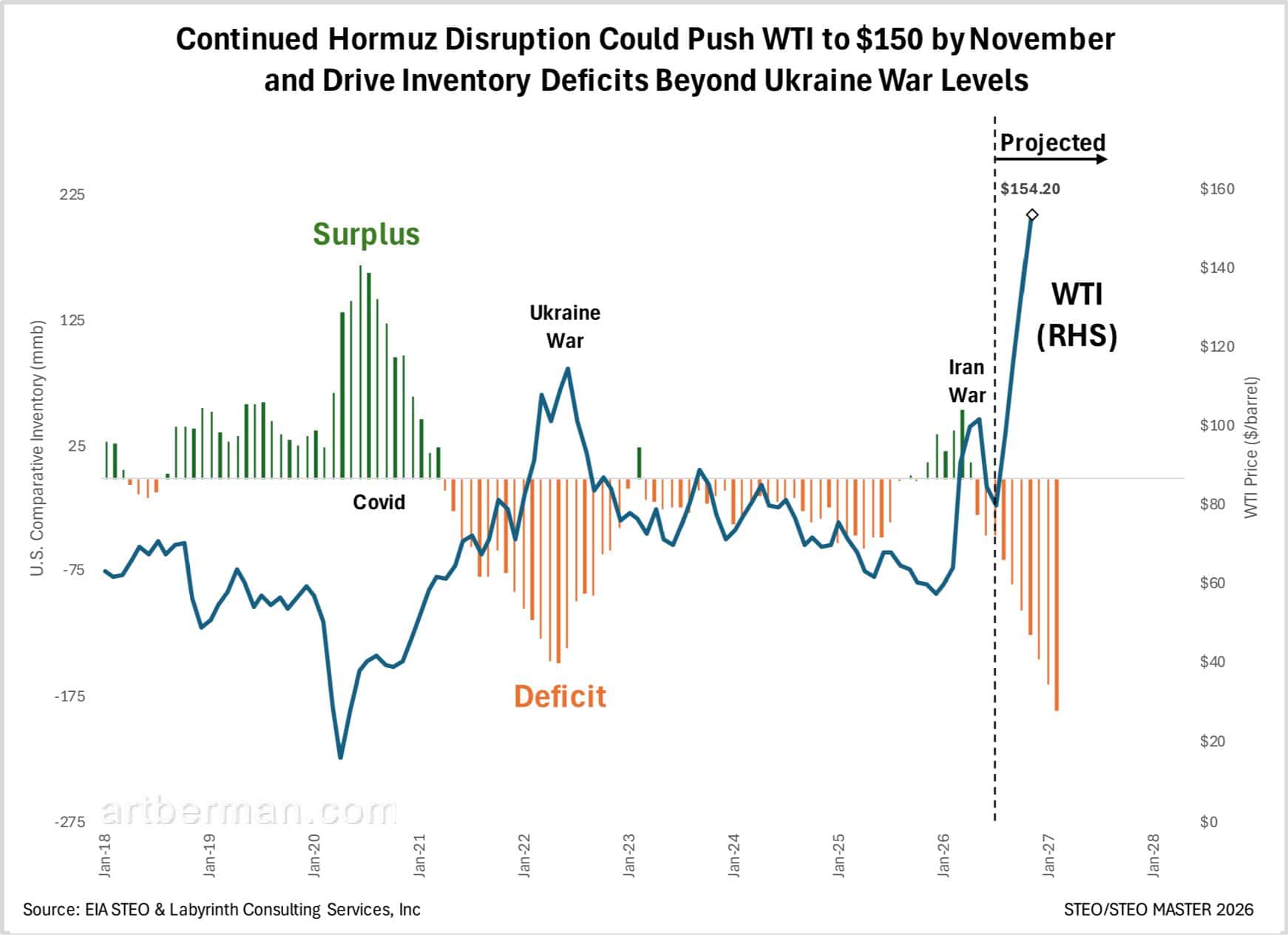 Fig 7: Monthly inventory deficits are accumulating. From this article:
1 August 2026
Oil Prices Can’t Be Whatever We Think They Should Be
https://www.artberman.com/blog/oil-prices-cant-be-whatever-we-think-they-should-be/
Power crisis from data centres
Data centres are now dominating the public energy debate
CHRIS BOWEN: Well, the Queensland Government has made their views pretty clear. We disagree with them, and we’re proceeding with that. Now, we’ll be putting in place Commonwealth legislation here…
In winter, what matters is the power generated after sunset measured in MW, under all conditions (climate change, weather, availability of wind, hydro, gas, batteries and survivability of coal plants)
6/8/25
NSW coal fired generation exceeded 7,000 MW on 20 evenings in July 2026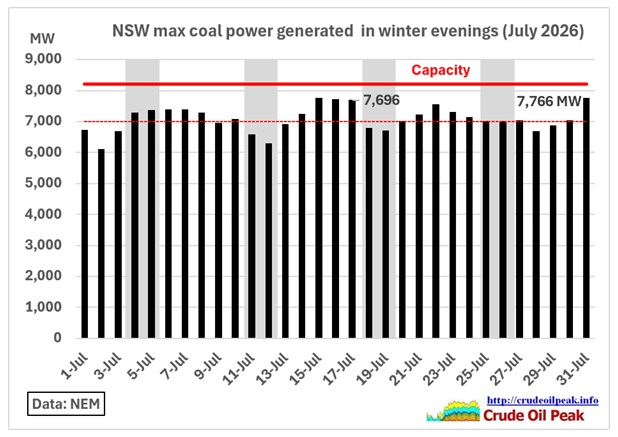 Fig 8: Coal generation in NSW – winter month
https://crudeoilpeak.info/nsw-coal-fired-generation-exceeded-7000-mw-on-20-evenings-in-july-2026
CHRIS BOWEN: Well, great question. And last week, Catherine King and I released the next stages of ensuring biofuels in Australia, in which ethanol is a key option. Ethanol, sugar, canola, all sorts of Australian agricultural products can go into Australian fuels, and that can help us with fuel security, and it can help create income for Australian farmers
The consultation paper is here:
18 August 2026
Securing Australia’s Cleaner Fuels Industry: Consultation paper on a demand mechanism
https://consult.dcceew.gov.au/securing-australias-cleaner-fuels-industry-consultation
These are long term projects. Phase 1 is the market formation for specified volumes of fuels up to 2035 and phase 2 is the transition to carbon intensity targets.
Conclusion:
A certain complacency has settled in. We do not expect that the Australian government reveals its own internal scenario calculations. But the continuing feel-good narrative of the Energy Minister does not suggest that serious preparations for a worsening situation are underway. This does not bode well for all fuel dependent projects which were recently started or which are in the planning pipeline without energy calculations.
Appendix
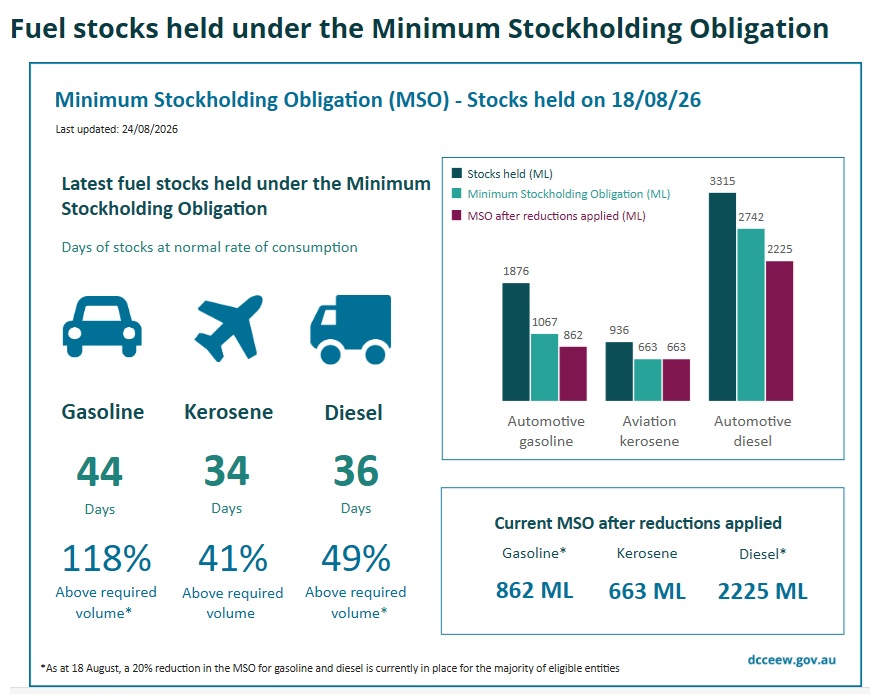 Fig 9: DCCEEW chart updated with data to 18 Aug 2026
https://www.dcceew.gov.au/energy/security/australias-fuel-security/minimum-stockholding-obligation/statistics