Summary
1 The Russian – Indian dilemma for Australian diesel imports
2 Australian diesel stock as low as at beginning of Iran war
3 Forward orders down and again no diesel volumes given
4 Kpler scenario on crude and fuel supplies up to Dec 2027
1 The Russian – Indian dilemma for Australian diesel imports
Press conference, Fairfield West, NSW
10 October 2026
MINISTER FOR CLIMATE CHANGE AND ENERGY, CHRIS BOWEN: We don’t need or want Russian fuel in Australia. We have the arrangements in place as best as we possibly can with our trading partners to ensure that Russian fuel doesn’t flow to Australia…….We’ll continue to have the very, very firm view that Russia should not be rewarded for their illegal and immoral invasion of Ukraine by any arrangements put in place [reported deal between Donald Trump and Vladimir Putin to release Russian fuel] as a result of the Middle East crisis
https://minister.dcceew.gov.au/bowen/transcripts/press-conference-fairfield-west-nsw-6
Everyone knows that India depends on crude imports from Russia.
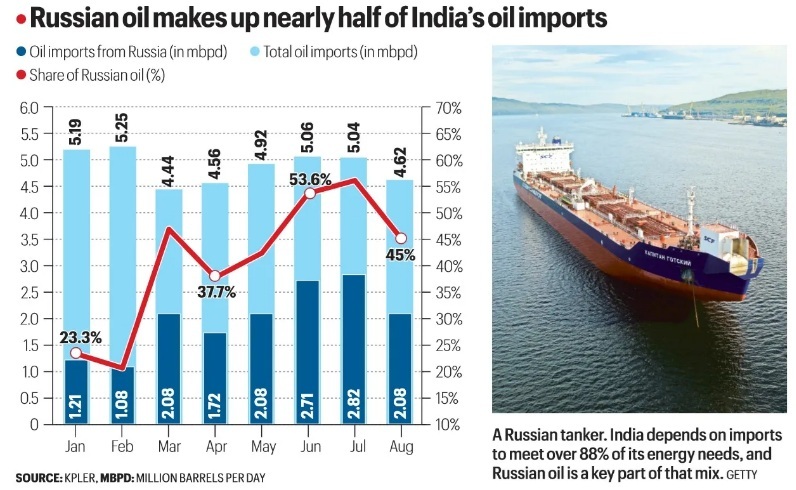
BTW, this chart was shown in a previous post:
20/9/2026
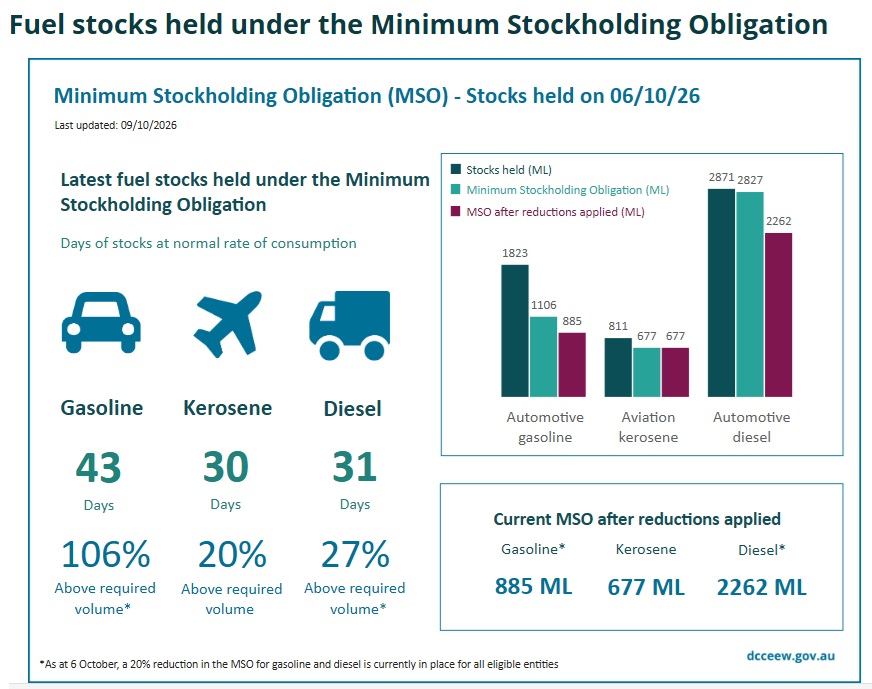
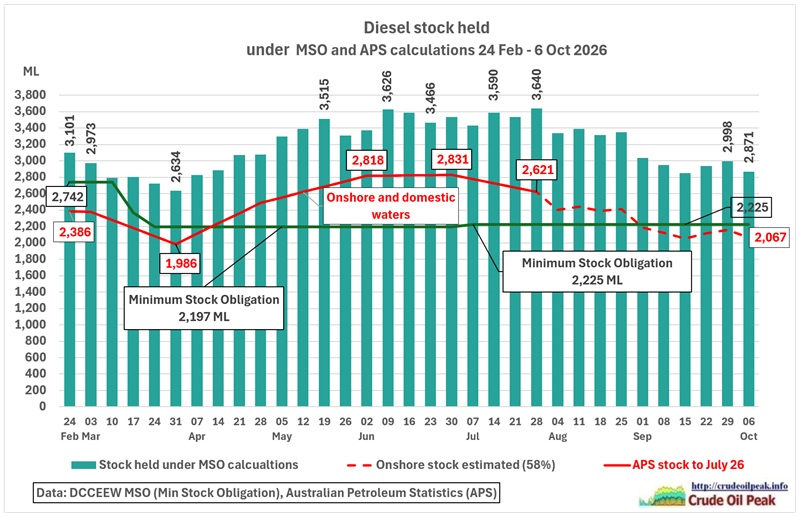
Australian onshore diesel stock on 15 Sep 2026 very likely near or below MSO level
https://crudeoilpeak.info/australian-onshore-diesel-stock-on-15-sep-2026-very-likely-near-or-below-mso-level
That’s why this question comes as a surprise:
JOURNALIST: Minister, Tim Lester from Seven News. Energy analysts have suggested to us that your trip to India was particularly interesting because if you were to open up diesel imports from India, that would be a major plus for our fuel security and with that, food security going forward. Can you tell us anything about prospects that we might be looking at India as a source for diesel?
MINISTER BOWEN: Well, India is a key friend and trading partner of Australia. You’re right, Tim. I was in India two weeks ago with fuel security as a focus of that visit. I was able to visit the largest refinery in the world at Jamnagar, which was very useful for Australia’s ongoing fuel security. I also met with the chief executive of that refinery and talked about the trading relationship between Australia and Reliance, which is the very large fuel refining company in India. We had a very, very fruitful and good discussion and we agreed to keep in contact, and to keep talking about the potential for Australia and India and Reliance in particular, that’s the firm that owns the world’s largest fuel refinery, to stay in close contact as this international fuel crisis continues. The worst energy crisis in our history. Now, I’m not making any particular announcements about that relationship at the moment other than we were in close contact when I was in India and we will remain in close contact.
The same journo insisted in a 2nd question that a deal with India would be “quite profound for our fuel security”
But the Minister gave the same open-ended answer, not mentioning Russia, avoiding any commitment for now and keeping all options open for the future.
In fact, Australia already imported diesel from India, even after Russia’s invasion in Ukraine.
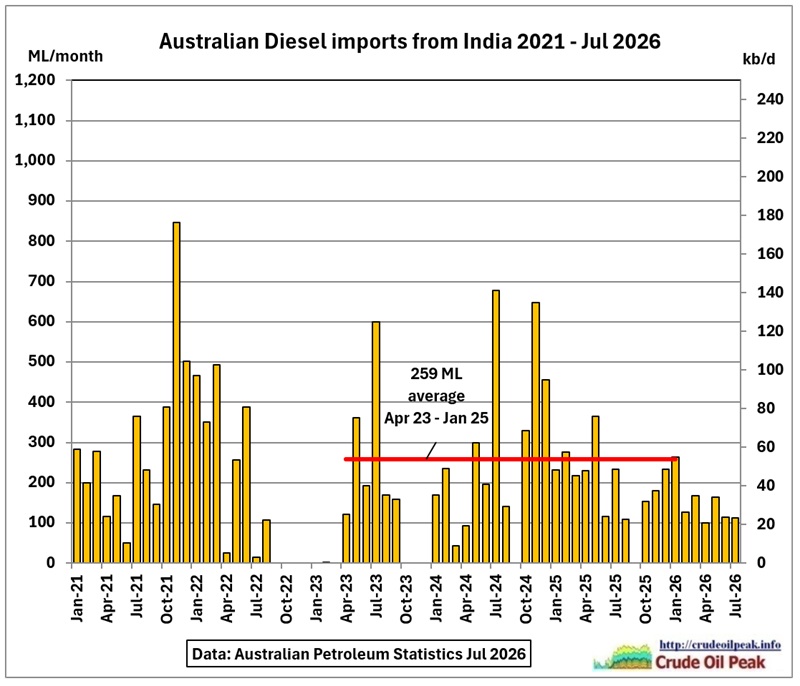 28/9/2026 Australian diesel imports by country to July 2026
https://crudeoilpeak.info/australian-diesel-imports-to-july-2026
In the meantime, India’s crude imports from Russia have declined.
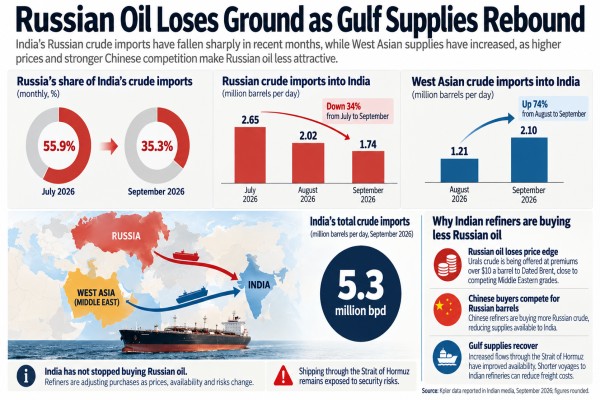 Russian Oil Loses Its Grip On India’s Market
9 Oct 2026
Higher prices and Chinese competition erode Russian oil’s appeal as Gulf supplies rebound, reshaping India’s crude imports.
India’s retreat from Russian oil is gathering pace as Middle Eastern suppliers regain ground. Rising prices and tougher competition from China are making Russian crude less attractive to Indian refiners.
The shift is not driven solely by American pressure or the threat of tariffs on countries buying Russian oil. Commercial considerations are also at play, as the price advantage that once made Russian crude attractive has eroded.
Russia’s share of India’s crude imports fell to around 35 per cent in September, from as much as 56 per cent in July, according to Kpler. Russian shipments averaged just 310,000 barrels per day in the four weeks to October 4, the lowest four-week average since March 2022, when India began increasing purchases of discounted Russian oil following Moscow’s invasion of Ukraine.
Urals crude loaded at Baltic ports is reportedly being offered at premiums exceeding $10 a barrel over Dated Brent, bringing its cost close to that of competing Middle Eastern grades.
Russian crude is unlikely to disappear from India’s import mix overnight. Refiners will continue to weigh prices, refinery compatibility, freight costs and geopolitical risks when choosing suppliers. Russian oil could regain market share if its prices fall sufficiently or competing supplies become less attractive.
https://stratnewsglobal.com/russia/russian-oil-loses-its-grip-on-indias-market/
Of course, the re-bound in Gulf supplies can quickly disappear. And what Trump is or will be doing is anyone’s guess. What is certain is that there will be more Iranian attacks on tankers in Hormuz
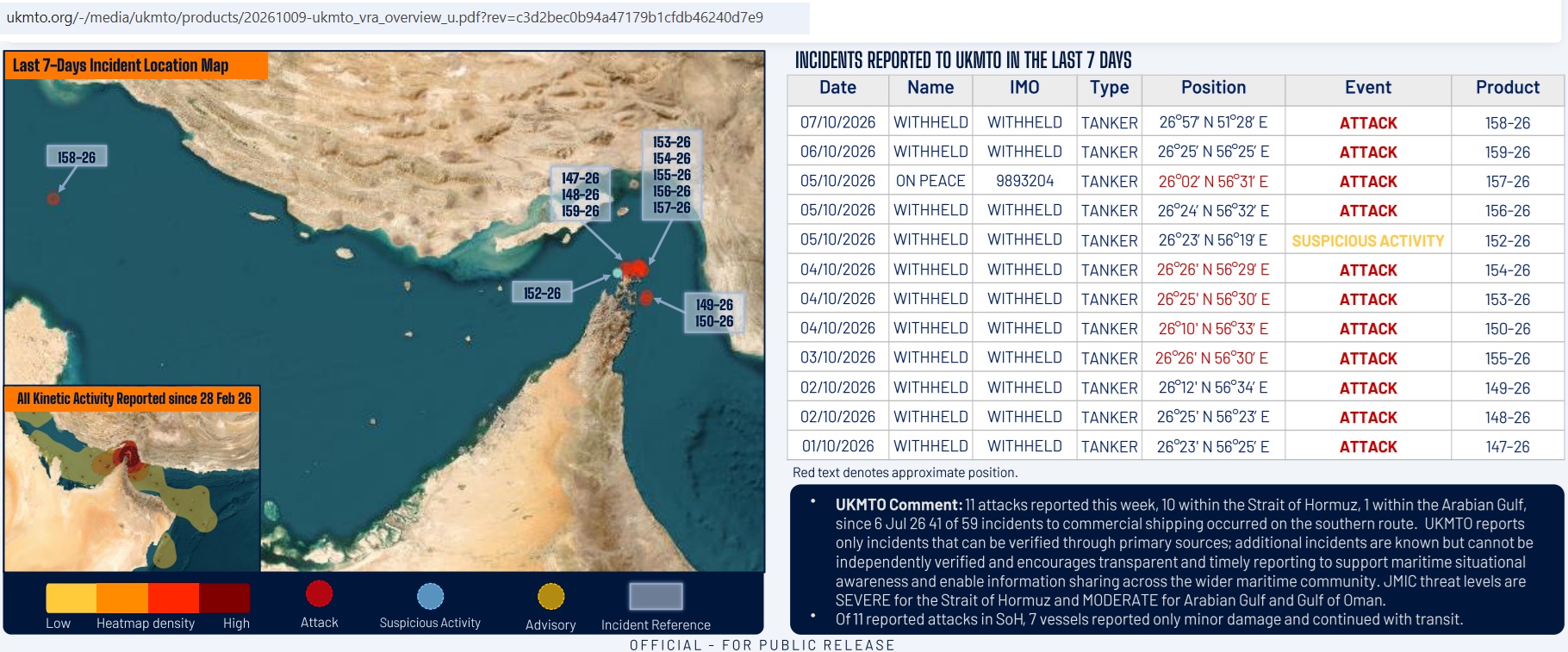 There were 11 attacks in the last UKMTO reporting week https://x.com/UK_MTO?lang=en
https://www.ukmto.org/-/media/ukmto/products/20261009-ukmto_vra_overview_u.pdf?rev=c3d2bec0b94a47179b1cfdb46240d7e9
2 Australian diesel stock as low as at beginning of Iran war
Australian diesel stock is lower now than it was on 3rd March. This means that if there were another phase in the Middle East crisis Australia would not be in a better position now.
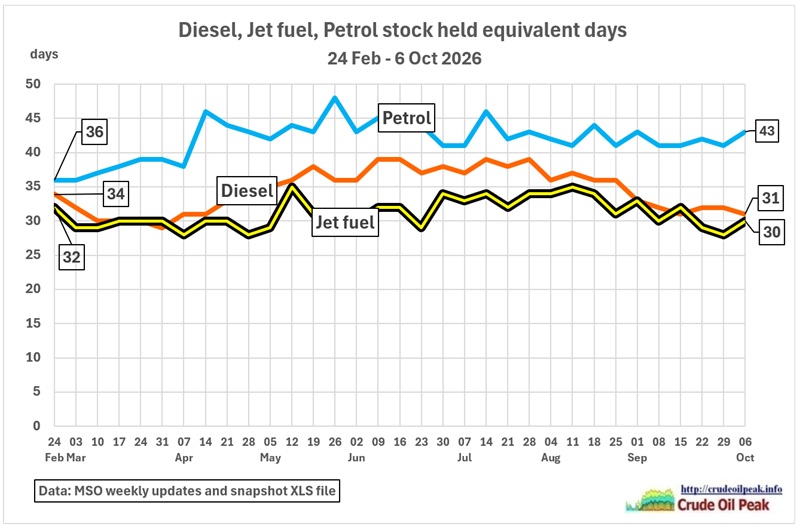
3 Forward orders down and again no diesel volumes given
 The orders are down compared to previous weeks which the Minister did not mention:
MINISTER FOR CLIMATE CHANGE AND ENERGY, CHRIS BOWEN: …We have 51 ships on the way to Australia with fuel, and we have 3.2 billion litres of various types of fuel locked in and contracted to be delivered over the next four weeks. So these are figures that are consistent with the updates I’ve been providing Australians every Saturday for the last six months.
Not really consistent as the above graph shows. Orders varied between 4,500 ML on 9th May and 3,000 ML on 8th August (or by 30%). And the data on “various types of fuels” are also not consistent or even missing altogether (?? marks). So we don’t know how much diesel will come in the next 4 weeks.
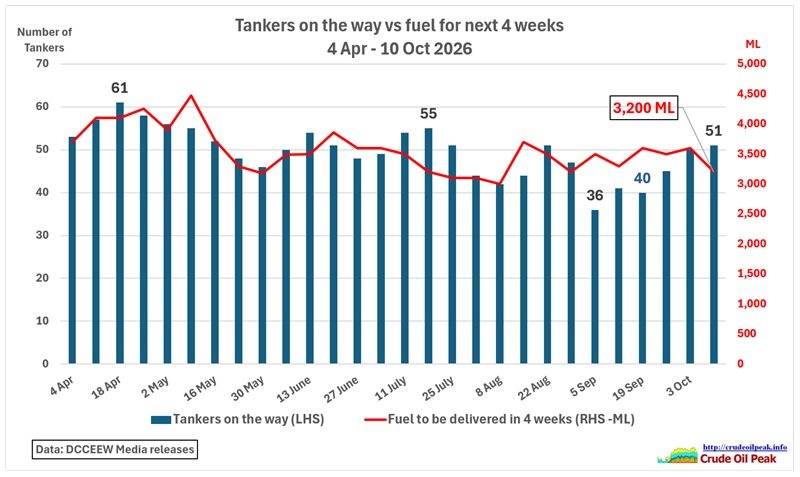 We have an increasing number of tankers for the same or a smaller volume. The volume per tanker has declined from 97 ML on 5 Sep to 63 ML on 10th October, i.e. smaller cargos. Is that also consistent?
CHRIS BOWEN: I was in Saudi Arabia two weeks ago, getting the latest on the situation from my Saudi Arabian counterpart. I met also with senior representatives of the Saudi Arabian Government this week at Pre-COP and obviously, we continue to see attacks in Saudi Arabia, but I do have confidence that the Saudi Arabian Government is taking steps to ensure that the fuel is flowing as well as it possibly can be.
A lucky Minister from a lucky country:
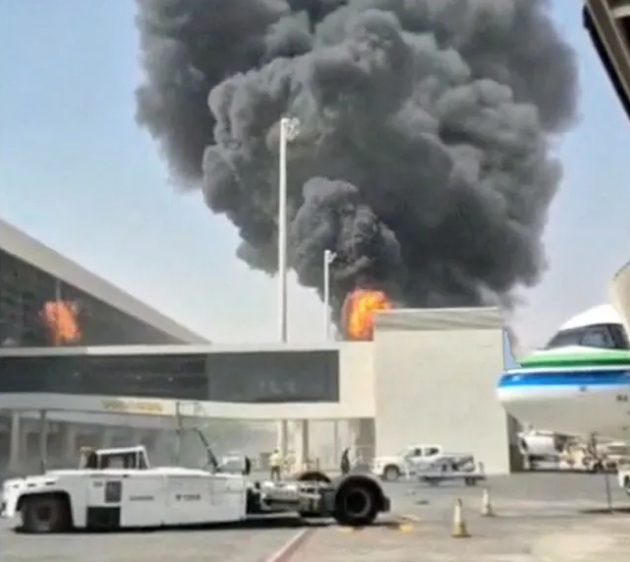
3 people killed in Houthi attack on main airport in Riyadh, Saudi officials say
Riyadh’s King Khalid International Airport was targeted on Thursday
9 Oct 2026
An airline pilot was among three Saudi citizens killed in attacks targeting Riyadh’s King Khalid International Airport, the kingdom’s civil aviation authority said on Friday.
The first attack on Thursday targeted airport facilities, while the second struck a Saudi aircraft, the Saudi statement said. It did not identify those responsible, though the Houthis claimed to have targeted the airport with a ballistic missile.
Several people “of different nationalities” were wounded in the attacks, the kingdom said.
https://www.cbc.ca/news/world/saudi-houthi-fighting-riyadh-airport-9.7375292
4 Kpler scenario on crude and fuel supplies up to Dec 2027
Hormuz: Normalisation no longer needs to wait for a deal
1 Oct 2026
Crude and Clean Products Strait of Hormuz exports as share of pre-war levels
The implication is not that Hormuz has reopened. It is that full reopening should not be expected in the next six months. Our revised base case shows a flatter and extended recovery curve through 2027, reflecting rising but volatile transits rather than a six-month post-deal reopening. The critical stress test is refined products. If constrained Gulf refinery runs push product markets toward unsustainable tightness, the economic pressure for a faster resolution would increase materially.
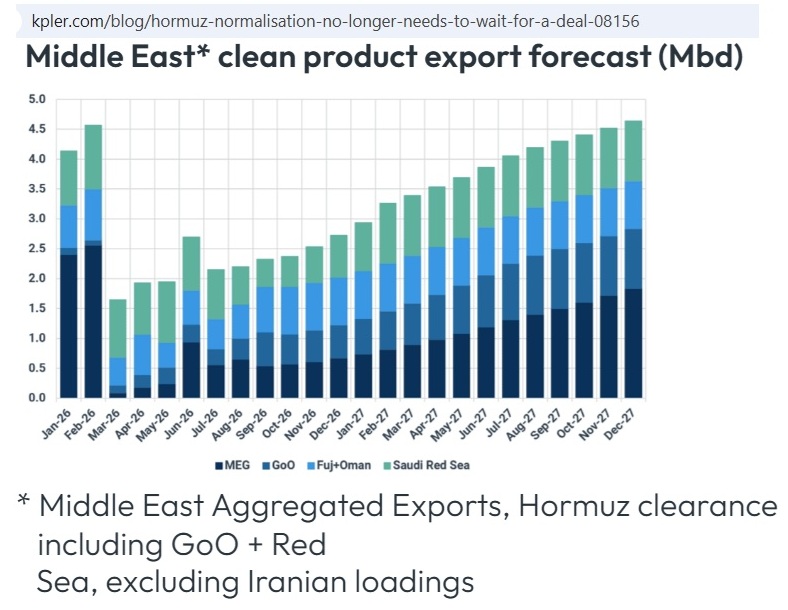
Clean products mean gasoline, diesel, gas oil, jet fuel and naphtha
Crude and Clean Products Strait of Hormuz exports as share of pre-war levels:
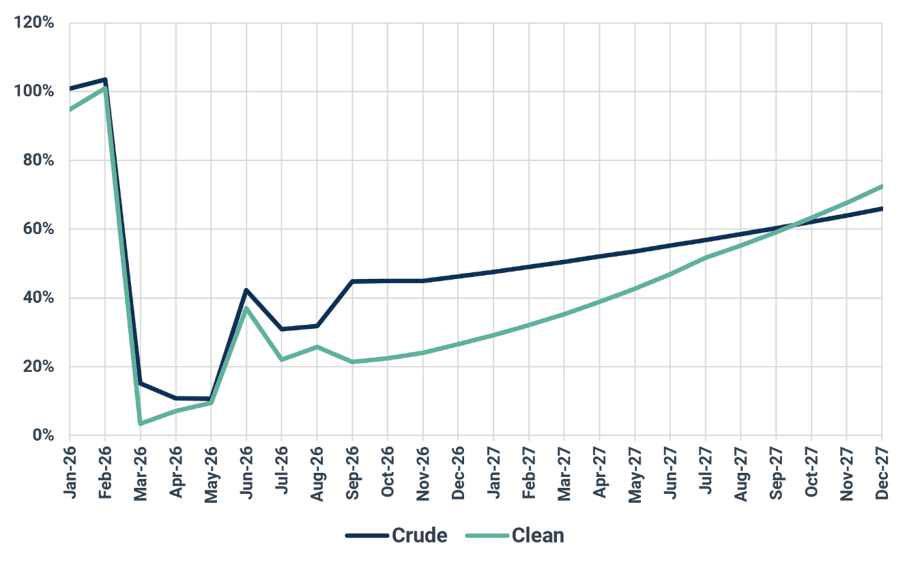 Mar26 Crash 10%, Now: Crude 45% Products 25%, Dec 2027 Crude: 65% Products 72%
https://www.kpler.com/blog/hormuz-normalisation-no-longer-needs-to-wait-for-a-deal-08156
This is of course a scenario Energy Minister Bowen does not want to discuss. It means delaying all unnecessary diesel intensive projects. That will be a hard nut to bite for business-as-usual governments. And that is why it is so important to keep monitoring diesel stock in timeline charts the public can understand.
Appendix